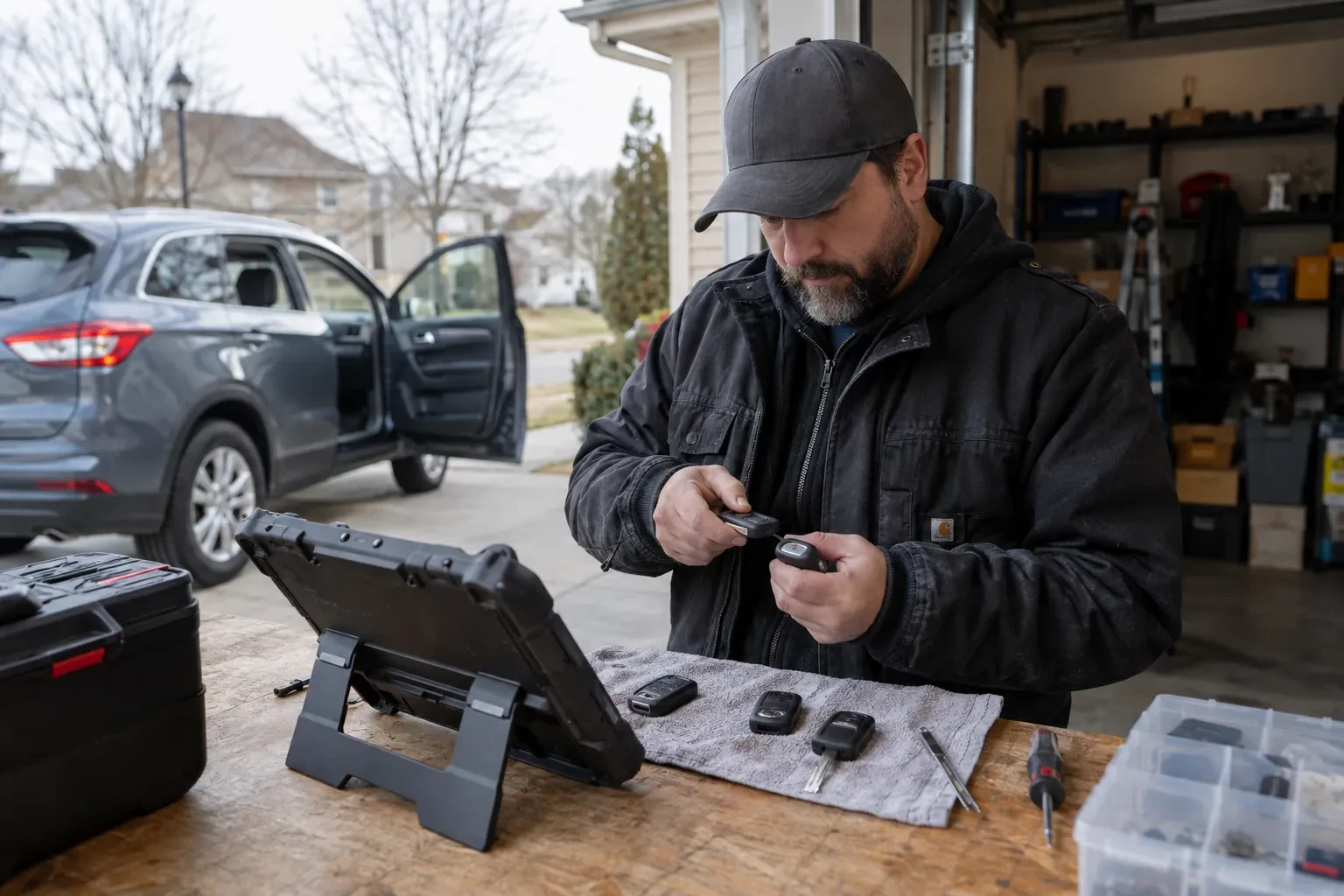
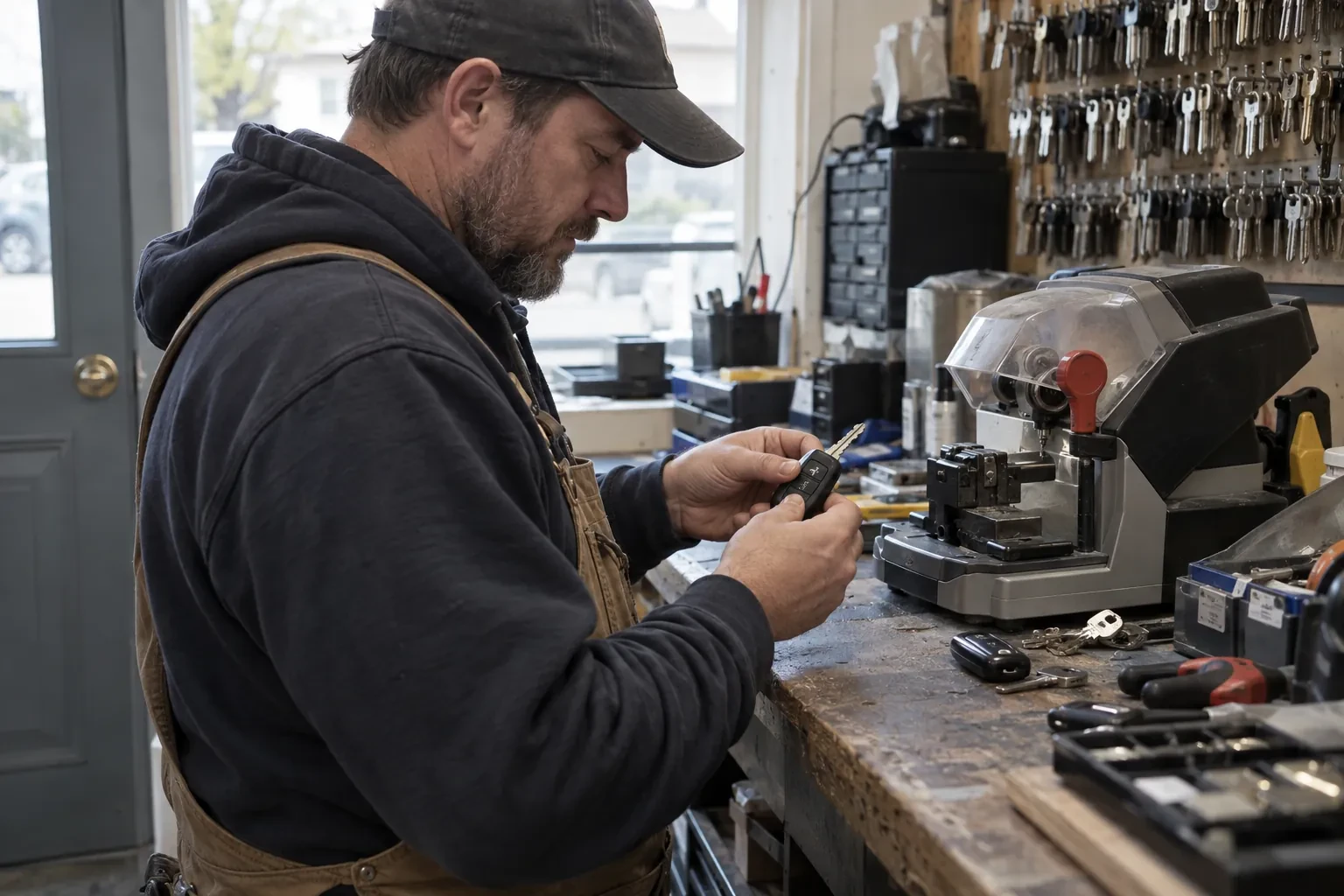
A lock problem is rarely only a lock problem. It is a door that swells shut in a damp week, a key that snapped on a cold morning, a tenant who left without handing anything back. In Madoc we listen first, explain the options, and do tidy work you can see before we drive off.
A lock problem is rarely only a lock problem. It is a door that swells shut in a damp week, a key that snapped on a cold morning, a tenant who left without handing anything back. In Madoc we listen first, explain the options, and do tidy work you can see before we drive off.
Careful work on every kind of lock.
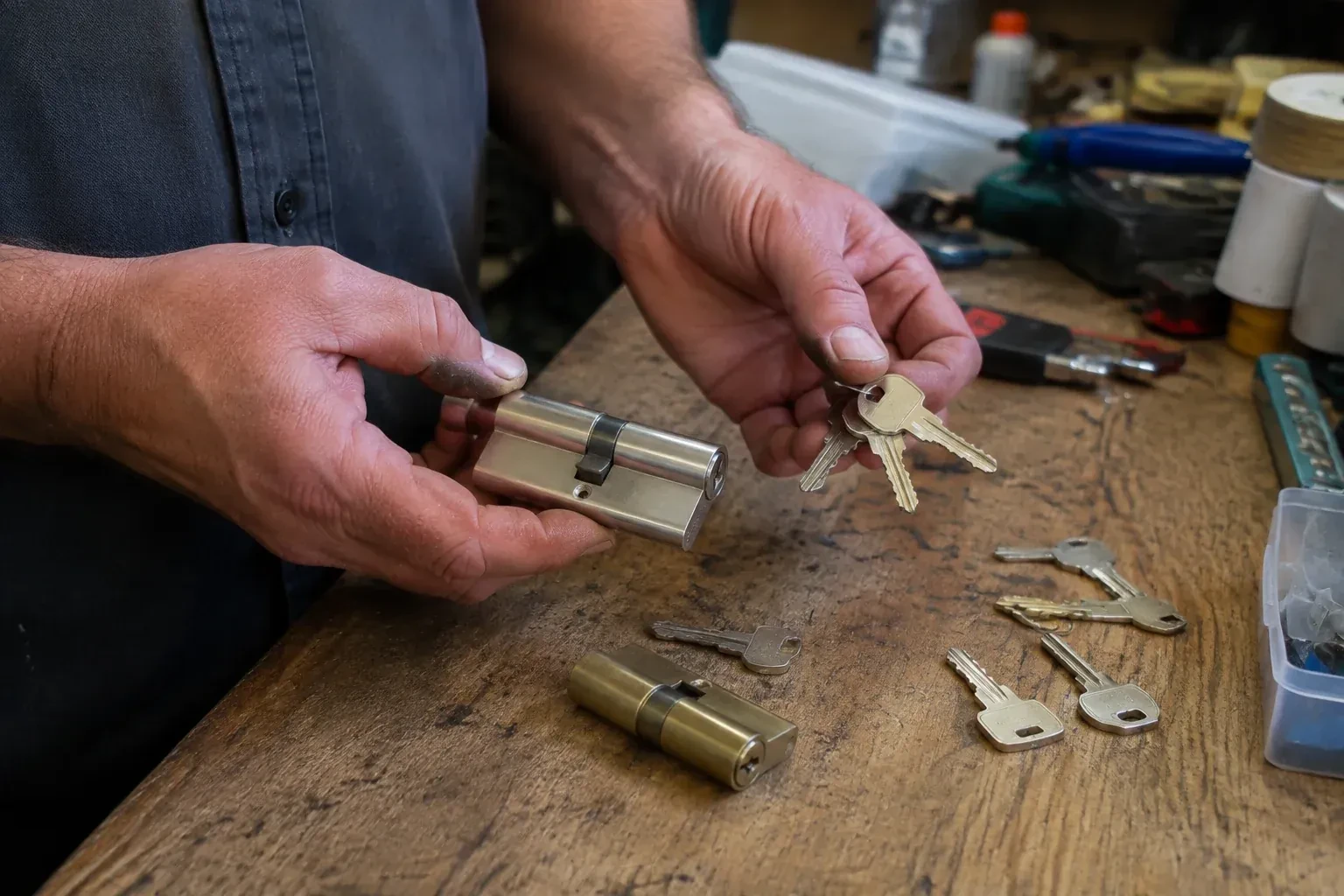
Households in Madoc often collect locks from different decades that all take different keys. We rekey them to a single key where the hardware allows, replace the one or two that cannot be matched, and set up a spare that lives somewhere sensible. You leave with a lighter ring and a clear idea of which key does what.
A key that snaps in the lock is a small crisis that happens to careful people all over Madoc. We extract the broken piece without harming the pins, cut a new key and check the cylinder for whatever caused the break in the first place. Often it is a worn key or a misaligned strike, and sorting that out means the new key lasts.
31years in business
24/7open every day
A straight assessment. If the lock is fine and the door just needs adjusting, we say so. If it has reached the end of its life, we say that too, and show you why.
Options laid out side by side. Repair, rekey, replace or upgrade, with what each involves and what it changes. You pick; we do not steer you toward the biggest job.
Finished, not nearly finished. Every key tested in every lock, every screw tight, every strike aligned, and the packaging in our van rather than your bin.
Doors in Madoc are opened, rekeyed, repaired, reinforced and replaced by the same small team, so you can pick one service today and add another later without explaining the house all over again. Start with the page that matches your door; the rest of the list will still be here.
About 23% of homes in Brampton were built in 1980 or earlier, according to the 2021 Census.
Newer homes
Builders often key an entire street to a small number of keyways, which is convenient for them and less so for owners afterwards. In newer areas a locksmith can move a household onto a keyway that is genuinely its own.
Single-detached houses make up about 53% of homes in Brampton (2021 Census).
In areas of mixed housing, landlords may own a house here and a few units there. A locksmith can put all of it under one master system so the owner carries one key while each tenant's key opens only their own door.
Most forced entries go through the strike and frame, not the cylinder, so this group treats the door as one assembly: hardened bolt, deep strike, three-inch screws, sound hinges, and a cylinder that defeats picks and drills on top of all that.
The house is fifteen years old and every exterior door still wears the light hardware the builder fitted: a short bolt, a thin strike held by two small screws, and a knob lock that never suited a street entrance.
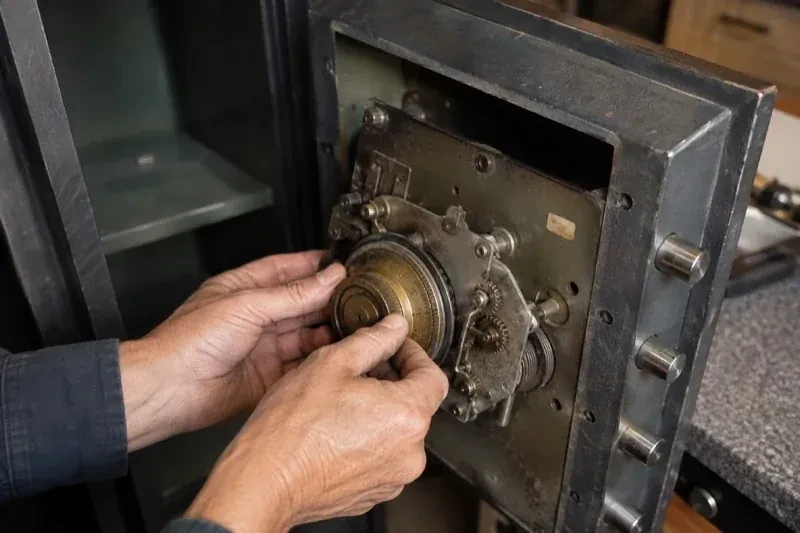
A safe sat in a late parent's basement for years, its combination known to nobody left in the family, and everyone would like to know what is actually inside it.
The keypad on the office safe blinks a low-battery warning every morning now, and whoever notices it first quietly hopes someone else deals with it before the batteries finally give out mid-week.
Which fix fits?
A cook stepped into the alley with the recycling and the rear door swung shut behind him.
WhyMoving into a home is the classic moment for this service, because you inherit whatever hardware and whatever key copies the previous owners left behind.
The mailbox key snapped clean off in the lock last week, and the stub is still sitting somewhere inside the cylinder.
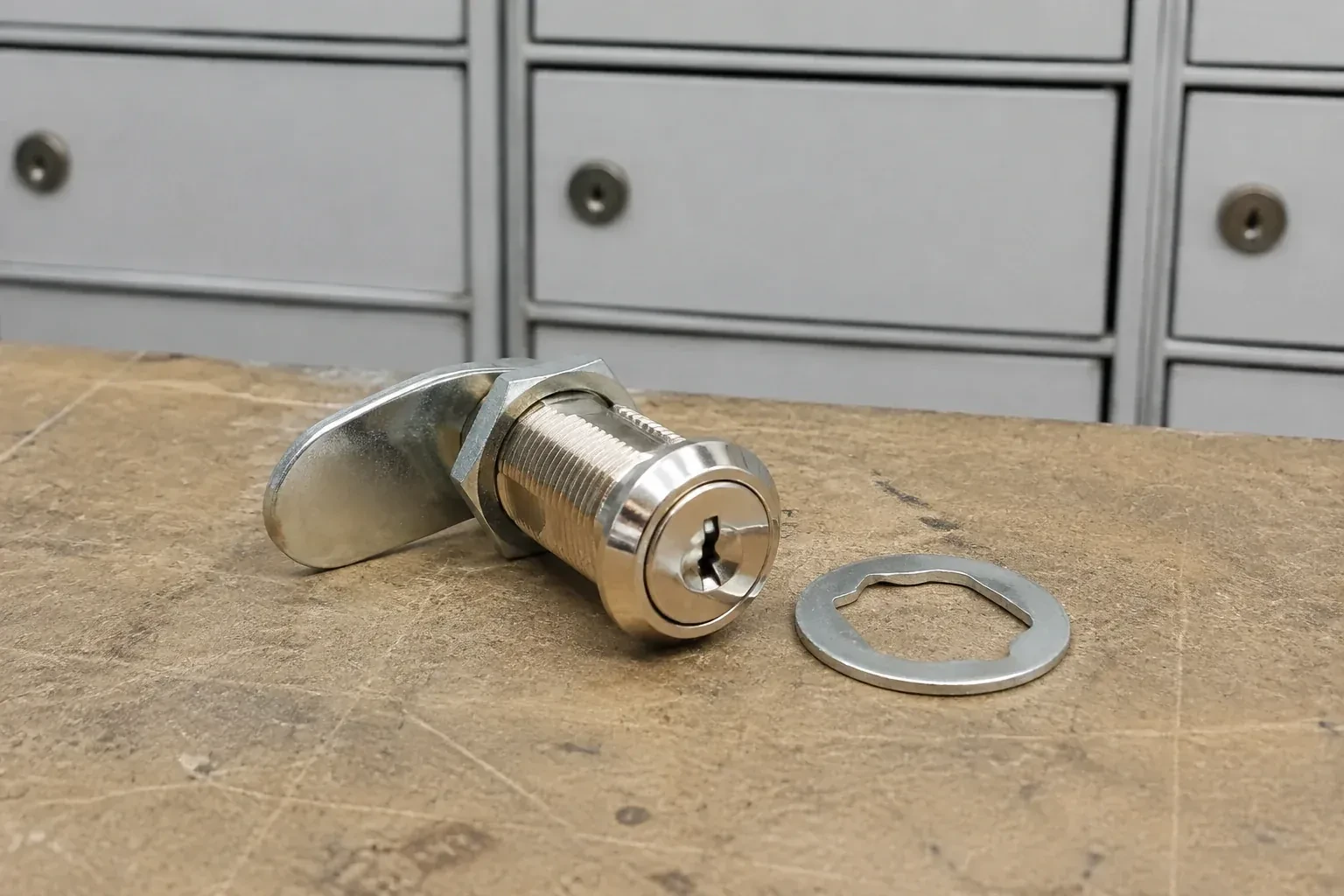
WhySmall outdoor cam locks take a beating over a Canadian winter: road spray, salt, and repeated freezing leave the keyway gritty and the cylinder stiff long before the metal actually fails.
The new manager took over the shop last month and only now needs the back-office safe open, but the combination the previous owner was supposed to leave in writing never turned up anywhere in the handover file.
WhySometimes the machine is not the problem; the key is.
Good days. Start with a turn.
1/9Business Lockout Service
A cook stepped into the alley with the recycling and the rear door swung shut behind him. The push bar works from inside, but the outside handle has a keyed cylinder and the key is hanging in the kitchen office. The front door is locked too.
That key had been bending a little for years, and you kept straightening it. Today it finally cracked at the deepest cut. The stub is in the lock, and the spare you found goes in a few millimetres and stops against it.
The shop's lever handle goes down as usual, but the latch inside the mortise case never pulls back. Staff are waiting on the sidewalk with their coffees, the door is locked, and the handle is simply moving air.
You were shovelling the driveway after dark and the ring must have slid out of your coat pocket somewhere under a metre of snow. You have raked the whole bank with a flashlight. It will turn up in April, and you would rather not wait.
The keys the seller handed over came in a sandwich bag: six unlabelled copies for two locks of different makes from different decades. You have no idea how many more copies exist or who is holding them.
The mailbox key snapped clean off in the lock last week, and the stub is still sitting somewhere inside the cylinder. Nothing else on the ring gets anywhere near that keyway, and the mail is piling up because of it.
The new manager took over the shop last month and only now needs the back-office safe open, but the combination the previous owner was supposed to leave in writing never turned up anywhere in the handover file.
Two people left over the summer and the keys they handed back came up one short. Nobody is sure whether the missing key was for the front door, the stockroom or both, and the sign-out sheet stopped being filled in a year ago.
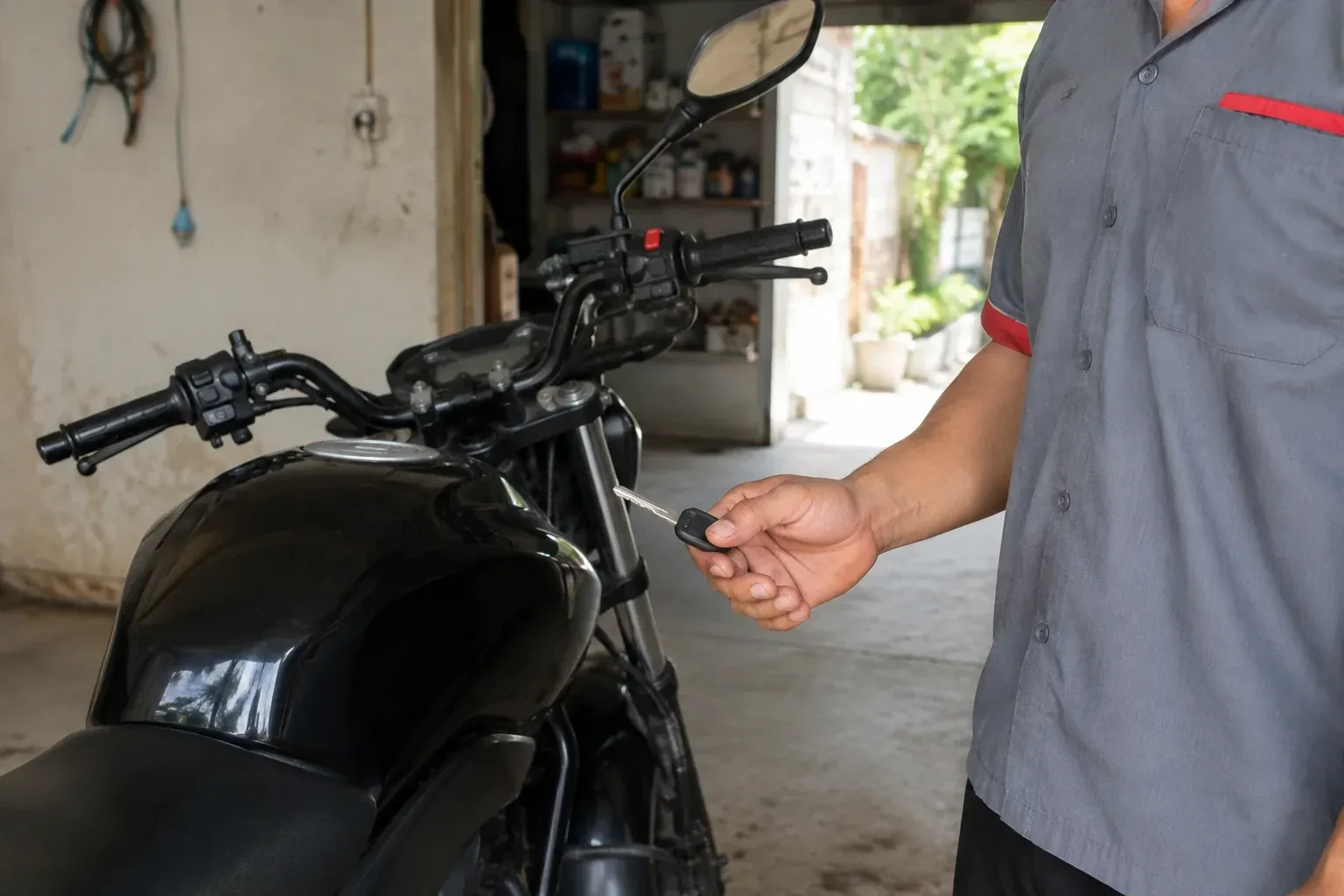
The dash lights come on, the starter cranks, and the engine simply refuses to catch, though the same key has run this bike since it was new. It could be the key and ignition module no longer agreeing, or an ordinary fuel or ignition fault sharing the same symptom.
How many keys should a business have, and who should hold them?
Fewer than most businesses think, and every one of them named. Two people who can open, one of whom can be reached on a day off, cover the door. Cleaners and contractors get a key only if they need one and hand it back when the arrangement ends. Write down who has what, collect keys when people leave, and rekey when one does not come back. Interior keys for the cash office or stockroom follow the same rule on a shorter list.
Why did my key break at all?
Often fatigue, though not the only cause. A brass blade is weakest where the deepest cut leaves the least metal, and thousands of turns can slowly work a crack into that spot. Then one morning something asks more of it: a frozen cylinder, a bolt binding in a swollen door, grit in the keyway, or turning before the key was fully in. A bent, worn or poorly cut key can also fail on its own, with no such trigger. The lock is inspected afterwards to find which applied.
Why did my lock seize when it worked yesterday?
Locks rarely fail in a day; they fail slowly over months and announce it in a morning. Grit and old lubricant build up in the pin stacks until one cold night thickens them past the point the key can overcome, or a door that has been drifting on its hinges finally pins the bolt after a humid week. The wiggle you needed last month was the warning. A lock in this state is usually cleaned or adjusted back to health rather than replaced.
Does stamping keys 'do not duplicate' stop copies?
It asks; it does not compel. The stamp is a request that a key-cutting counter may or may not honour, and manufacturers say as much. Real control comes from a restricted keyway, whose blanks are issued only through authorised channels against a key card, or simply from knowing how many keys exist and who holds them. A rekey resets that count to a number you chose.
Can I replace only the deadbolt and keep my existing knob?
Yes. The deadbolt and the knob or lever are separate locks in separate bores, so one can be replaced while the other stays. The new deadbolt can be pinned to work on the same key as the knob if the keyways are compatible, and its finish can be matched to the knob so the door looks intended. Replacing the deadbolt first is a sensible order, since it does most of the securing.
What happens to the old lock and the old key afterward?
The old cylinder is removed and handed to you or taken away, whichever you prefer, and any key still floating around no longer fits anything once the new lock is seated. If the old lock was drilled out, the leftover pieces are shown to you so it is clear what was removed and why.
Can a safe be repaired instead of replaced after drilling?
Often, yes, particularly for a mechanical lock, where a worn wheel pack, drive cam or spindle can be replaced individually within the existing lock body. An electronic lock's circuit board and keypad are less often repairable in place and are more commonly swapped for a comparable or higher-rated replacement unit that fits the same cutout.
What is an interchangeable core and why is it suggested for staff turnover?
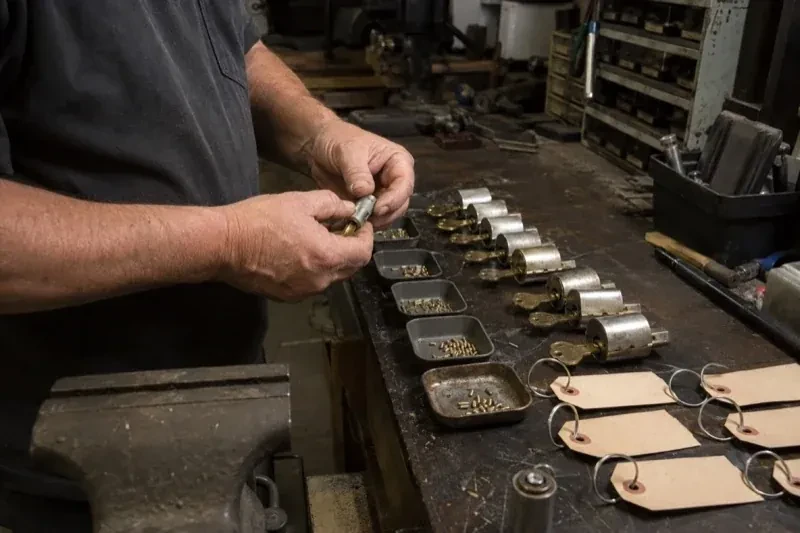
A small-format interchangeable core is a small figure-eight cylinder that slides out of the lever, deadbolt or padlock when a control key is turned, with no tools needed; larger doors sometimes use a large-format core with a different profile instead. A manager keeps the control key in the safe and a few spare cores on hand, so a missing key means the core is swapped in moments and repinned later. For a business with frequent staff turnover, it turns a call-out into a routine.
What should I do to look after a new key or lock afterward?
Very little beyond two simple habits: wipe the key clean before use, especially after a wet ride, and, where the lock's own maker calls for it, a light dose of the specified lubricant once or twice a year. Storing a spare somewhere other than on the machine itself rounds out the care a new key or lock generally needs.
Request a visit
Households in Madoc often collect locks from different decades that all take different keys. We rekey them to a single key where the hardware allows, replace the one or two that cannot be matched, and set up a spare that lives somewhere sensible. You leave with a lighter ring and a clear idea of which key does what.