Change or rekey · Madoc
Lock Replacement & Upgrade in Madoc
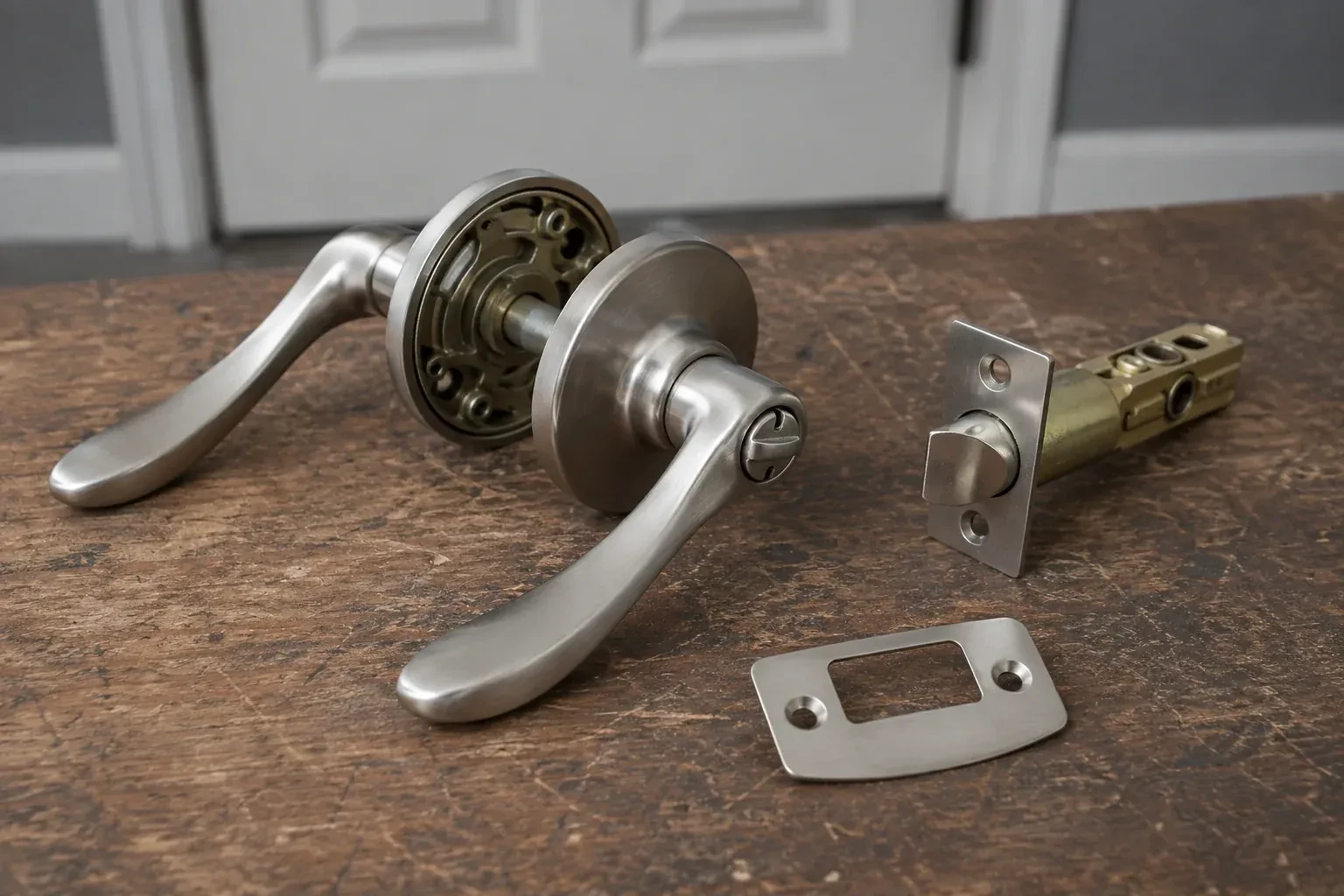
The house is fifteen years old and every exterior door still wears the light hardware the builder fitted: a short bolt, a thin strike held by two small screws, and a knob lock that never suited a street entrance.
In plain words
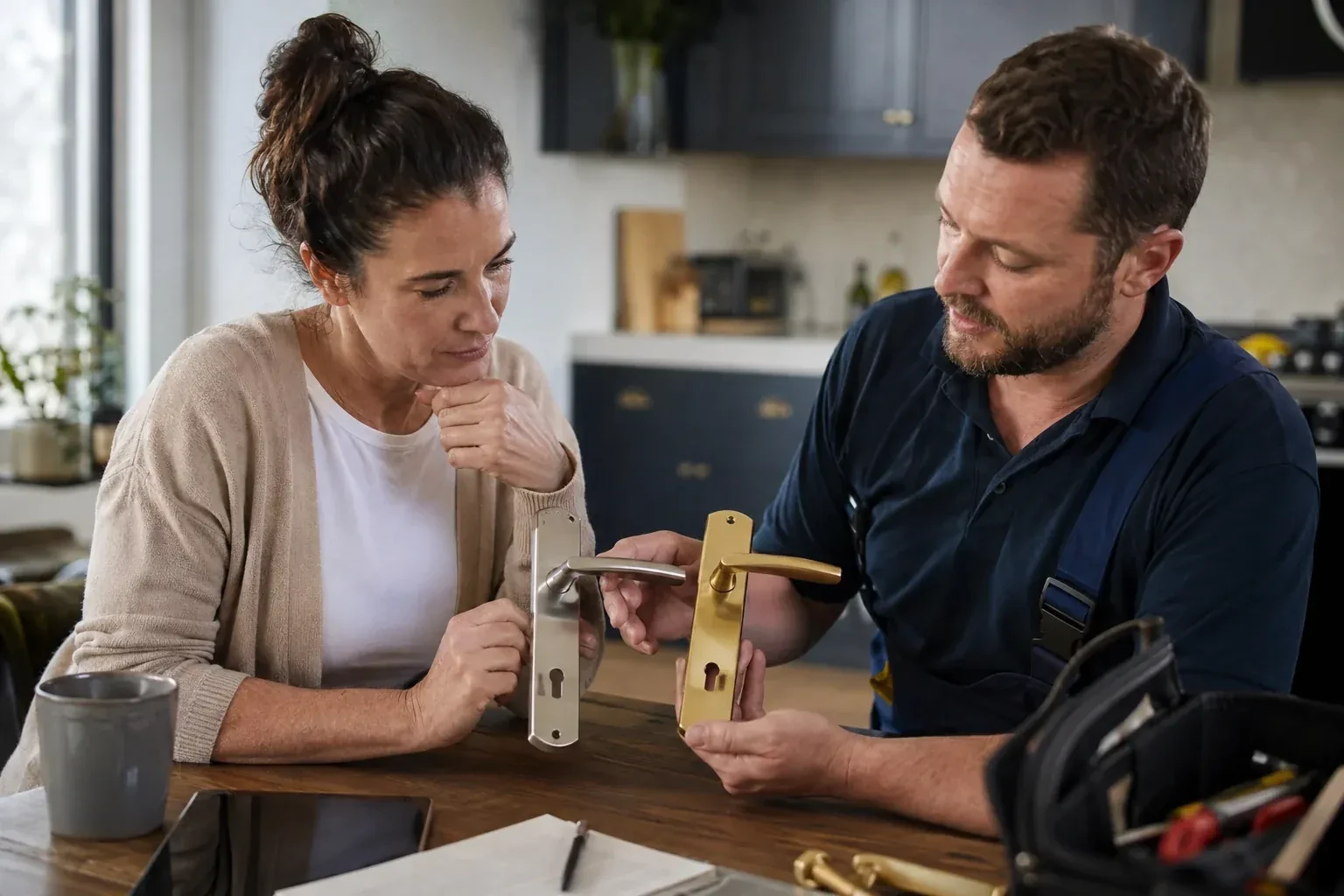
Moving into a home is the classic moment for this service, because you inherit whatever hardware and whatever key copies the previous owners left behind. The locksmith walks every exterior door with you and sorts the locks into three piles: sound hardware worth keeping and rekeying, worn hardware worth replacing, and doors with no deadbolt at all. Everything that stays is pinned to one new key, new locks are keyed to match, and old copies floating around town stop mattering. You leave the visit knowing exactly which key opens which door and how many of them exist.
How the visit goesThe keys the seller handed over came in a sandwich bag: six unlabelled copies for two locks of different makes from different decades. You have no idea how many more copies exist or who is holding them.
Lock Replacement & Upgrade
How the visit goes
How the old lock behaves in use
The locksmith works the existing hardware the way you do every day and watches for the tell-tale signs. A key that must be lifted or wiggled points to worn pins or a worn key. A knob that turns too far, or a lever that droops, suggests a tired spindle or spring. A latch that stays retracted, or a bolt that stops short, can be internal wear or something outside the lock altogether. Doing this with the door open first, then closed, separates faults inside the mechanism from faults in the fit of the door, and that distinction decides whether new hardware is the answer or part of the answer.
Keying the new locks to one key
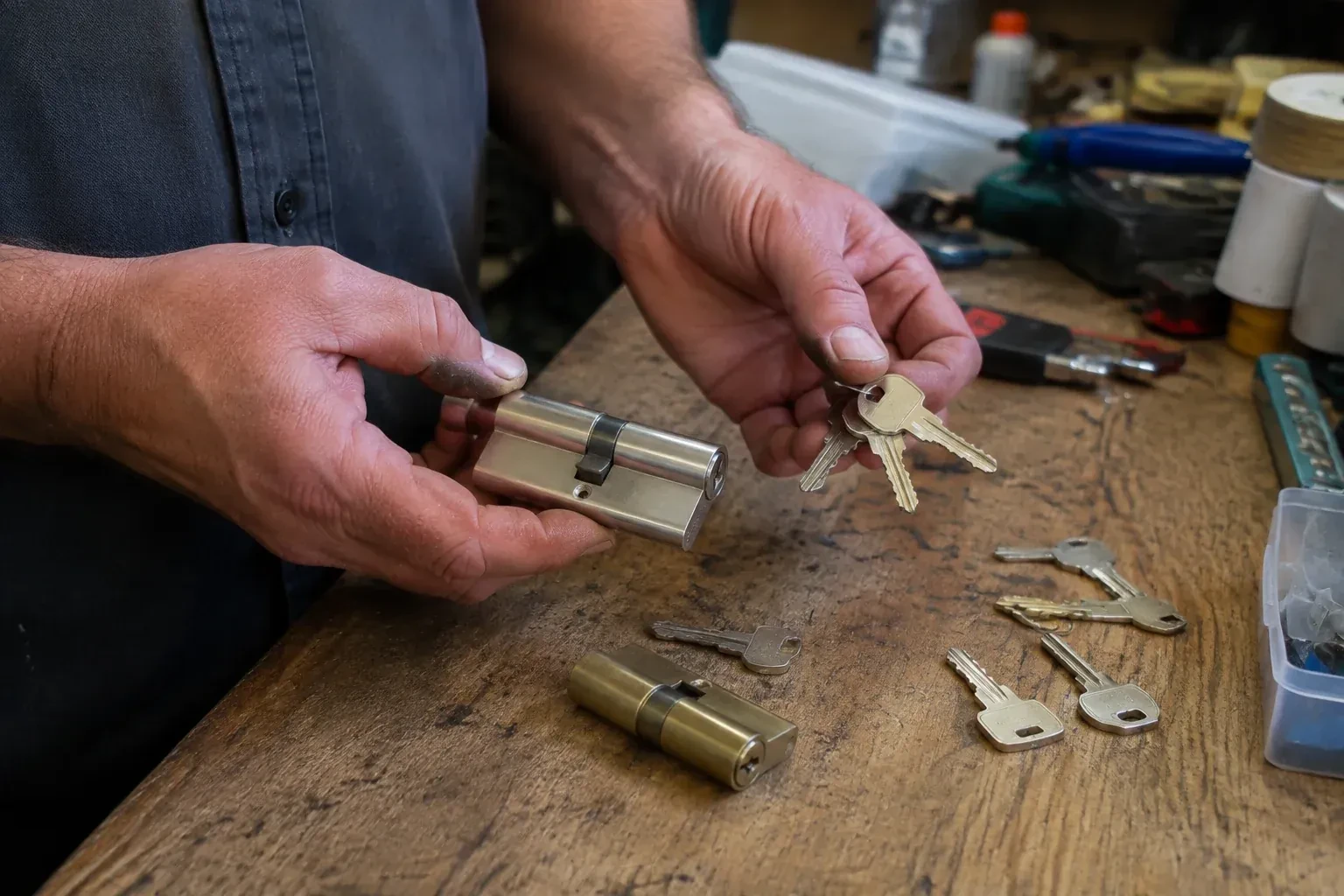
New cylinders arrive on random keys, so the locksmith pins them alike on site when you want one key for the house. Each cylinder is removed, the plug slid out on a follower so the springs stay put, and the bottom pins replaced to match a single new key. Existing cylinders that are staying are repinned the same way. Every key is then cut from the new combination, tried in every lock it should open, and any that drag are recut rather than handed over. The result is one key for the front, back and garage doors, and a clear count of how many exist.
Every lock tried the way you will use it
Before the tools go back in the van, each lock is operated from both sides with the door open, then closed, then closed hard against the weatherstrip. The latch should catch on its own when the door swings shut, the deadbolt should throw to its stop with a fingertip on the thumb-turn and no shoulder on the door, and the key should turn without lifting or jiggling. You are invited to try each one yourself and to lock up behind the locksmith. Anything that felt marginal has been adjusted, so the door you close that night behaves the same as the one you tested.
Lock Replacement & Upgrade
In the van
Adjustable latch or bolt
Manufacturer-approved cylinder lubricant
Filler plates and thick-door extension kits
Key blanks and key cutter
Graded deadbolt
Lock Replacement & Upgrade
What affects the quote
Condition of the old hardware
Hardware that comes off cleanly is one thing; painted-over trim, seized or stripped screws and a cylinder that has to be drilled out add time before the new lock can go on.
Patio and French door hardware
Sliding door mortise locks, foot bolts and flush bolts for an inactive French door leaf are specialty items sized to the door, and they are quoted as their own line beside the entrance work.
Special-order hardware
Most standard locks come from the van. A specific style, an unusual finish or a restricted system may need ordering, which affects scheduling and is noted in the quote rather than discovered on the day.
What to have ready
- Is the door wood, steel or fibreglass, and roughly how thick is it?
- How many keys does the household need, and should copying be restricted?
- Has the door been forced or damaged, or does it need a push to lock?
Lock Replacement & Upgrade: questions
QuestionsWill a new lock fit the holes already in my door?
Usually, yes. Most residential doors are prepared to standard sizes, a 54 millimetre cross bore and a backset of 60 or 70 millimetres, and most modern hardware adjusts between those backsets. The locksmith measures before choosing, so the new lock is matched to the door rather than the other way around. Where an older mortise lock or an unusual bore is found, filler plates, extension kits or a carefully jigged new bore bring the door to standard.
Can I replace only the deadbolt and keep my existing knob?
Yes. The deadbolt and the knob or lever are separate locks in separate bores, so one can be replaced while the other stays. The new deadbolt can be pinned to work on the same key as the knob if the keyways are compatible, and its finish can be matched to the knob so the door looks intended. Replacing the deadbolt first is a sensible order, since it does most of the securing.
What information helps before the visit?
Photographs of each lock from outside and inside, plus one of the door edge showing the latch plate and one of the strike on the frame, tell the locksmith most of what they need. Add the door thickness if you can measure it, whether the door is wood, steel or fibreglass, the finish you want to match, how many doors are involved and whether you want them all on one key.
Related services
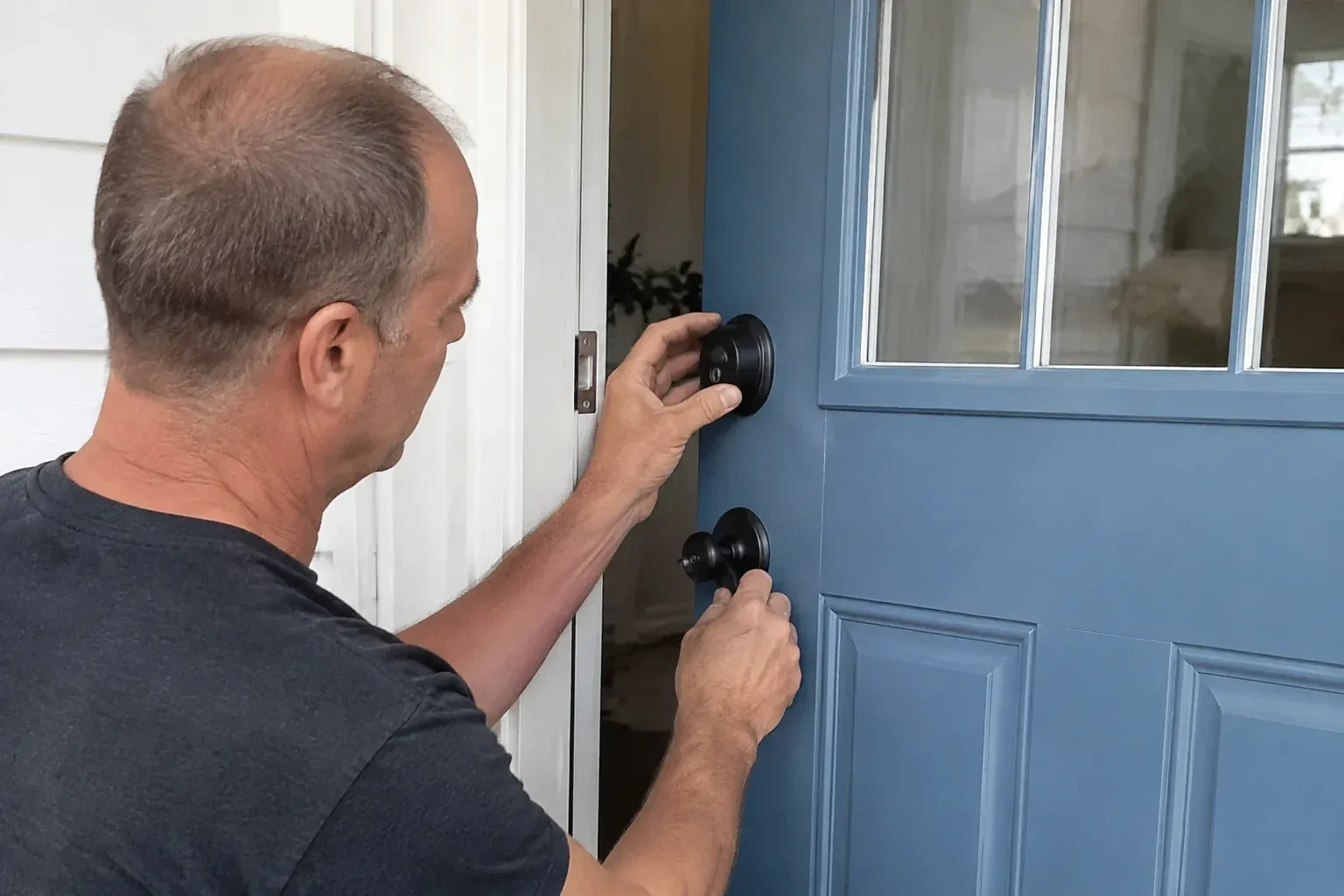
- Deadbolt InstallationSomeone tried the door last winter.
- Vintage Mortise Lock ServiceThe key turns freely in the round cylinder on the door, all the way around and back, without the bolt shifting at all.
- Smart Lock InstallationYour mother still lives on her own, and the personal support worker, the pharmacy delivery and two siblings all need to get in on different days.