Locksmith in Brampton, OntarioVintage hardware,cared for properly
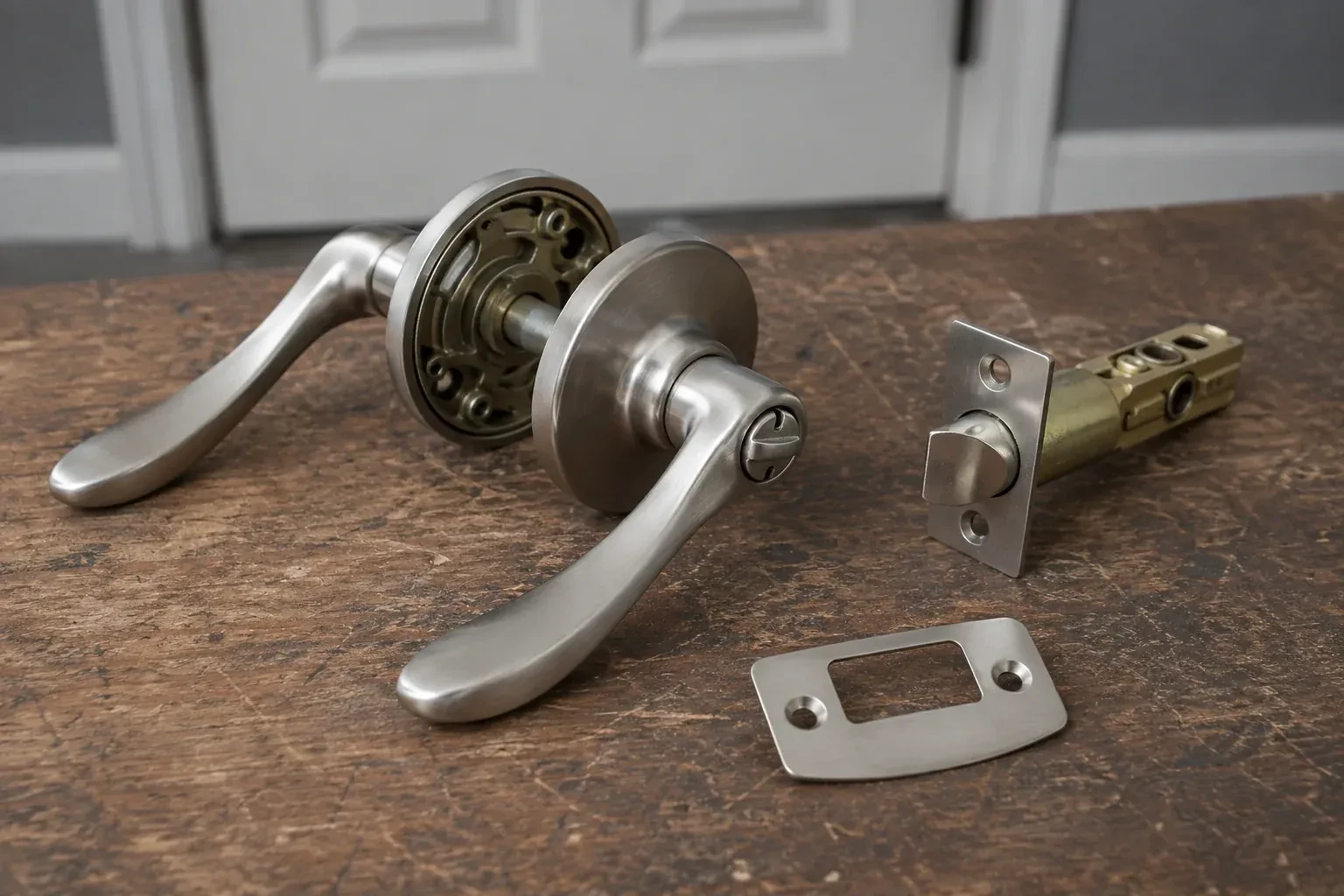
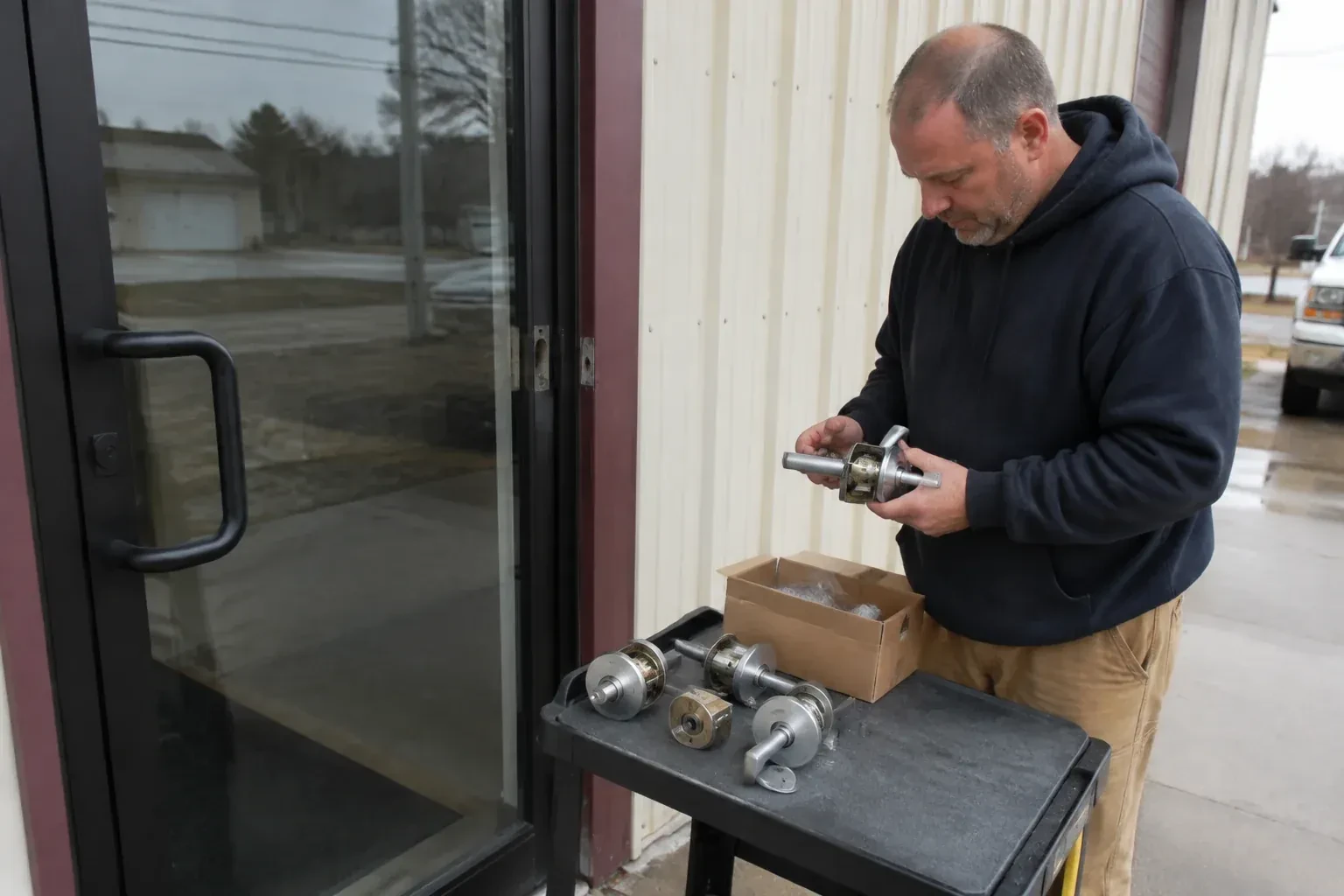
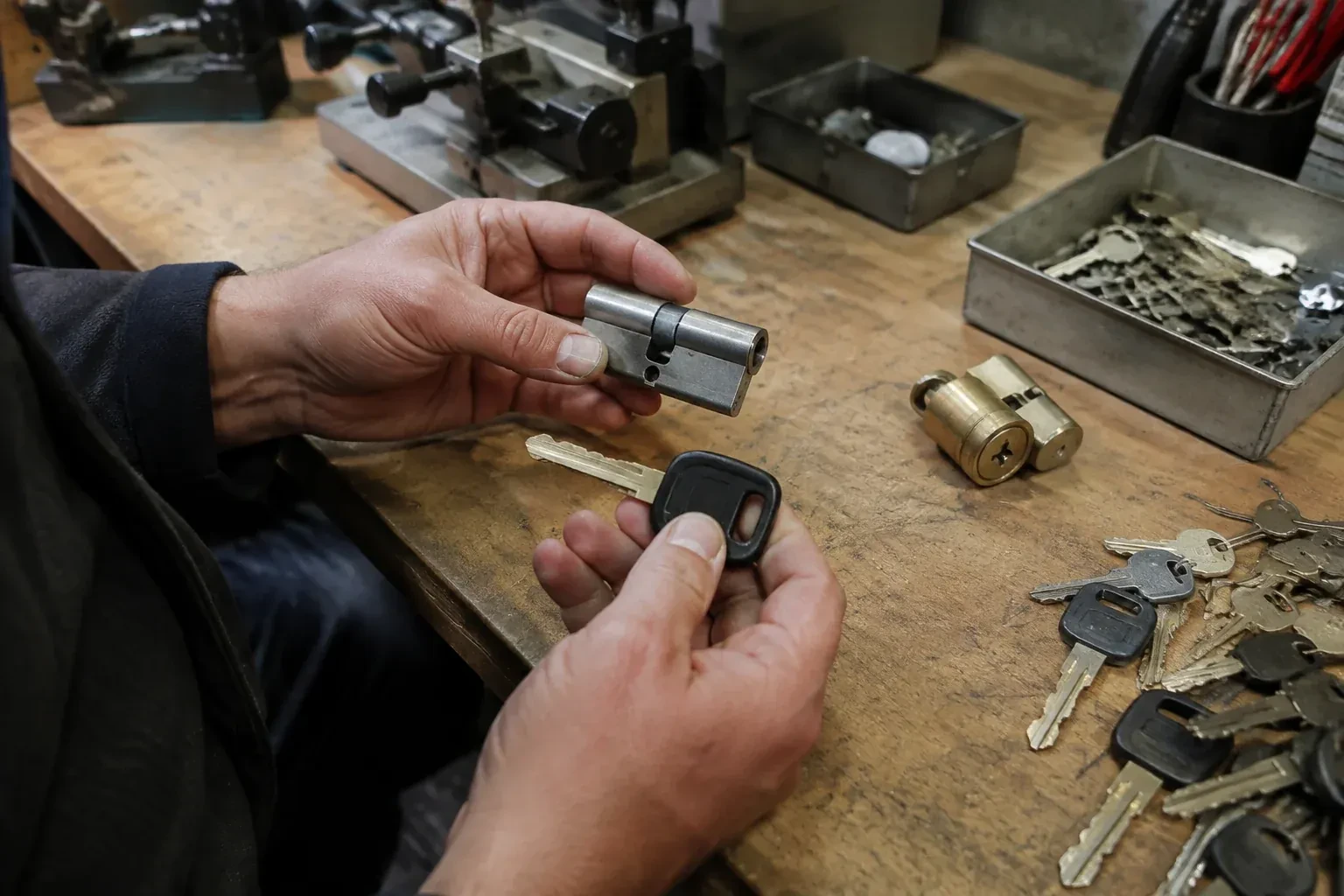
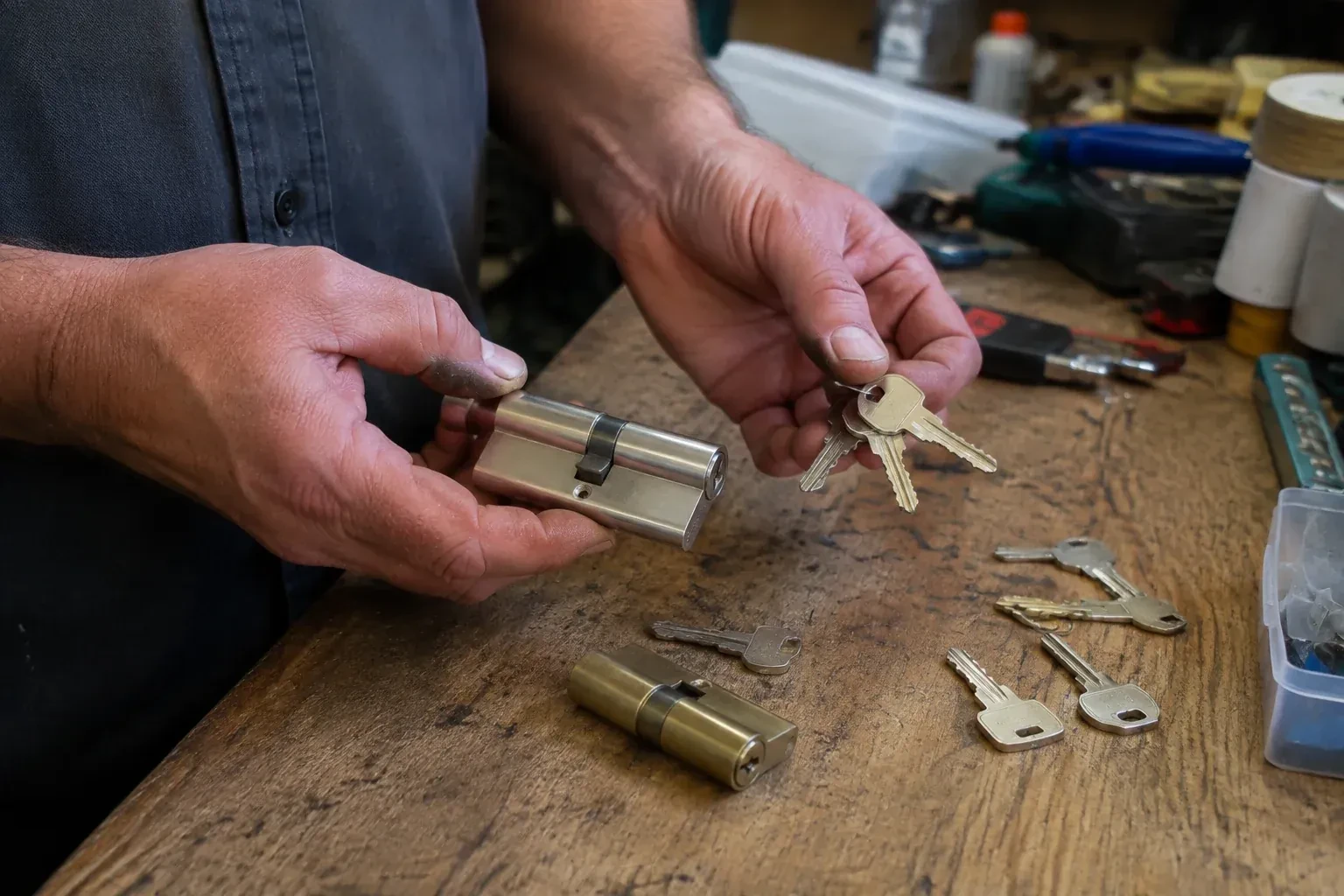
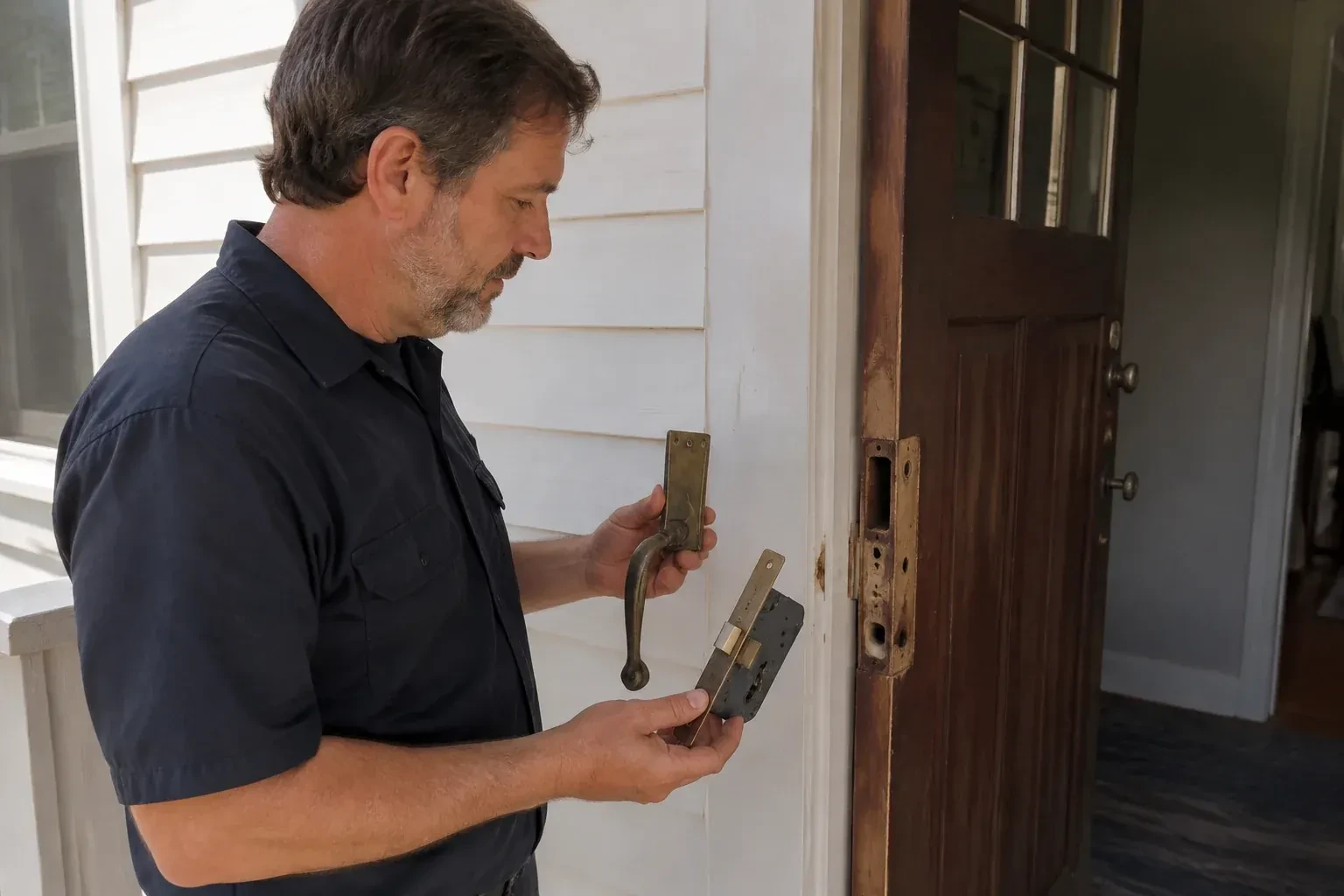
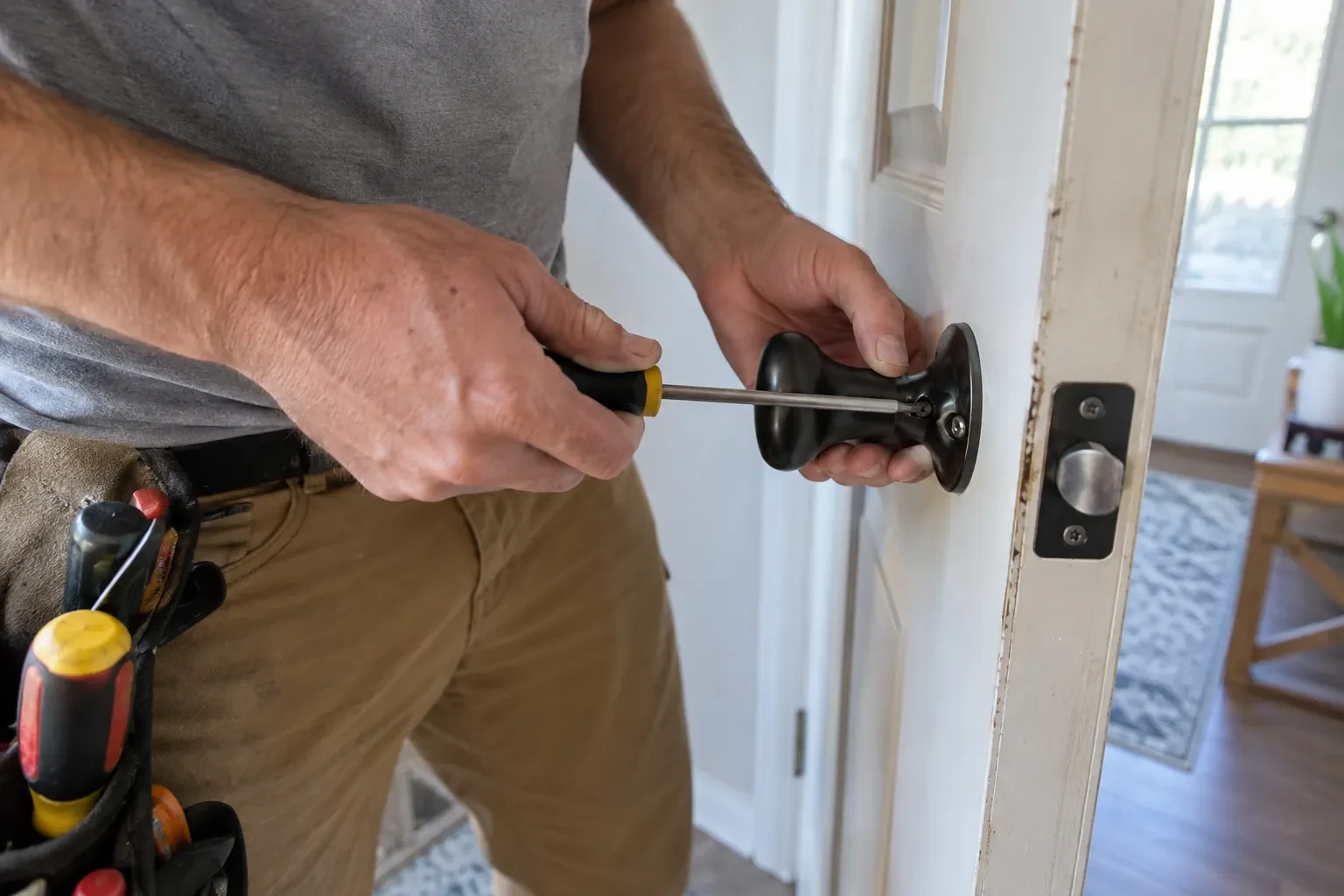
Glass knobs, ornate escutcheons and mortise cases that have turned for generations deserve a locksmith who knows them. In Brampton we clean, rebuild and re-spring old mechanisms, cut keys for locks that no longer have one, and match period-appropriate parts so the door keeps its face. We serve Mayfield as well.
Glass knobs, ornate escutcheons and mortise cases that have turned for generations deserve a locksmith who knows them. In Brampton we clean, rebuild and re-spring old mechanisms, cut keys for locks that no longer have one, and match period-appropriate parts so the door keeps its face. We serve Mayfield as well.
Careful work on every kind of lock.
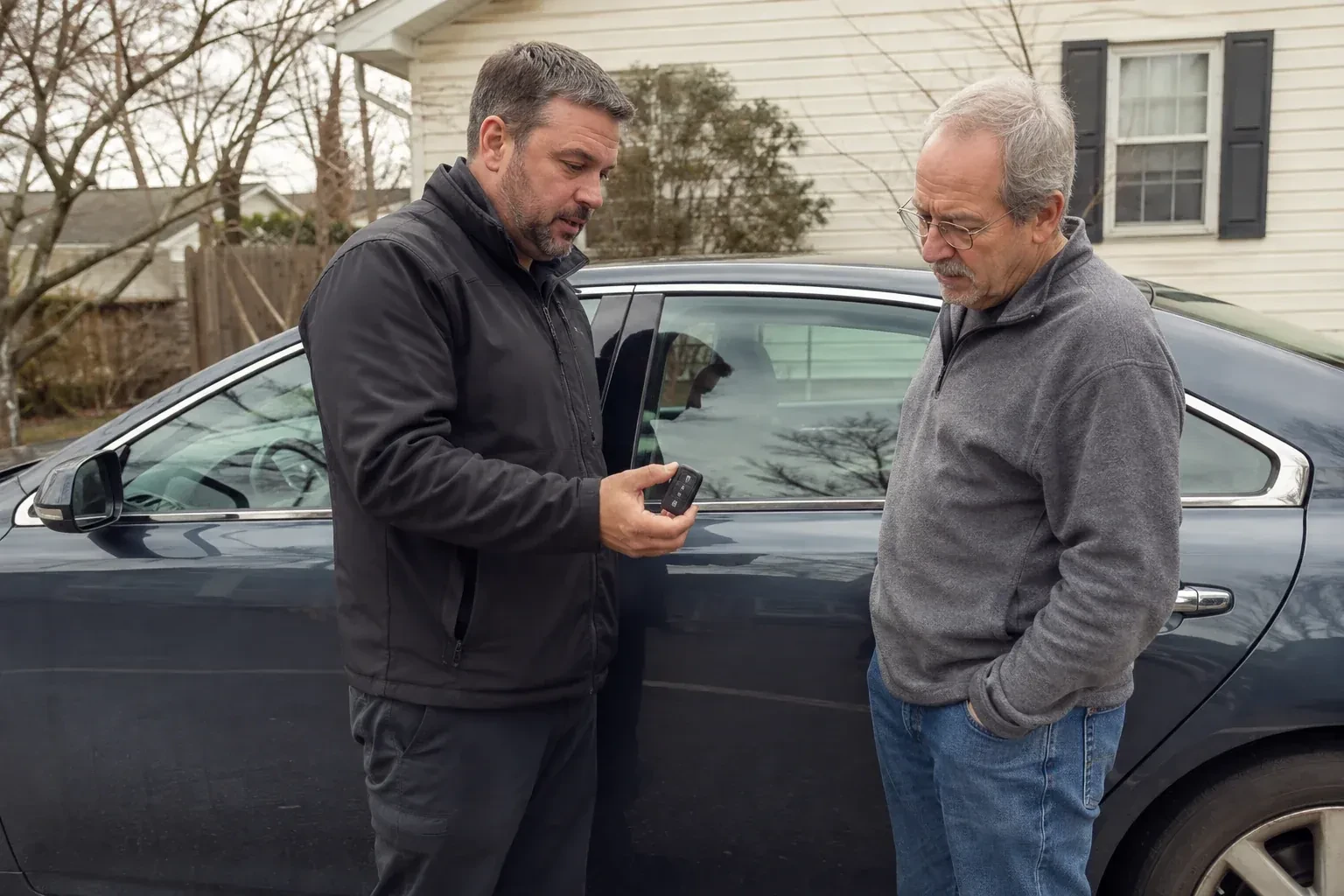
Every job in Brampton starts with a proper look before anyone touches a tool. The locksmith checks the cylinder, the latch, the strike and the way the door sits in its frame, then tells you what he found and what he suggests. The price is given at the door once that look is done, so it reflects the actual hardware rather than a guess, and it is the same fee at any hour.
Whether your door in Brampton is on a century home, a new townhouse or a unit above a shop, the questions are the same. Does it close properly? Does the key turn cleanly? Who else has one? We answer those with a careful look, straightforward options and tidy work, and we treat your time and your property with respect.
31years in business
24/7open every day
A straight assessment. If the lock is fine and the door just needs adjusting, we say so. If it has reached the end of its life, we say that too, and show you why.
Options laid out side by side. Repair, rekey, replace or upgrade, with what each involves and what it changes. You pick; we do not steer you toward the biggest job.
Finished, not nearly finished. Every key tested in every lock, every screw tight, every strike aligned, and the packaging in our van rather than your bin.
For a household in Brampton the common requests are a rekey after moving in, a lockout, a deadbolt that grinds, and a lock that finally needs replacing. For a business they are storefront hardware, staff key control and exit devices. Both lists, and a few less common jobs, are laid out here.
About 23% of homes in Brampton were built in 1980 or earlier, according to the 2021 Census.
Newer homes
Newer homes are built to standard bores and backsets, so nearly any modern deadbolt, lever set or smart lock fits straight on. The locksmith can offer a wide range of hardware knowing it will mount cleanly without new holes.
Single-detached houses make up about 53% of homes in Brampton (2021 Census).
Where housing types are mixed, the same lost-key call means different things. In a house, rekey every door on the property. In an apartment, rekey the suite door and check with management about the common entrance. The locksmith asks which it is first.
Most forced entries go through the strike and frame, not the cylinder, so this group treats the door as one assembly: hardened bolt, deep strike, three-inch screws, sound hinges, and a cylinder that defeats picks and drills on top of all that.
The house is fifteen years old and every exterior door still wears the light hardware the builder fitted: a short bolt, a thin strike held by two small screws, and a knob lock that never suited a street entrance.
A commercial door works harder than a house door. It opens hundreds of times a day, in all weather, for people who do not own it. The hardware and the key control have to reflect that, and this section explains how we approach both.
A safe sat in a late parent's basement for years, its combination known to nobody left in the family, and everyone would like to know what is actually inside it.
The keypad on the office safe blinks a low-battery warning every morning now, and whoever notices it first quietly hopes someone else deals with it before the batteries finally give out mid-week.
Which fix fits?
You are inside, the deadbolt is thrown, and the thumb-turn will not budge.
WhyMoving into a home is the classic moment for this service, because you inherit whatever hardware and whatever key copies the previous owners left behind.
Your mother still lives on her own, and the personal support worker, the pharmacy delivery and two siblings all need to get in on different days.
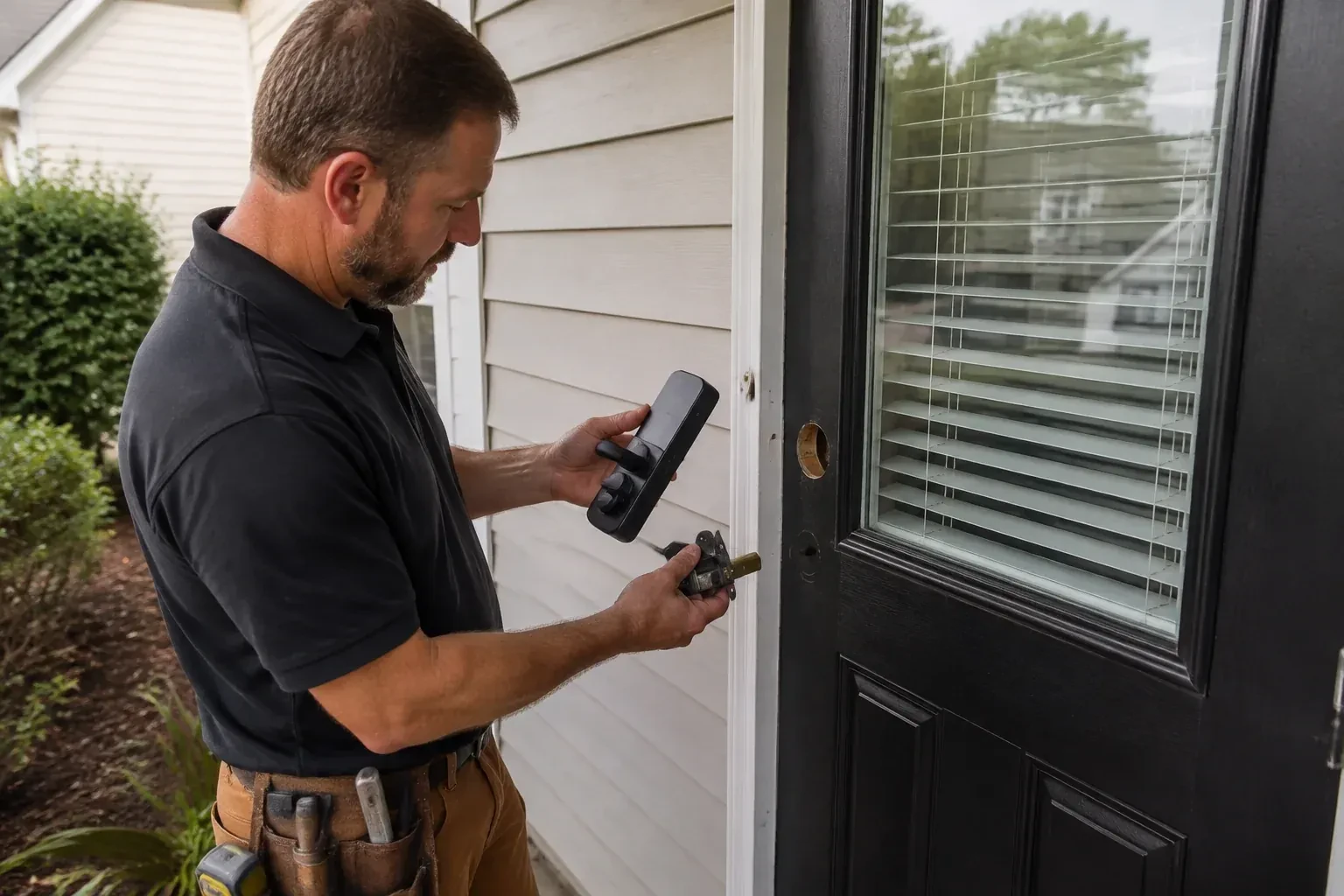
WhyMost of the skill in fitting a smart lock goes into the door rather than the electronics.
Pry marks circle the dial after an overnight break-in attempt, and the safe now refuses every number that used to open it, as if something inside has locked itself down.
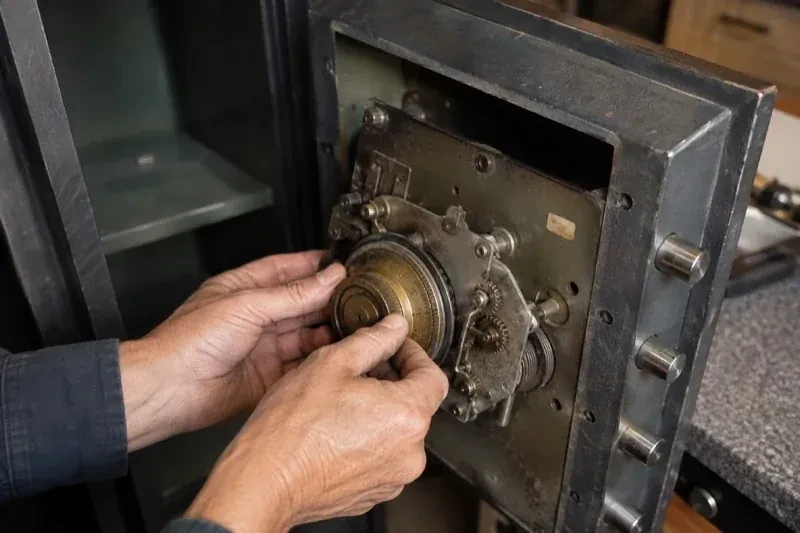
WhyA safe that arrives with no history at all, through an estate, an auction or a property changing hands, gets treated as an unknown until the locksmith reads it directly: the data plate, the lock type, the dial or keypad style, and any wear that hints at its age.
The drawer behind the counter holds a tangle of keys with tape labels: front old, side, Dave.
WhyTaking over a commercial unit is the moment to make the locks yours.
The key to the office entrance turns with almost no resistance now, and some mornings the deadbolt does not fully retract until someone jiggles the handle and tries the key again.
WhyWhen the keys are truly gone, a car lockout call becomes two jobs in one visit.
A teenager just passed a driving test and reasonably wants a key of their own rather than negotiating over the family's single copy every time the car is needed.
WhyA vehicle used by more than one person, such as a shared family car, a small business van or a vehicle looked after by a caretaker, works better with a key for each regular driver rather than one ring changing hands.
Your key turns smoothly in the driver's door, the same as it always has, but the button underneath stays down and the latch never releases.
WhyA used vehicle sometimes arrives with a lock or two that never quite matched the rest, whether from a prior repair, a replaced door, or a key cut from a worn original.
Good days. Start with a turn.
1/9Seized & Jammed Lock Opening
You are inside, the deadbolt is thrown, and the thumb-turn will not budge. It moved a little last week with some effort. Now the door you walk through every day is a wall, and you need it open.
The century home's original mortise lock takes a key the size of a spoon, sticks in humid weather and has worn its strike to a groove. You want a lock that works every day without giving up the old door.
Your mother still lives on her own, and the personal support worker, the pharmacy delivery and two siblings all need to get in on different days. Cutting keys for everyone feels wrong; a code for each person, with a log, feels right.
Pry marks circle the dial after an overnight break-in attempt, and the safe now refuses every number that used to open it, as if something inside has locked itself down.
The drawer behind the counter holds a tangle of keys with tape labels: front old, side, Dave. Some open things, some open nothing, and the hardware-store copies mean the true count drifted long ago past anything written down.
The key to the office entrance turns with almost no resistance now, and some mornings the deadbolt does not fully retract until someone jiggles the handle and tries the key again.
Your toddler is buckled in the back seat, the doors locked when you shut yours, and your keys are on the front seat beside your phone. It is hot, the child is starting to fuss, and you need help this minute, not a discussion.
A teenager just passed a driving test and reasonably wants a key of their own rather than negotiating over the family's single copy every time the car is needed. Two drivers and one key keep colliding on the same schedule.
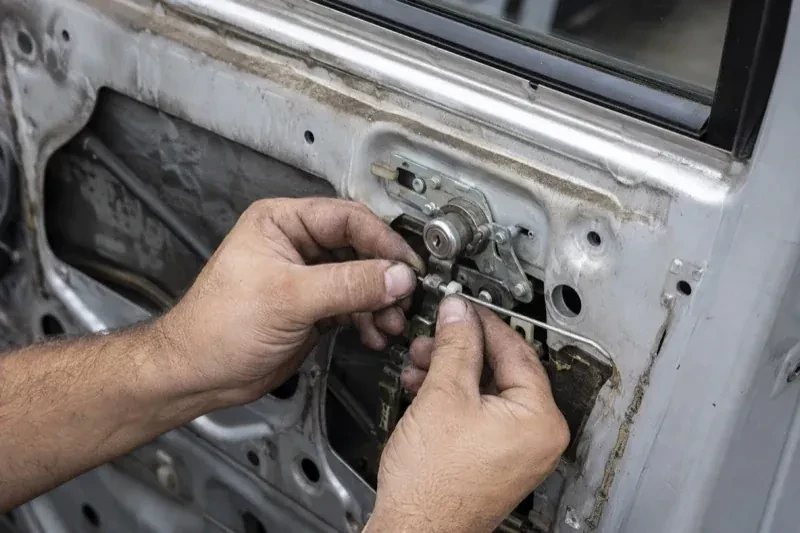
Your key turns smoothly in the driver's door, the same as it always has, but the button underneath stays down and the latch never releases. The passenger side opens without any trouble, so the key itself is clearly not the source of the trouble.
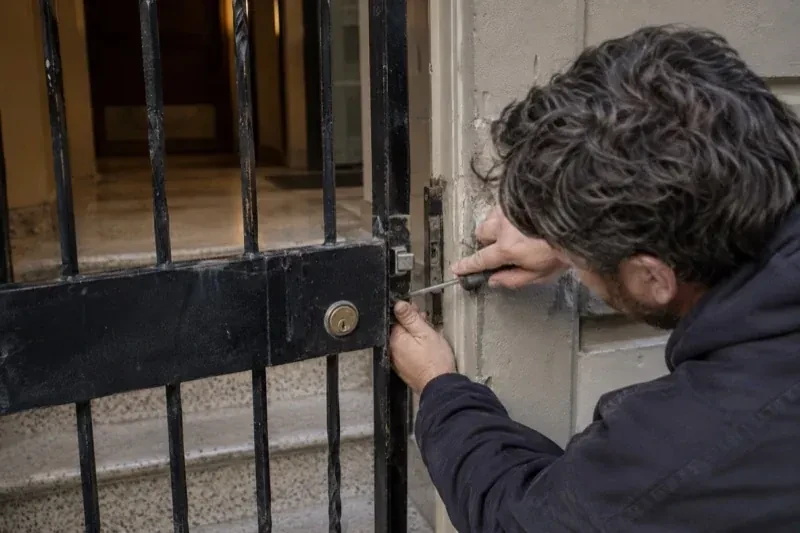
Locks rarely fail in a day; they fail slowly over months and announce it in a morning. Grit and old lubricant build up in the pin stacks until one cold night thickens them past the point the key can overcome, or a door that has been drifting on its hinges finally pins the bolt after a humid week. The wiggle you needed last month was the warning. A lock in this state is usually cleaned or adjusted back to health rather than replaced.
Can I replace only the deadbolt and keep my existing knob?
Yes. The deadbolt and the knob or lever are separate locks in separate bores, so one can be replaced while the other stays. The new deadbolt can be pinned to work on the same key as the knob if the keyways are compatible, and its finish can be matched to the knob so the door looks intended. Replacing the deadbolt first is a sensible order, since it does most of the securing.
Is a smart lock as secure as a regular deadbolt?
The part that resists force is the same: a steel bolt, a solid strike with long screws and a door that closes true. Smart deadbolts meet the same residential hardware standards as mechanical ones, and a reinforced strike goes in regardless of which you choose. Where a smart lock adds is on the human side: codes that can be revoked and a door that locks itself, plus, on a key-free model, no keys to copy or lose. Good habits, such as unique codes and updates, keep the electronic side tidy.
Can a safe be repaired instead of replaced after drilling?
Often, yes, particularly for a mechanical lock, where a worn wheel pack, drive cam or spindle can be replaced individually within the existing lock body. An electronic lock's circuit board and keypad are less often repairable in place and are more commonly swapped for a comparable or higher-rated replacement unit that fits the same cutout.
What is an interchangeable core and why is it suggested for staff turnover?
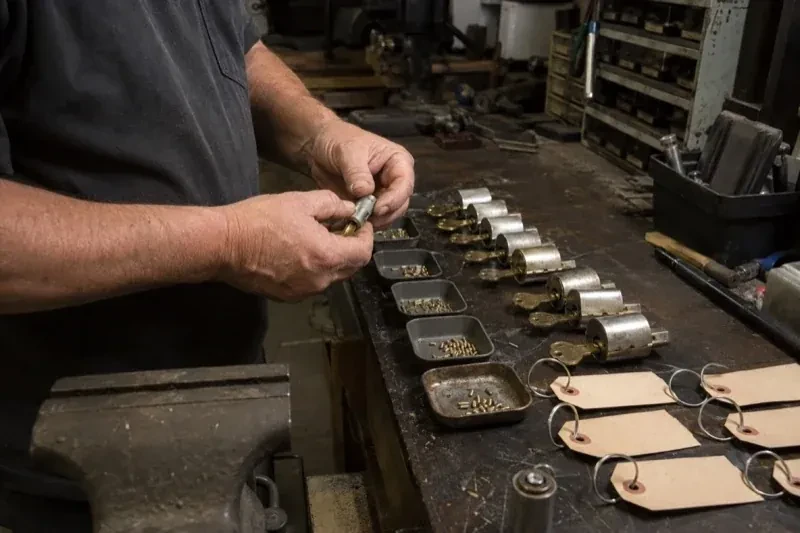
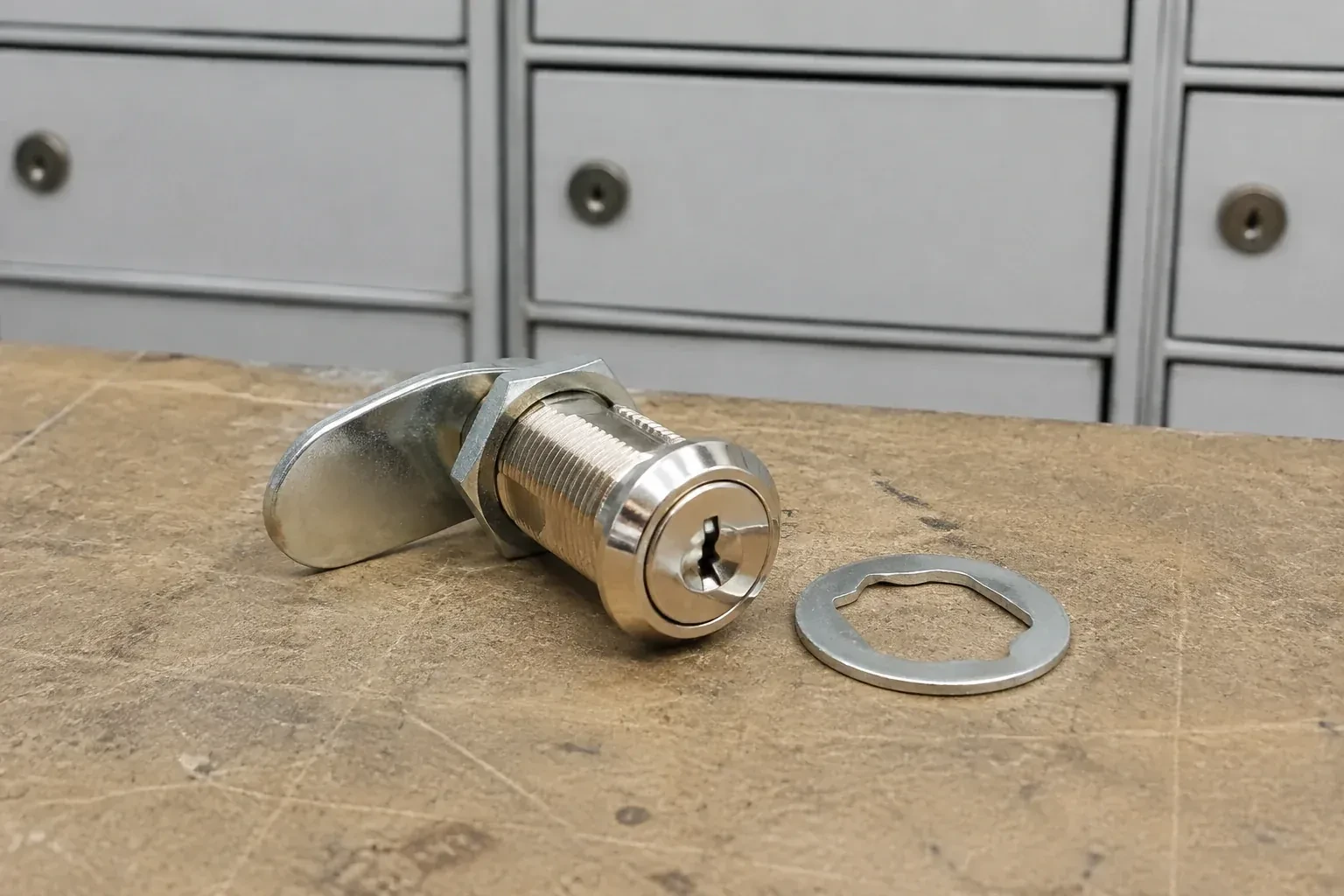
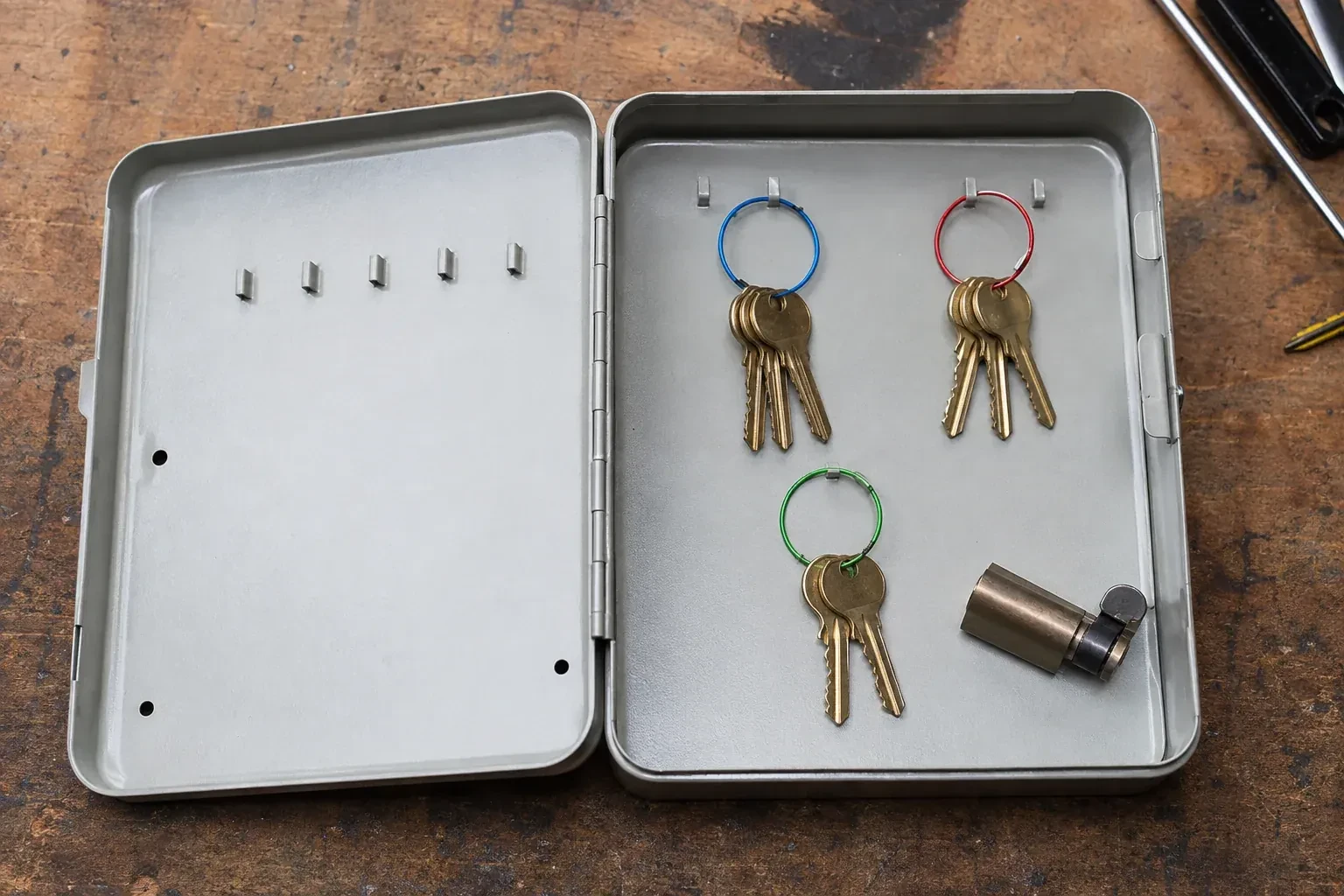
A small-format interchangeable core is a small figure-eight cylinder that slides out of the lever, deadbolt or padlock when a control key is turned, with no tools needed; larger doors sometimes use a large-format core with a different profile instead. A manager keeps the control key in the safe and a few spare cores on hand, so a missing key means the core is swapped in moments and repinned later. For a business with frequent staff turnover, it turns a call-out into a routine.
Can you install a restricted or patented keyway?
Yes. A restricted keyway limits duplication to keys cut through the manufacturer or an authorized distributor rather than at an ordinary hardware counter, though the exact registration and proof-of-entitlement steps vary by system; a patent-protected keyway adds a further, legally backed layer of control on top of that. This is a common step for a business tightening key control after a lost key or staff turnover.
There is a dog inside and the car is getting hot. Who do I call?
Call 911, and the provincial animal protection line if you cannot reach the owner; the province asks the public to report animals left in hot or cold vehicles rather than break glass themselves. Police and animal welfare inspectors have authority to enter a vehicle for an animal in distress. A locksmith can attend as well, and if you are the owner, the same careful opening gets you and the dog reunited with the car undamaged.
Does cold weather affect a key fob?
Yes, in a couple of small ways. Battery performance drops in cold temperatures, so a fob that already had a fading battery is more likely to act up on a cold morning, and a proximity system's range can feel shorter in the cold as well. Testing a spare's battery before winter, and keeping a spare battery on hand, avoids being caught out by either.
What causes a car door lock to seize up in winter?
Meltwater from a thaw can run into the keyway during the day and refreeze overnight, and road salt and brine thickens grease inside an older cylinder. Both make the key resist turning or stop partway, and both respond well to gentle warming or a lock de-icer rather than force.
Request a visit
Every job in Brampton starts with a proper look before anyone touches a tool. The locksmith checks the cylinder, the latch, the strike and the way the door sits in its frame, then tells you what he found and what he suggests. The price is given at the door once that look is done, so it reflects the actual hardware rather than a guess, and it is the same fee at any hour.