Car keys · Brampton
Key Fob Programming
A cracked case or a spin through the wash left the fob unresponsive, and opening it up reveals a slightly corroded board where the buttons used to sit.
In plain words
A new, unregistered replacement fob is, electronically, a blank slate until it has been matched to one specific vehicle; a used fob is checked rather than assumed the same, since some OEM smart keys become permanently unusable once reset or removed from a vehicle. Programming reads the vehicle's identifying information, confirms the new fob is a compatible part, and writes it into the vehicle's accepted list. From that point the new fob behaves the same as a factory original, answering the same buttons and, where equipped, letting the engine start without the fob leaving a pocket.
How the visit goesA cracked case or a spin through the wash left the fob unresponsive, and opening it up reveals a slightly corroded board where the buttons used to sit. The mechanical blade still turns the lock on its own, but the wireless side of the fob has gone silent.
Key Fob Programming
How the visit goes
Battery, buttons or the hidden chip
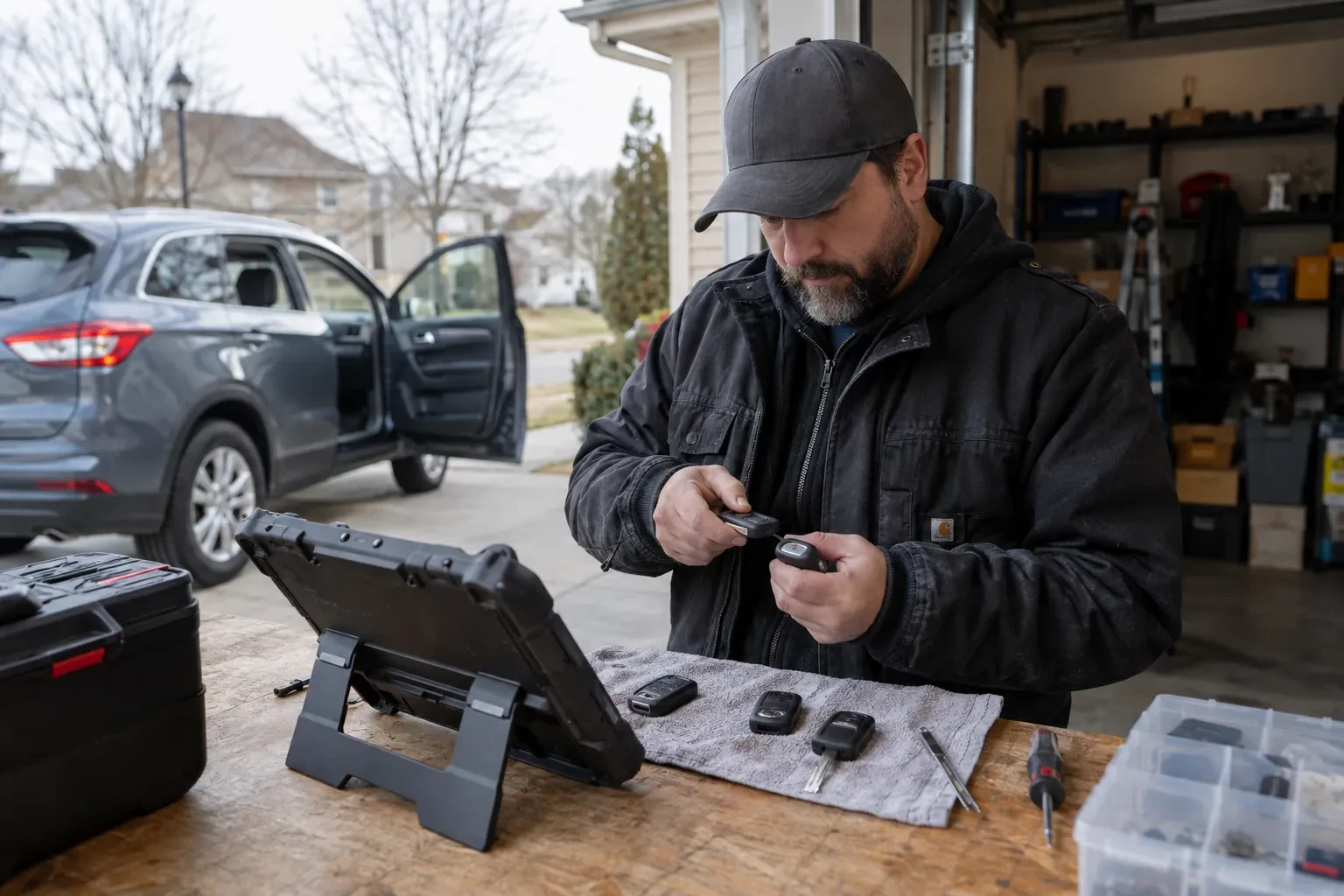
A fob that has gone quiet is checked in layers before anything is assumed. The battery is tested first, since a fading coin cell is the most common reason a remote stops answering while the mechanical blade still turns the door. If a fresh battery changes nothing, the buttons and the small circuit board are examined for wear, cracks or corrosion. Only once the physical fob is ruled out does the check turn to the vehicle's own memory, since a fob can be in working order and still be missing from the accepted list.
Registering the fob to its vehicle
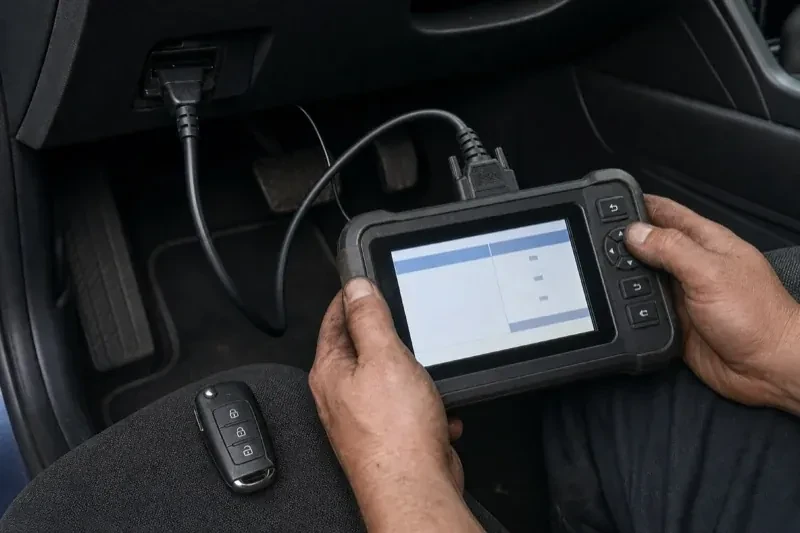
With the vehicle and the fob identified, the registration procedure runs through a diagnostic connection built for that specific system, most often the same port used for other vehicle diagnostics. The exact sequence that model calls for is followed step by step, since the order and the timing between steps varies from one manufacturer to the next. When the procedure completes, the fob is now part of the vehicle's accepted list rather than an unrecognized piece of plastic with buttons on it, and it is treated as a working key from that point forward.
Knowing where this vehicle stands going forward
For a vehicle that turned out to need manufacturer-level access, the household leaves the visit with a clear picture rather than an unresolved gap: what was tried, what the vehicle actually requires, and which fobs are ready to go the moment that next step happens. Nothing sourced during the visit needs to be redone, and the eventual appointment, wherever it happens, starts from a documented position instead of repeating the same identification work from scratch.
Key Fob Programming
In the van
Precision case-opening tools
Replacement fob shell and buttons
Vehicle-specific key programmer
Fob and remote signal tester
Diagnostic port interface cable
Key Fob Programming
What affects the quote
Vehicle age and how common its parts are
Fobs for a common, recent vehicle are usually easier to source than for an older or less common model, where a compatible part may take longer to locate, and that availability affects the quote.
Whether the vehicle has been worked on before
Prior attempts at programming, a fob that has already been opened, or settings that already look altered can add time to confirming the vehicle's current state before new work proceeds.
Which key system the vehicle uses
A basic remote-and-blade key, a transponder key, or a full proximity fob with passive entry and remote start each involve different parts and different procedures, and that difference is reflected in the quote from the first assessment.
What to have ready
- Was the vehicle bought used, and how many fobs came with it?
- Is any fob genuinely lost, or just misplaced at home?
- Is a new driver being added to the vehicle's key list?
Key Fob Programming: questions
QuestionsWhat should I have ready before a key fob programming visit?
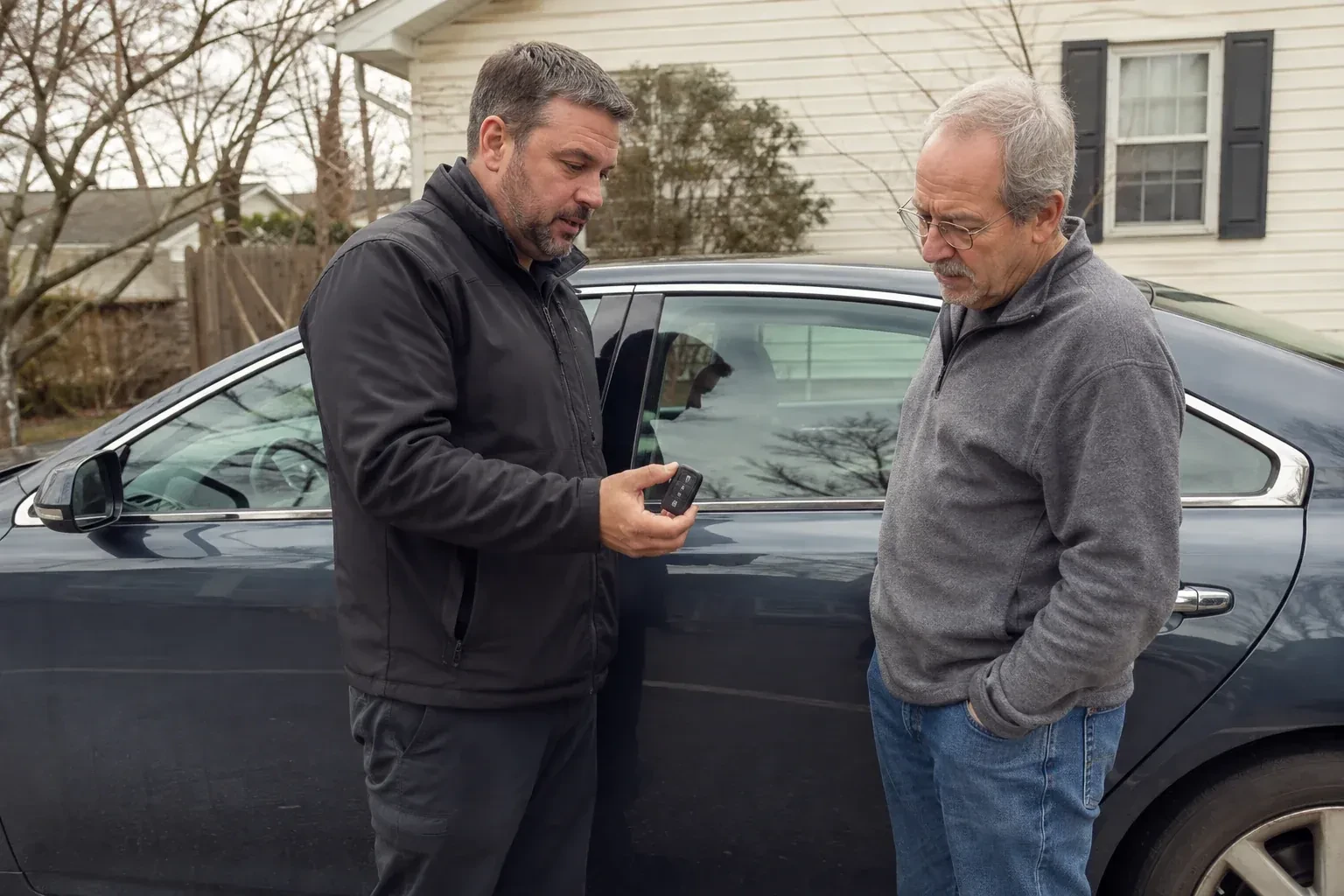
The vehicle's identification number, proof that you own or are authorized to use it, and an honest count of how many fobs exist for the car, working or not. Mention whether any fob is truly lost rather than misplaced at home, and whether the vehicle currently starts with the fob you do have. That picture lets the right procedure and parts be settled before work begins rather than partway through it.
Does key fob programming use my car's diagnostic port?
On most vehicles, yes. The same connection point used for other vehicle diagnostics is typically how a fob's registration procedure communicates with the car's onboard systems. A few older or simpler key systems are programmed through a different in-car sequence instead, which is one more reason the vehicle's year and model are checked before the procedure begins.
I bought a used car with only one fob. What are my options?
Ownership of the vehicle is confirmed first, since a fob is only added for someone who can show they now hold the vehicle. From there, an additional fob is sourced and registered alongside the one you have, or, if you would rather not rely on a single fob at all, a second and third can be added in the same visit.
Related services
- Car Key ReplacementMinus twenty outside, the fob button does nothing, and the door keyhole has a crust of road salt over it because you have not used a metal key in that car since the day you bought it.
- Spare Car Key DuplicationTwo coworkers share one delivery van and one key between them, trading it at the start and end of every shift in a parking lot.
- Transponder Key ProgrammingThe remote fob has gone silent, the doors won't unlock with a button press, and the little emergency blade tucked inside it has not been used since the day the car was bought.