Car keys · Brampton
Car Key Replacement
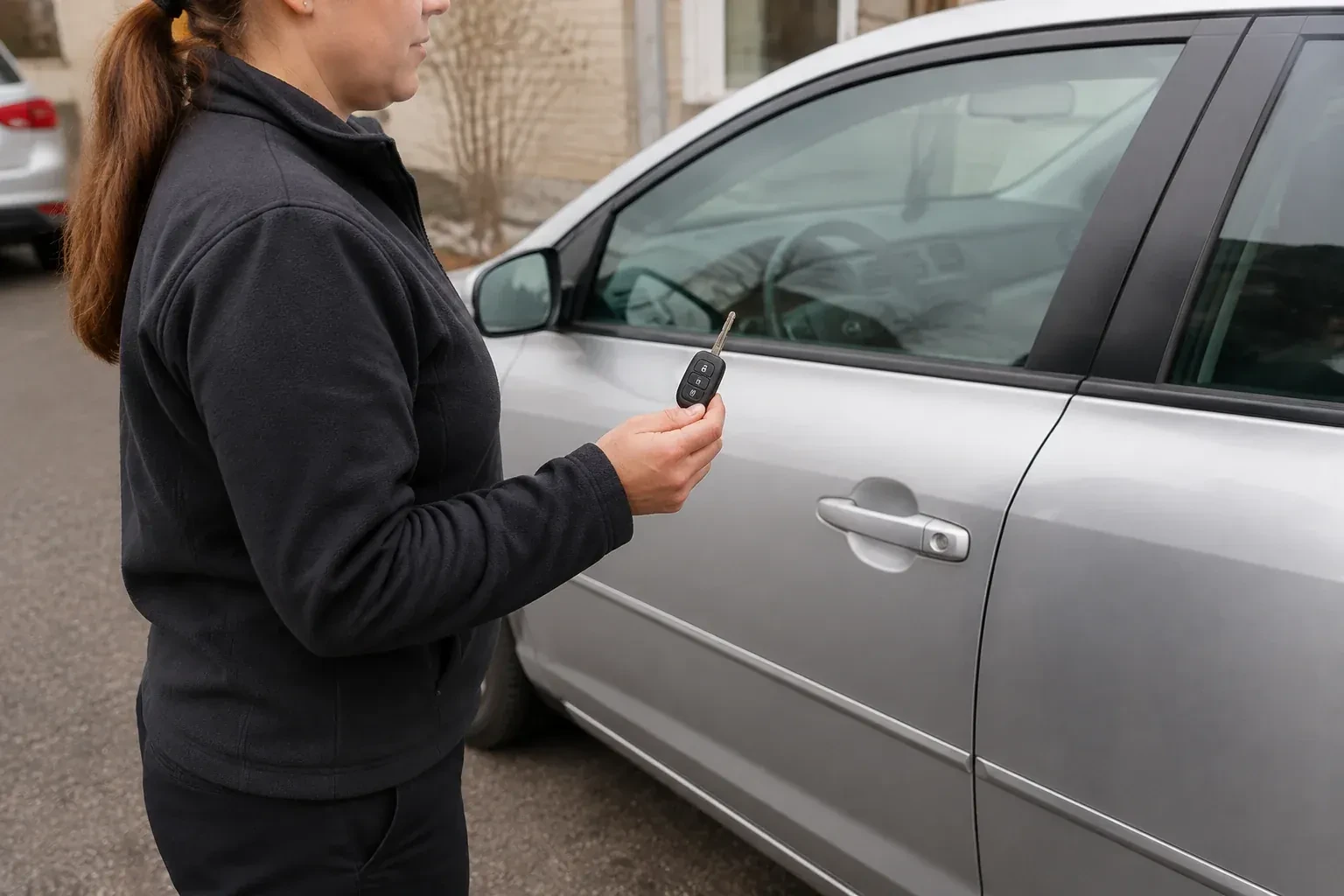
Minus twenty outside, the fob button does nothing, and the door keyhole has a crust of road salt over it because you have not used a metal key in that car since the day you bought it.
In plain words
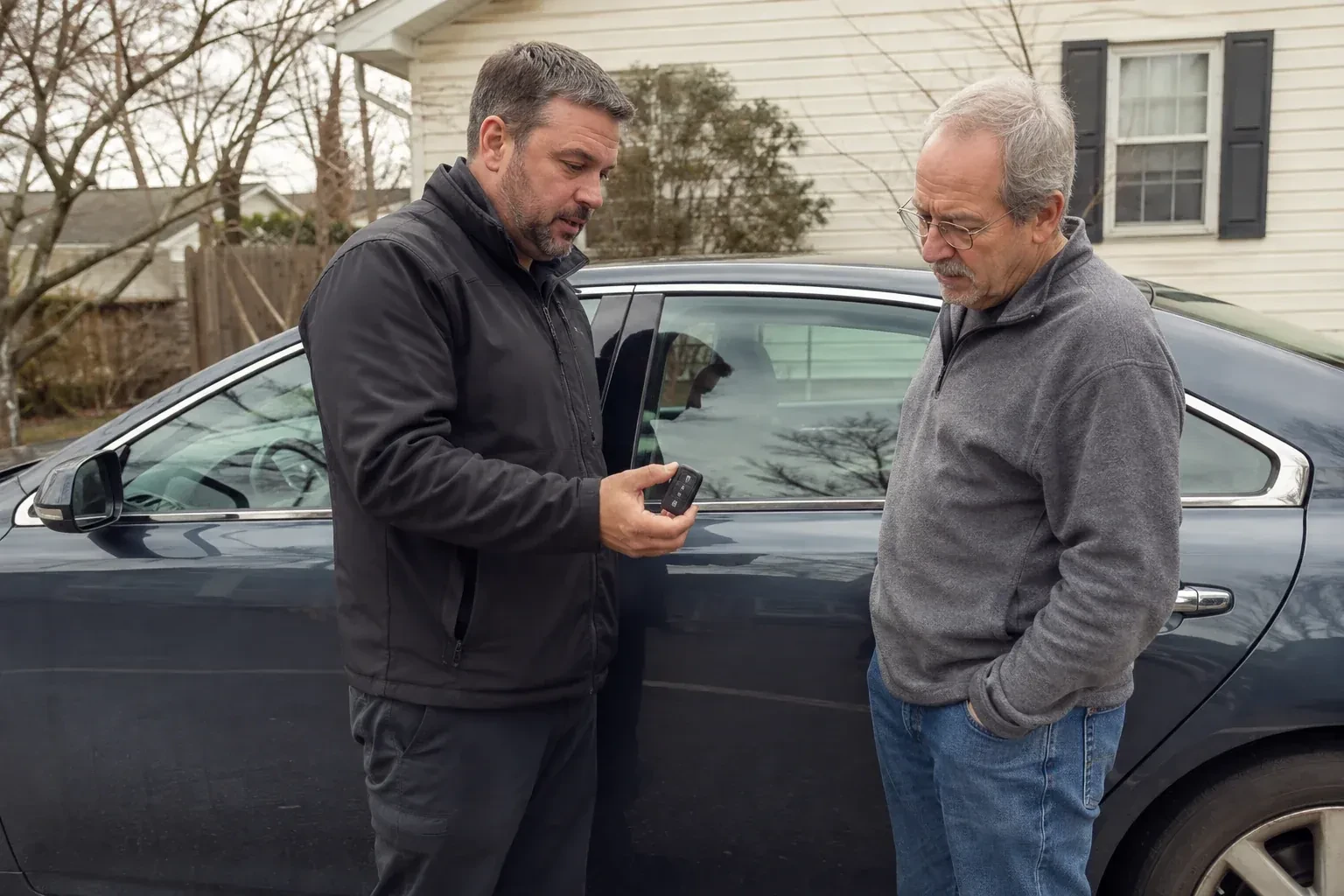
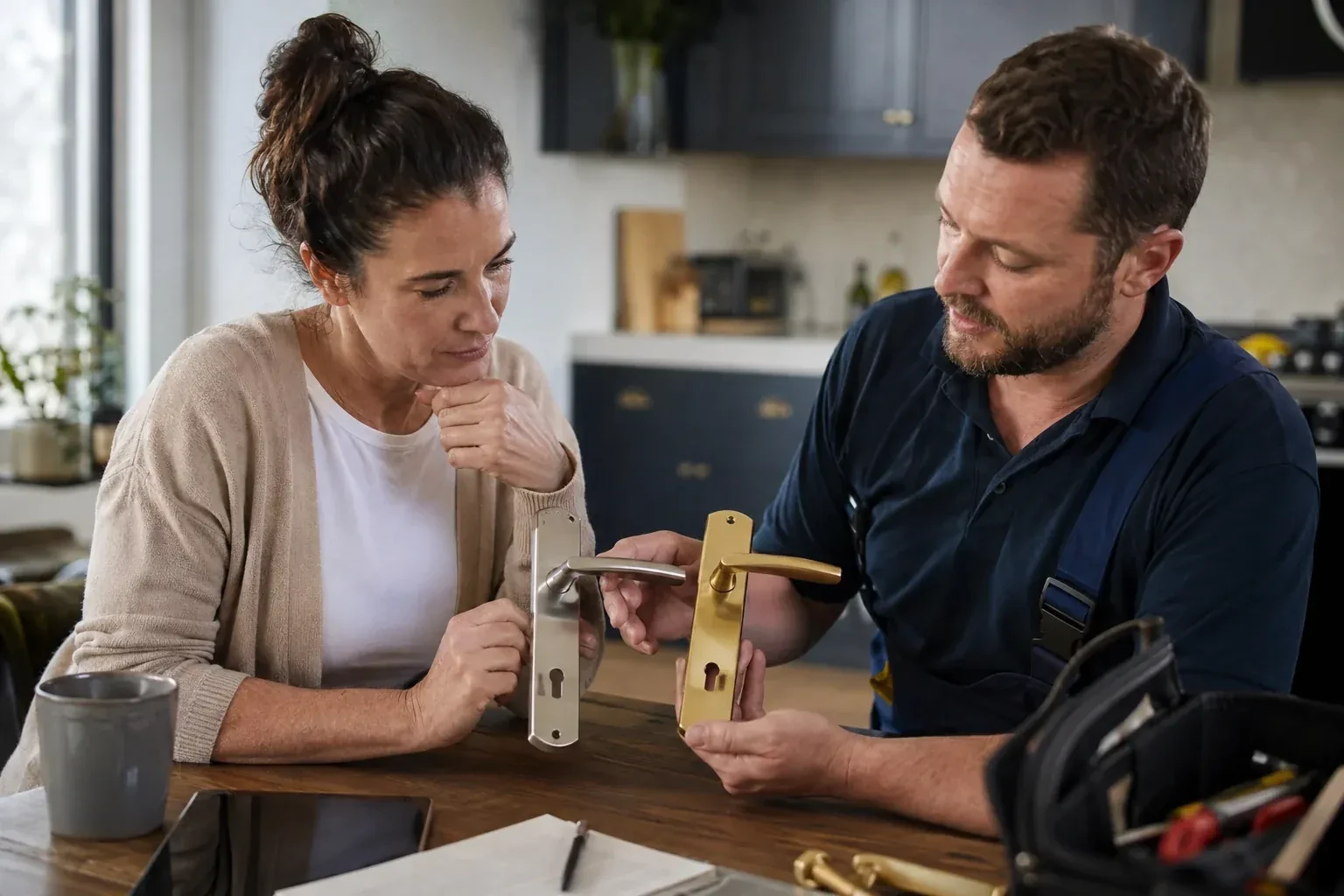
Every replacement key starts with a simple question: is this your car to key? The answer is settled with government photo identification and the vehicle permit, the green ownership issued by ServiceOntario, matched against the VIN on the dash and the door label. A lease agreement, fleet paperwork or a bill of sale covers a company car or a vehicle bought last week. The check takes a minute and it protects you as much as anyone, because the same standard applies to whoever might one day ask for a key to your car. Once it is done, the technical work begins.
How the visit goesThe key snapped at the head while you were turning it in a stiff, frosty door lock. Half the blade is in your hand, the rest is inside the lock, and the plastic head still lights up when you press a button.
Car Key Replacement
How the visit goes
Reading the VIN for the key system
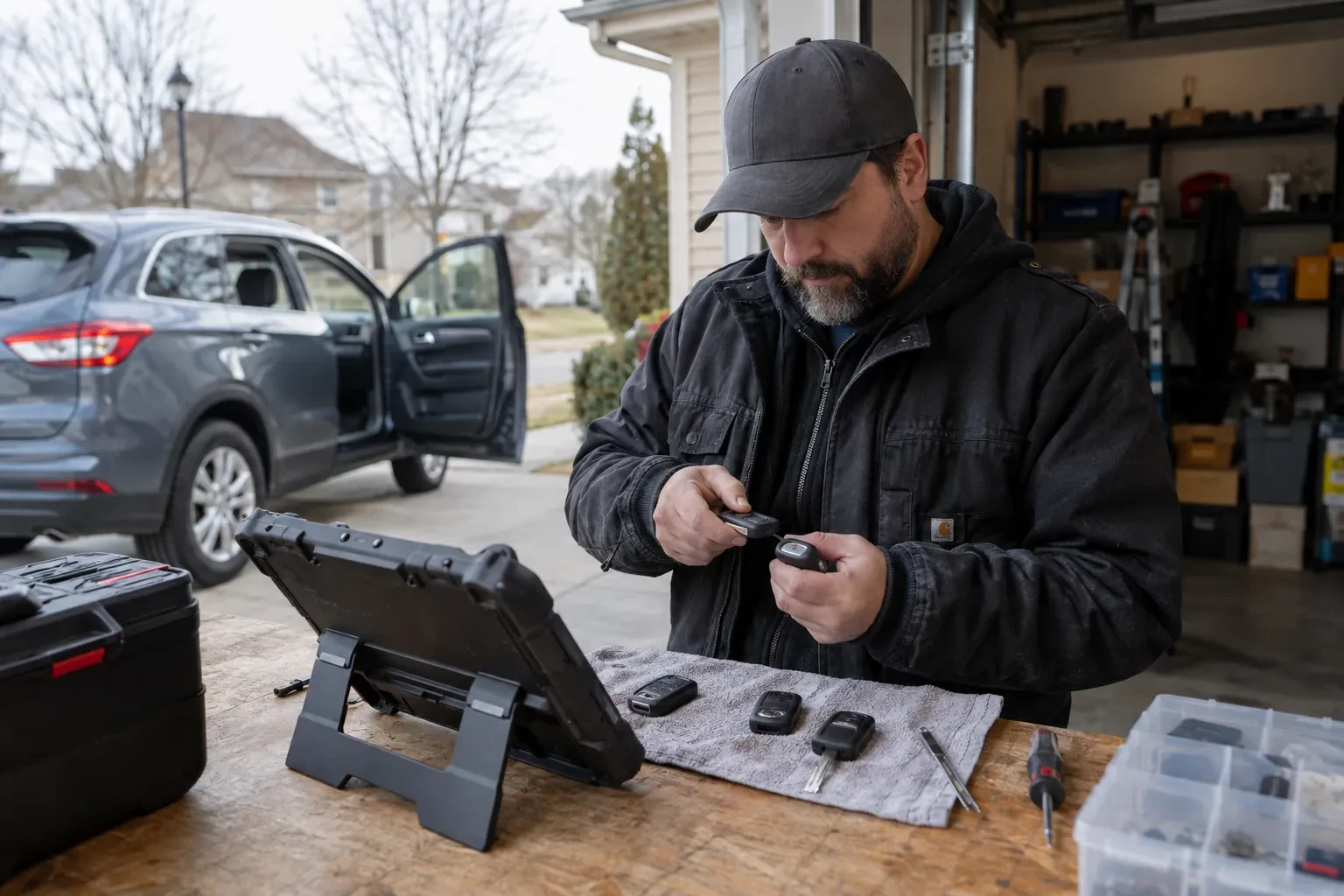
The seventeen-character VIN tells the locksmith what kind of key the car was built with. From it, together with the year, make and model, comes the blade profile (a plain edge cut or an internal high-security cut), the transponder type and immobilizer generation, the remote's frequency and part number, and whether the car uses a proximity fob, or instead a phone-key or key-card system with no cut blade at all. This lookup happens before the visit so the correct blank, shell or fob is in the van, and it flags systems needing a security PIN, manufacturer data or a dealer procedure. A photo of the old key, if any survives, confirms the reading.
Cutting a blade to the factory code
Vehicles equipped with a coded mechanical key leave the factory with a key code that describes the exact depths of its blade. When that code can be retrieved for your VIN, the locksmith enters it into a code-cutting machine, which mills a blank to the original specification rather than tracing a worn key. The result is a blade that matches the locks as they were built, seats fully in the ignition and lifts each wafer to the correct height. Cutting to code is the preferred route for any replacement, and it is the only sensible route when the existing key has worn thin or been copied several times over.
Looking after the mechanical lock you rarely use
On a keyless car the door cylinder can go years without a key in it, which is exactly why it seizes with salt and grit. After the visit, use the emergency blade in the driver's door once a season so the wafers keep moving, and follow the vehicle or lock maker's own maintenance instructions once the salt is off the roads in spring, since automotive locks more often need cleaning than added lubricant. In a cold snap, a small tube of lock de-icer in a coat pocket does the job; hot water only refreezes inside. A lock that has been freed during the visit stays free with this little attention.
Car Key Replacement
In the van
OBD programming tool
Remote-head key shell
Vehicle battery maintainer
Security PIN or secure-data access
Fob coin-cell battery
Car Key Replacement
What affects the quote
Programming route the car allows
Some vehicles accept a new key through an on-board routine, most through the programming tool, and a few only through a dealer procedure. The route determines the time and the data involved, and the quote says which it is.
Battery and access to the car
A flat vehicle battery needs a maintainer during programming, and a locked car with no key has to be opened before the diagnostic port can be reached. Both are small items that the quote names plainly.
Year, make and model
The vehicle decides the blank, the chip and the programming route. A twenty-year-old sedan with a plain transponder key and a recent proximity-start model are different jobs, and the quote follows the VIN rather than a flat figure.
What to have ready
- What buttons did the old key have: lock, unlock, trunk, panic, remote start?
- Is there an aftermarket alarm or remote starter fitted to the car?
- Was the key lost, stolen, broken, or damaged by water?
Car Key Replacement: questions
QuestionsAfter a break-in the doors and ignition are on different keys. Can that be fixed?
Yes. When a door lock is forced and replaced, or an ignition is swapped, the car can end up needing two blades. A locksmith can rekey the replacement cylinder to match the surviving one, so a single key operates every lock again, and cut new keys to that combination. The transponder side is unchanged by the lock work, so your existing programmed keys carry on starting the car once the blades match.
Can you make a key for a car with push-button start?
On many vehicles, yes: a proximity fob is registered to the vehicle through the diagnostic port in much the same way as a transponder key, and then tested for passive entry at the handles and for starting with the fob in a pocket. Other systems pair a proximity fob through onboard, app-based or dealer-only steps instead. The emergency blade tucked inside the fob is cut to the door lock so you have a mechanical way in, and the VIN check reveals in advance which route a given vehicle needs.
Why do you ask for ownership documents before making a key?
Because a car key is a credential, and issuing one to the wrong person would be a serious matter for the real owner. Matching photo identification and the vehicle permit to the VIN on the dash is the standard step, and it takes a minute. It protects you too: the same check stands between your car and anyone who might one day claim it as theirs.
Related services
- Spare Car Key DuplicationTwo coworkers share one delivery van and one key between them, trading it at the start and end of every shift in a parking lot.
- Key Fob ProgrammingA cracked case or a spin through the wash left the fob unresponsive, and opening it up reveals a slightly corroded board where the buttons used to sit.
- Transponder Key ProgrammingThe remote fob has gone silent, the doors won't unlock with a button press, and the little emergency blade tucked inside it has not been used since the day the car was bought.