Locksmith
Useful things to know
You do not need to become an expert to make good choices about locks. A little understanding goes a long way. These short pieces give you that: how keys are copied, what a lock grade means, when a repair beats a replacement and how to prepare for the unexpected.
Short answers to common questions
I am a landlord. Can you open a unit my tenant is living in?
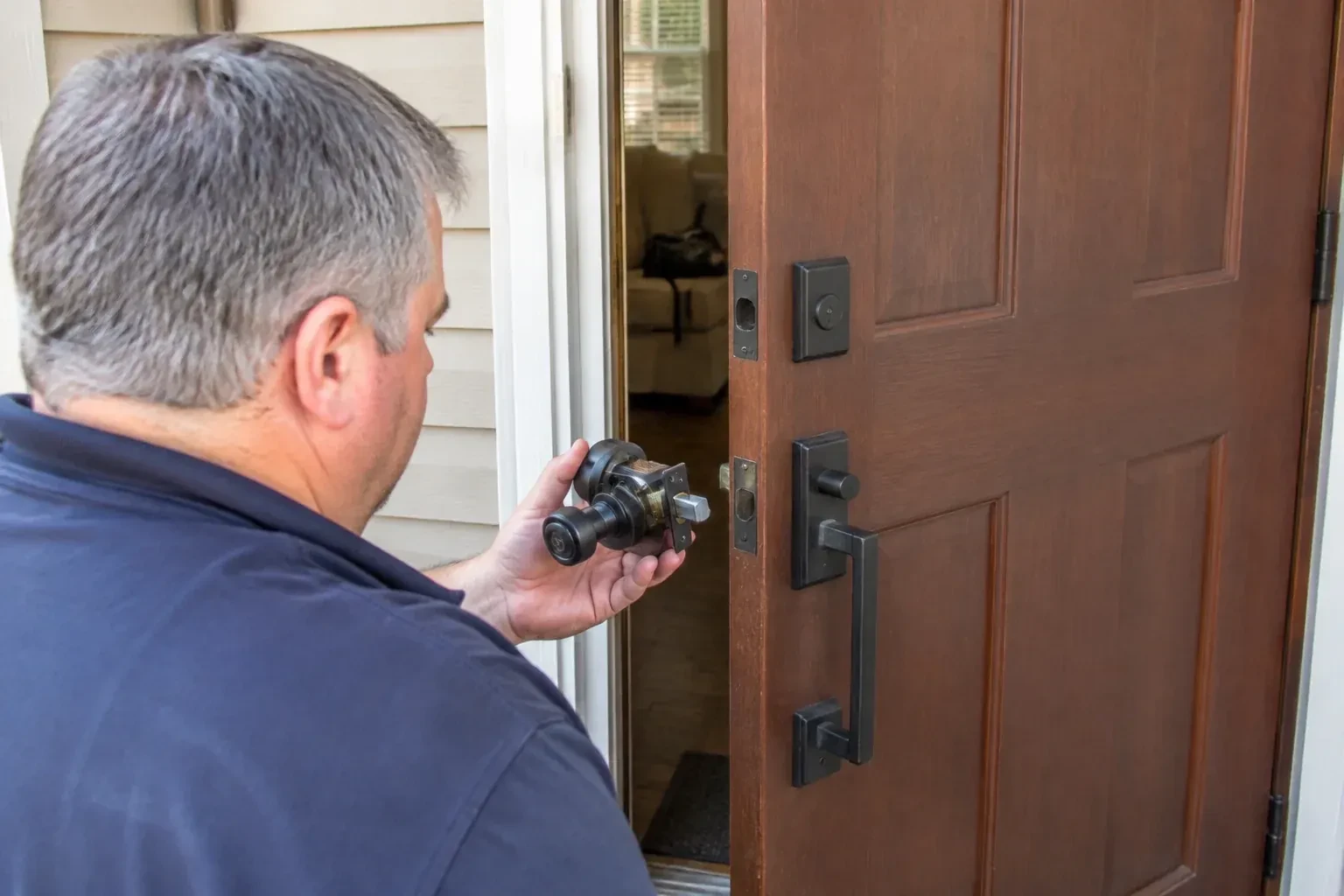
A locksmith will want to understand the situation first, because a tenant's right to their home is protected and a lockout of a tenant is something only a sheriff enforcing a Landlord and Tenant Board order may carry out. Legitimate reasons do come up: a tenant has asked you to let them in, a vacated unit needs securing, or an emergency requires access. Bring ownership records and be ready to explain the circumstances, and the locksmith will help you handle it properly.
Can you also deal with the back door, the roll-up shutter and the gate?
Yes. A business lockout covers every opening the premises relies on: the rear service door with its exit device, a roll-up shutter and its padlock, the compound gate, a mailbox in the lobby and interior doors such as the cash office or server closet. Mention each one when you call so the right padlock shackles, cores and cylinders are in the van, and so cylinders that should share a key are handled together.
My car key snapped in the door. Is that a locksmith job?
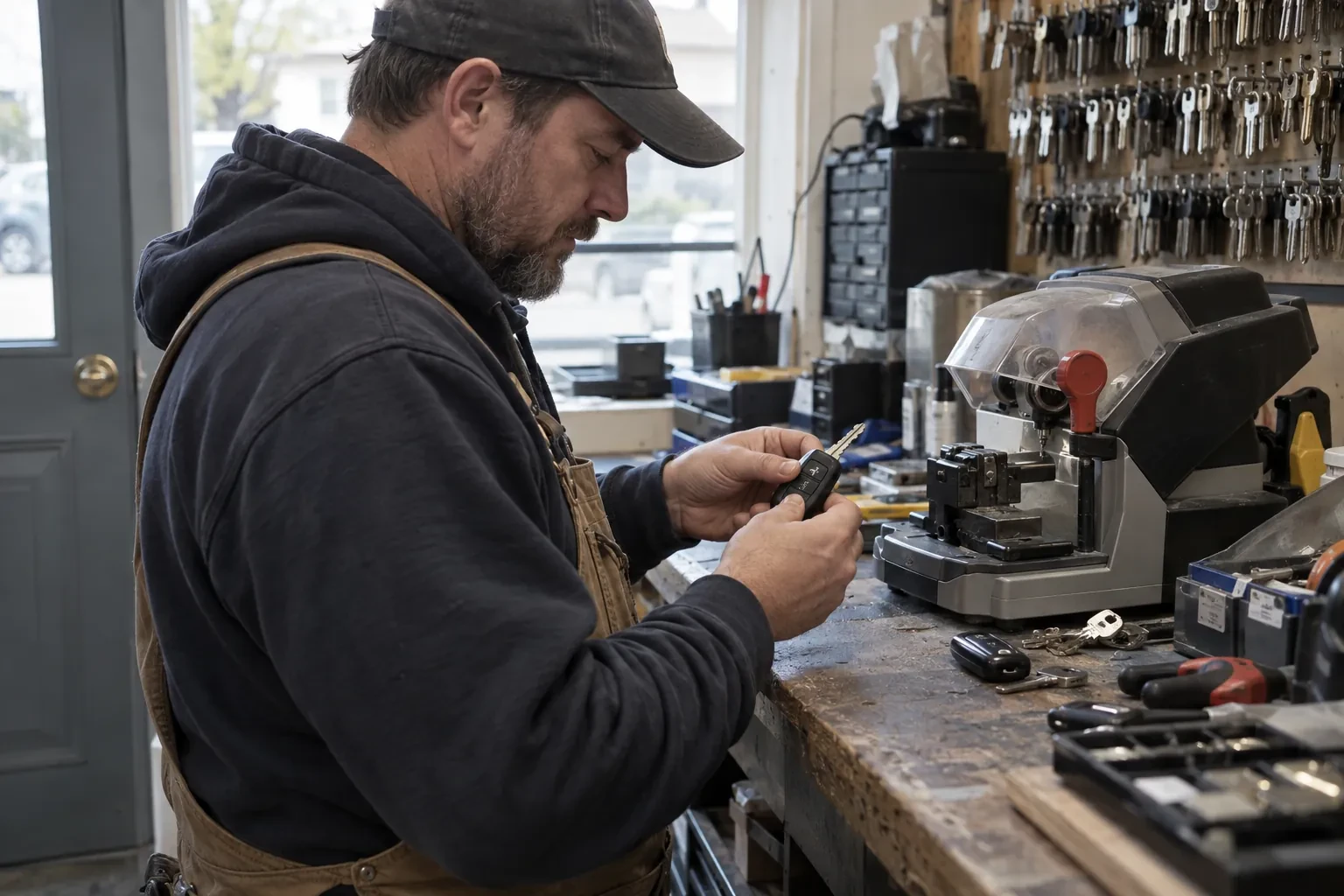
Yes. Vehicle door locks and ignitions use wafer cylinders that respond to the same extractor tools. Once the blade is out, the plastic head you are holding, which carries the transponder chip and any remote buttons, can usually take a freshly cut blade so the car keeps recognizing it. The ignition is checked as well, since a broken key sometimes disturbs the wafers.
How is a forced storefront door repaired?
Aluminum storefront doors are attacked at the narrow stile, which bends under a pry bar, or at the hookbolt and glass. The locksmith straightens or replaces the damaged section where possible, fits a new narrow-stile deadbolt or hookbolt with its strike, and adds a latch guard or anti-pry astragal along the meeting edge so a bar has no purchase. Cores are rekeyed and codes reviewed. The inside release stays a single motion so the exit route is unchanged.
Is a key stuck in the lock the same problem as a jammed lock?
They are close relatives. A key that will not come out is usually a plug that has not returned to its neutral position with the shell, a cylinder cap that has loosened, debris in the keyway, or a cylinder that is pinned incorrectly; some cylinders are also designed to hold the key until the plug is returned. The locksmith frees the key first, without pulling, then treats the cause the same way as any seized cylinder.
How many new keys should I ask for?
Count the people who genuinely need one and add one for a known spare location: each adult, a teenager, a caregiver or regular sitter, the neighbour who checks the house, the landlord if you rent. Keys are cut on site, so the number is easy to settle during the visit. Fewer keys with names attached is the point; another can always be cut later from the code.
Can I keep one door on a different key from the rest?
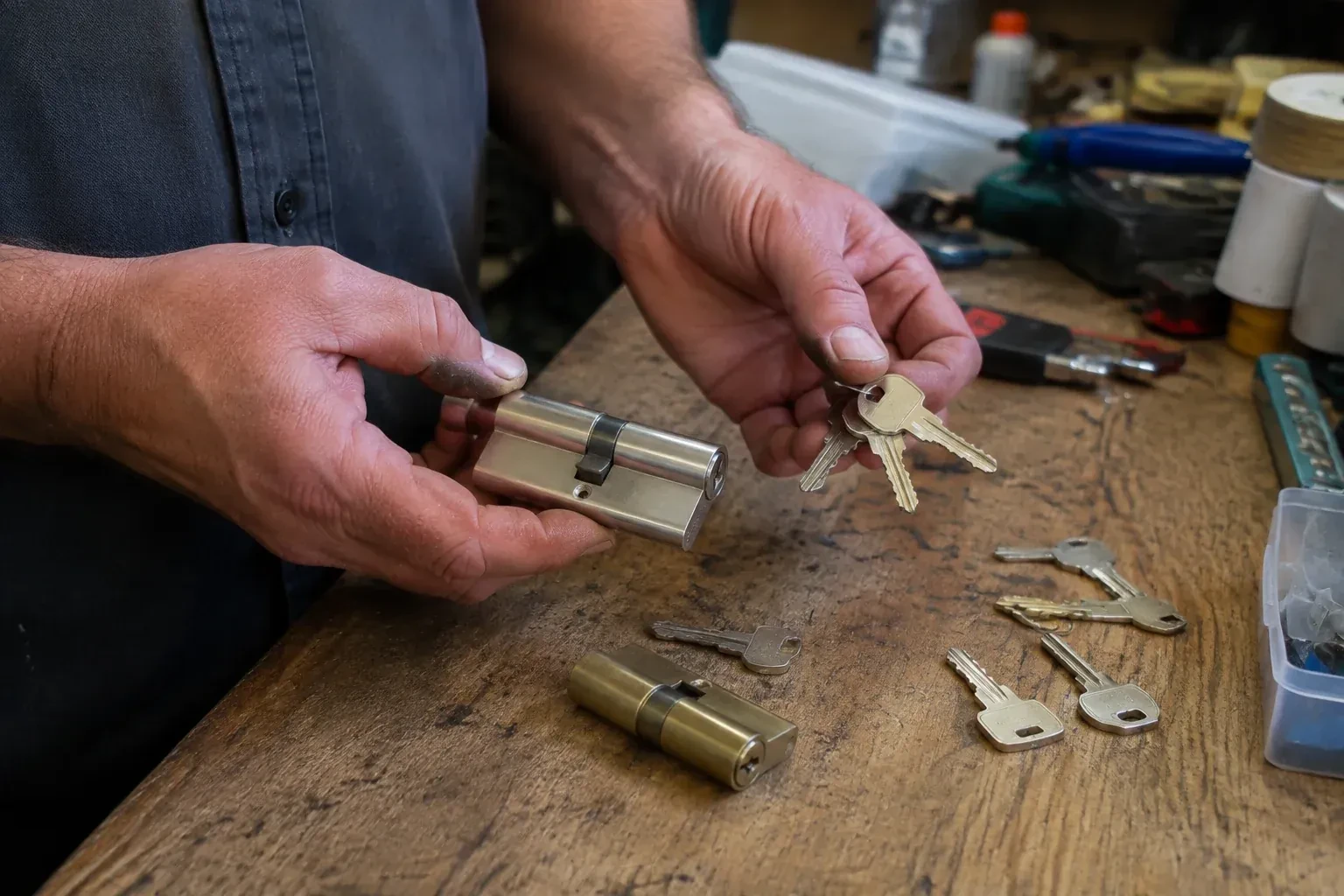
Yes, and it is common. A basement suite or in-law apartment often gets its own key so the tenant's key opens their door and nothing else, while your key opens the main house. A home office, a storage room or a shed can be kept separate for the same reason. The locksmith sets up the groups you want, pins each accordingly and tags the keys so the separate one is not mixed into the household set.
What about glass beside the door or a window in it?
Glass within reach of the lock is the one case where a plain thumb-turn deserves thought. Options include a captive thumb-turn that turns freely until you remove its small key, laminated glass or a tested security-film system with its specified frame attachment, or simply setting the bolt farther from the glass. Lock manufacturers describe sidelights as a weak point, so the locksmith measures the reach and lays out the choices rather than defaulting to a key on the inside.
Will a new lock fit the holes already in my door?
Usually, yes. Most residential doors are prepared to standard sizes, a 54 millimetre cross bore and a backset of 60 or 70 millimetres, and most modern hardware adjusts between those backsets. The locksmith measures before choosing, so the new lock is matched to the door rather than the other way around. Where an older mortise lock or an unusual bore is found, filler plates, extension kits or a carefully jigged new bore bring the door to standard.
Will the door look any different afterwards?
Usually not, when the original case is repaired: the same knobs, escutcheons, faceplate and strike go back on in the same positions, and the only visible change is paint or grime cleared from the edges that were catching. A replacement case is chosen to match the pocket so original trim is reused wherever spacing allows, though an occasional case needs a small pocket or fixing change, explained beforehand.
Will summer heat behind my storm door damage the lock?
It can stress it, and it is one of the first things the locksmith looks at. A full-glass storm door on a south- or west-facing entrance can push the air between the doors well above what electronics are rated for on a hot afternoon. The usual answers are a storm door with a vent or screen, swapping to the screen panel for summer, or a model whose maker rates it for that exposure. With that handled, the lock is fine.
Should I choose a padlock or a built-in gate lock for a new gate?
A padlock through a hasp is simple to fit to almost any gate and easy to rekey or swap later, which suits a gate that gets occasional use or belongs to more than one type of user, such as a shared laneway. A built-in gate lock with its own latch and cylinder tends to suit a gate used daily, since it operates with one motion instead of fitting and removing a separate padlock each time. Either can be paired with a closer if the gate should shut on its own.
Do neighbouring mailboxes in the panel get disturbed during the work?
No. The work is confined to the named compartment or compartments. Neighbouring doors keep their existing locks and keys, and the panel's frame, hinges, and shared structure are left as they are. Even during a larger job covering many compartments, each one is handled as its own small task rather than as one blanket change across the whole panel.
Do drop safes or under-counter cash safes work the same way as a larger floor safe?
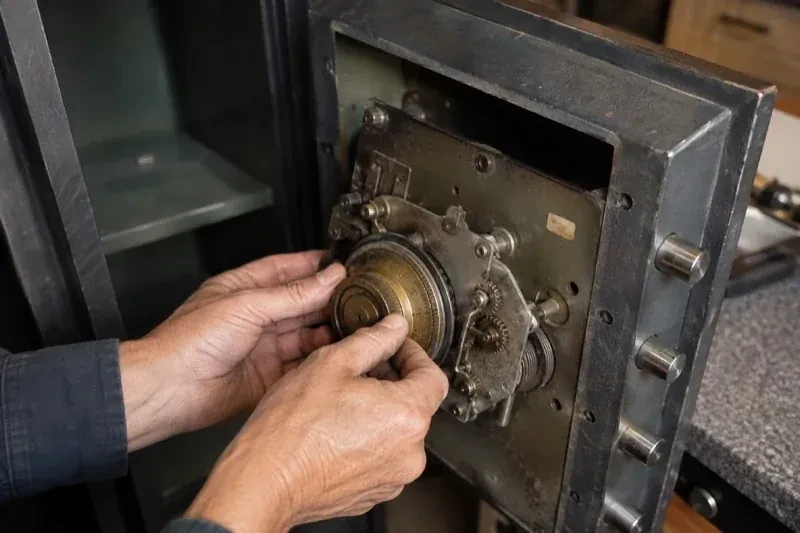
The identification step is the same regardless of size, but the lock inside is not assumed from the safe's size: a small drop safe or under-counter unit can carry anything from a basic keypad to a high-security lock, so each is identified on its own before manipulation, reset or a combination change proceeds, with the same care around authority and aftercare applying equally.
Will you service a safe that another company installed?
Yes, servicing does not depend on who did the original installation. The locksmith opens the bolt-work, tests the lock through a full cycle, checks the anchoring underneath, and replaces batteries in an electronic lock as needed, regardless of the brand or who fitted it originally. Not knowing the history of the unit just means a slightly more thorough first look before any work begins.
Do high security locks need special maintenance?
Only light care. Use the dry lubricant the locksmith recommends once or twice a year, never oil, which gathers grit around the finger pins and sidebar. Keep the keyway free of debris and insert the key fully before turning. In winter, warm a resisting key in your hand or use a de-icer rather than forcing it. Check hinge and strike screws each season so the door stays aligned. Treated this way the cylinder lasts for decades.
Will rekeying affect our alarm system or card readers?
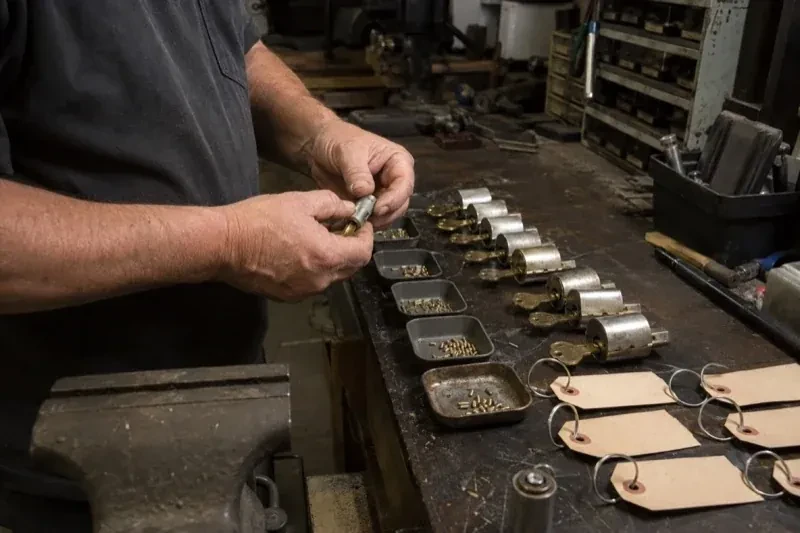
Mechanical rekeying leaves electronics alone: alarm panels, card readers and keypads keep their codes and credentials. What changes is the list of people holding keys, and it is worth updating the alarm company's keyholder list and retiring the codes of anyone who has left at the same time, since keys and codes usually walk out together. Where a door has both a card reader and a keyed override, the override cylinder is rekeyed with the rest.
What happens if a master-level key goes missing?
The current chart shows exactly which doors that level was designed to reach, which for a lost top-level master can mean the whole property rather than one group. Depending on how the key was lost and who else already holds that level, the usual options are repinning the affected cylinders and reissuing keys to the remaining holders; a restricted keyway lowers the odds of an unauthorized copy being cut but is not proof that one has not been made. Without a current chart, the first task is reconstructing that scope.
What maintenance does the system need going forward?
Ongoing maintenance is light: checking the battery backup and the request-to-exit device periodically, keeping reader surfaces reasonably clean, and revoking credentials promptly once someone leaves. Door and frame alignment is worth a look at each change of season, since a shifted door can affect how cleanly an electric strike or a magnetic lock releases.
Can one visit cover several doors in the same building?
Yes, and it is common. A building rarely has only one exit affected by an occupant-load or fire-rating question; stairway doors, assembly-room exits and any doors altered together during a renovation are usually assessed and fitted in the same visit, with one written record covering every device installed across the building.
Who should hold the master key once the system is set up?
That is a decision for the business, not the locksmith, but the general practice is to limit master keys to the smallest number of people who genuinely need building-wide access, and to log who holds each one. Sub-master and change keys can then cover departments, shifts or single doors without every key holder carrying access to everything.
How can I avoid locking myself out of the car again?
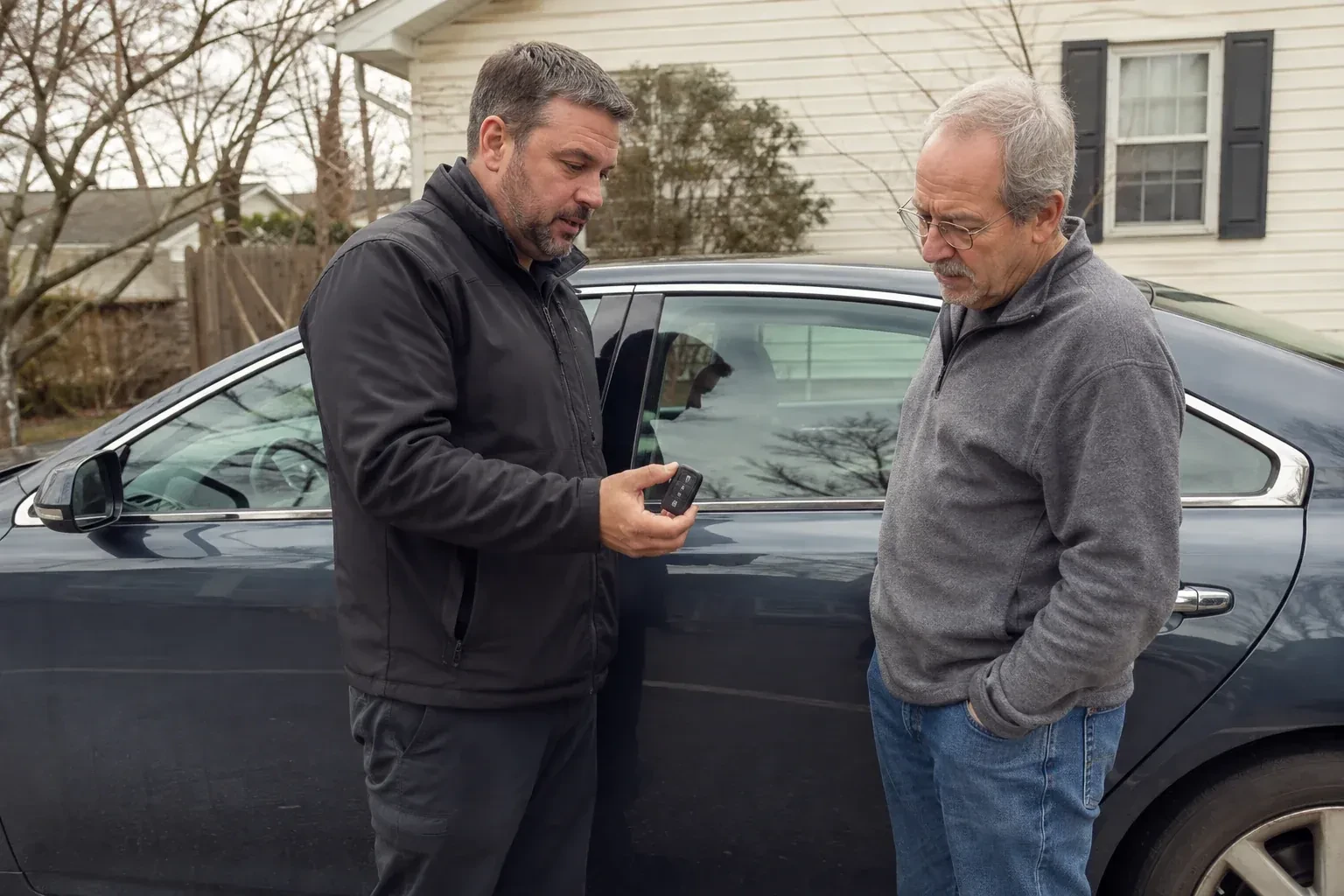
Make one habit stick: keys go into a pocket before any door closes. Keep a spare at home or with someone nearby, and store a spare fob away from the main one. Change your fob battery every autumn before the cold arrives. If your car offers a setting that stops the doors locking with the fob inside, turn it on. Keep a photo of your vehicle permit on your phone so identification is never behind glass.
After a break-in the doors and ignition are on different keys. Can that be fixed?
Yes. When a door lock is forced and replaced, or an ignition is swapped, the car can end up needing two blades. A locksmith can rekey the replacement cylinder to match the surviving one, so a single key operates every lock again, and cut new keys to that combination. The transponder side is unchanged by the lock work, so your existing programmed keys carry on starting the car once the blades match.
How is the electronic chip handled during duplication?
Where the transponder supports it, the chip in the working key is read and its data cloned onto a fresh chip, sometimes with vehicle-specific data pulled from the car to help. Where cloning is not supported for that particular vehicle and chip, the locksmith instead connects through the diagnostic port and has the car's own security module enrol a freshly coded chip as a new, independently authorized key.
What should I have ready before a key fob programming visit?
The vehicle's identification number, proof that you own or are authorized to use it, and an honest count of how many fobs exist for the car, working or not. Mention whether any fob is truly lost rather than misplaced at home, and whether the vehicle currently starts with the fob you do have. That picture lets the right procedure and parts be settled before work begins rather than partway through it.
Does cold weather affect a key or its fob?
The metal blade and the passive chip inside it are not affected by cold. The fob's battery is a different story: cold weather reduces a battery's effective output, which can turn a marginally weak battery into one that suddenly stops responding on a cold morning. Testing a fob's battery before winter sets in catches this early.
How do you tell the cylinder apart from the switch behind it?
The cylinder is the part the key physically touches and turns; the switch is the electrical component behind it that responds to each position. The locksmith checks whether the barrel itself moves cleanly through every stop and whether the dash and starter respond at the right moments. When the barrel turns properly but the response is missing, the switch or wiring is a likely cause, though the battery, starter and park/neutral circuit are checked too before settling on it.
Do you need to see proof that the vehicle is mine before starting?
Yes, and it takes only a moment. The vehicle's registration, matched to the vehicle identification number on the dash or door jamb, settles it in most cases. A rental agreement or a fleet authorization does the same job when the vehicle is not registered in your own name.
I bought a used bike with just one worn key. What happens now?
The locksmith first identifies every lock on the machine, ignition, seat and fuel cap included, and tests the key that came with it against each one. Whatever the existing key does not already cover is then cut or decoded to match, so the outcome is a complete, known set of keys rather than a single blade of uncertain history. It is a common situation and does not require any prior records to resolve.