Change or rekey · Brampton
Lock Replacement & Upgrade
The house is fifteen years old and every exterior door still wears the light hardware the builder fitted: a short bolt, a thin strike held by two small screws, and a knob lock that never suited a street entrance.
In plain words
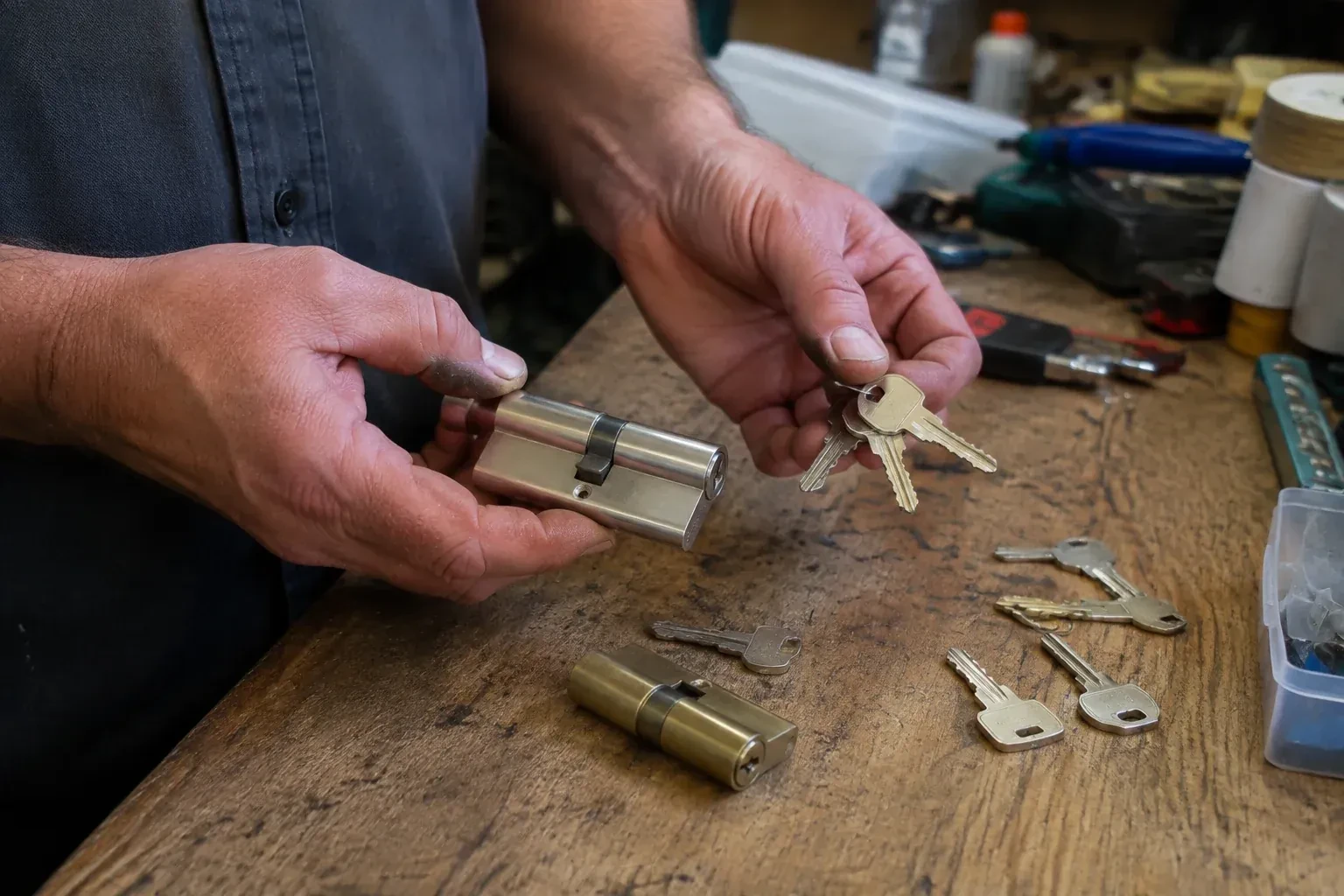
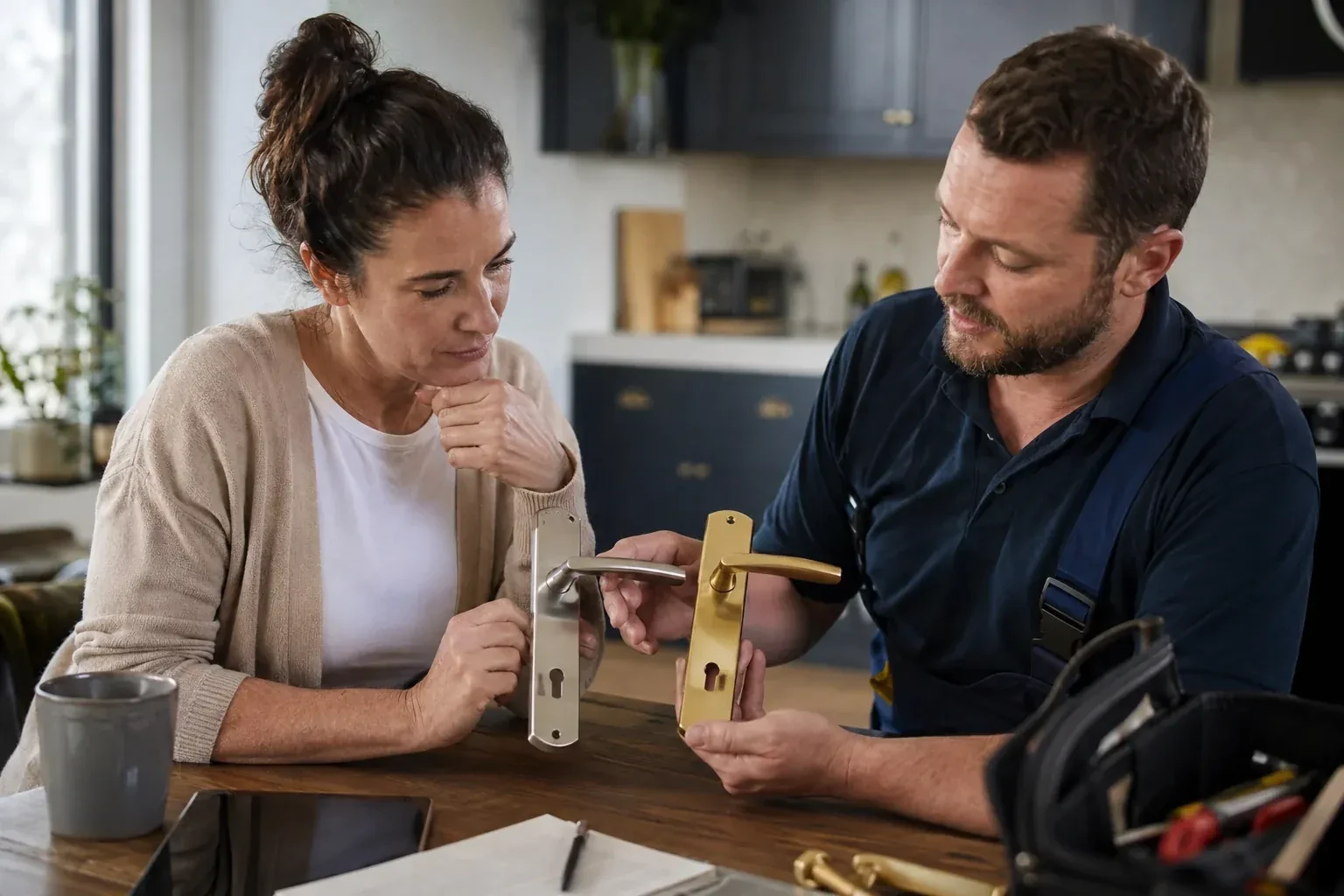
Not every complaint about a lock ends in a new lock, and a good visit says so. A cylinder that turns stiffly may only need cleaning and fresh pins; a lost key calls for rekeying, which keeps the hardware and changes the key; a loose lever often wants a tightened spindle. Replacement earns its place when the mechanism is worn through, the housing is damaged, the grade was never adequate for the entrance, or you want a different function, finish or a keypad. The locksmith lays the three routes side by side so the choice rests on what the door needs rather than on what is in the van.
How the visit goesThe house is fifteen years old and every exterior door still wears the light hardware the builder fitted: a short bolt, a thin strike held by two small screws, and a knob lock that never suited a street entrance.
Lock Replacement & Upgrade
How the visit goes
Exposure, weather and finish
The locksmith looks at where the door lives. A side entrance beside a salted driveway, a south-facing front door in full sun and a sheltered porch each treat a finish differently, and the residential hardware label scores finish durability as its own category for exactly this reason. Existing hardware is examined for pitting, peeling and green bloom, which shows how hard the spot is on metal. That guides the choice between a PVD brass, a satin nickel, a powder-coated black or a stainless product, and whether a storm door or a small hood would help. Matching the rest of the entrance comes last, once the finish will survive the location.
Fitting the latch or bolt to the door
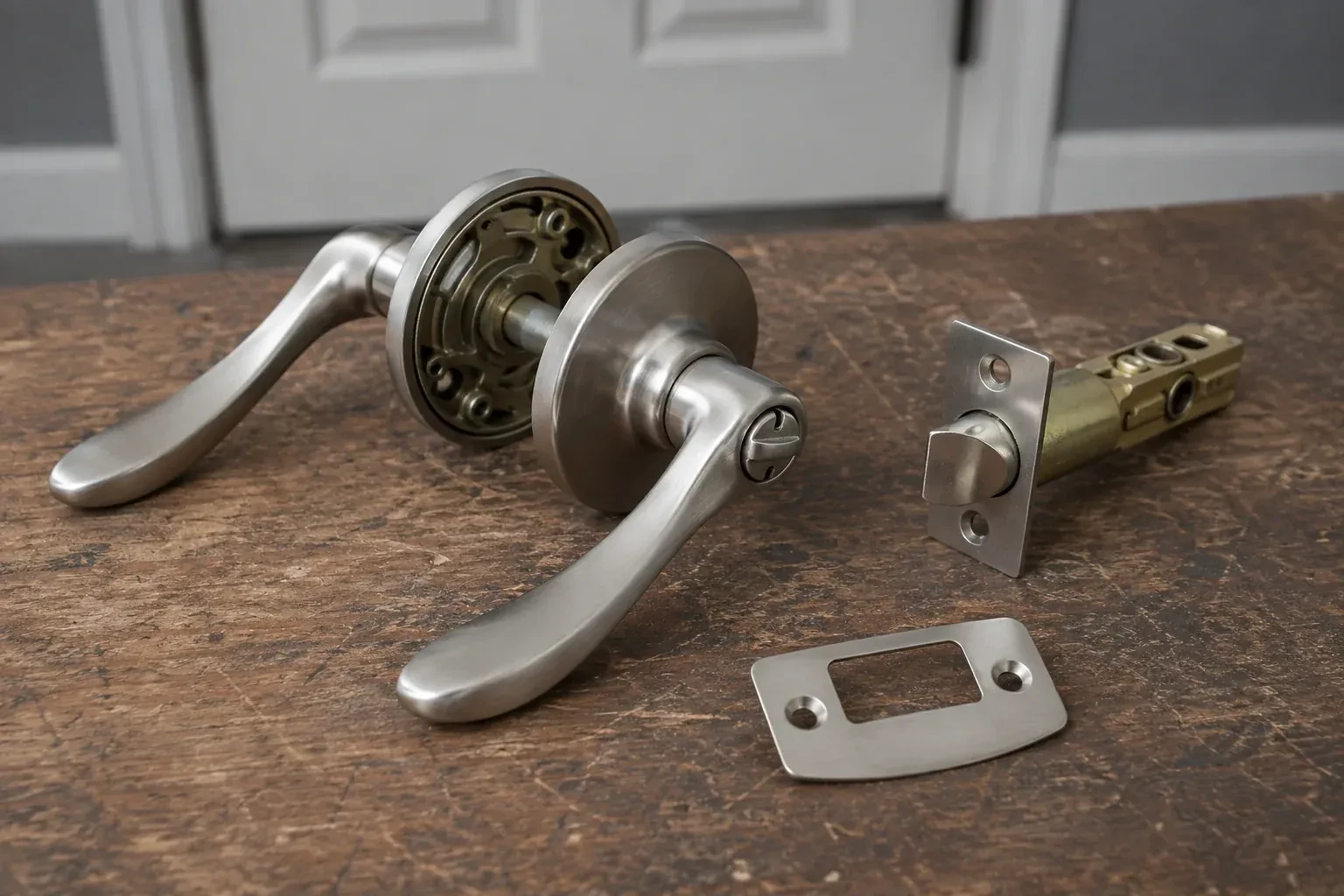
Most modern latches and bolts adjust between the two common backsets, so the unit is set to the measured figure and slid into the edge bore. A spring latch goes in with its bevel facing the strike, while a deadbolt is oriented the way its markings or instructions call for, not by that bevel rule. The faceplate should sit flush in its mortise; where the old cut-out differs in shape or size, the mortise is trimmed with a sharp chisel, or a round drive-in collar is used where the door was prepared that way. The bolt is checked to travel freely before anything else goes on, since a bolt that binds in the door will bind under the key too.
The rental paperwork, quietly sorted
If the door belongs to a rental unit, the visit finishes with the keys in the right hands. When a landlord orders the change, giving the tenant a full set of new keys is standard practice. When a tenant orders it with the landlord's consent, a key for the landlord is cut alongside the household's and the consent is noted. The locksmith can leave a short written record of the hardware fitted and the keys issued for the property file, so both sides know what is on the door and nobody is surprised at the next inspection or move-out.
Lock Replacement & Upgrade
In the van
Adjustable latch or bolt
Manufacturer-approved cylinder lubricant
Filler plates and thick-door extension kits
Key blanks and key cutter
Graded deadbolt
Lock Replacement & Upgrade
What affects the quote
Number of doors
One back door is a small visit; the front, back, side, garage man-door and patio slider together are a longer one, though several doors done at once share the travel and setup.
Special-order hardware
Most standard locks come from the van. A specific style, an unusual finish or a restricted system may need ordering, which affects scheduling and is noted in the quote rather than discovered on the day.
Restricted keyway system
Patented cylinders and controlled key blanks cost more than standard hardware and involve setting up your key records, which is quoted separately from an ordinary replacement.
What to have ready
- Is the door wood, steel or fibreglass, and roughly how thick is it?
- Do you want every exterior door to open with one key?
- Do you own the home, or rent it with the landlord's agreement to change locks?
Lock Replacement & Upgrade: questions
QuestionsWill a new lock fit the holes already in my door?
Usually, yes. Most residential doors are prepared to standard sizes, a 54 millimetre cross bore and a backset of 60 or 70 millimetres, and most modern hardware adjusts between those backsets. The locksmith measures before choosing, so the new lock is matched to the door rather than the other way around. Where an older mortise lock or an unusual bore is found, filler plates, extension kits or a carefully jigged new bore bring the door to standard.
Can I replace only the deadbolt and keep my existing knob?
Yes. The deadbolt and the knob or lever are separate locks in separate bores, so one can be replaced while the other stays. The new deadbolt can be pinned to work on the same key as the knob if the keyways are compatible, and its finish can be matched to the knob so the door looks intended. Replacing the deadbolt first is a sensible order, since it does most of the securing.
What information helps before the visit?
Photographs of each lock from outside and inside, plus one of the door edge showing the latch plate and one of the strike on the frame, tell the locksmith most of what they need. Add the door thickness if you can measure it, whether the door is wood, steel or fibreglass, the finish you want to match, how many doors are involved and whether you want them all on one key.
Related services
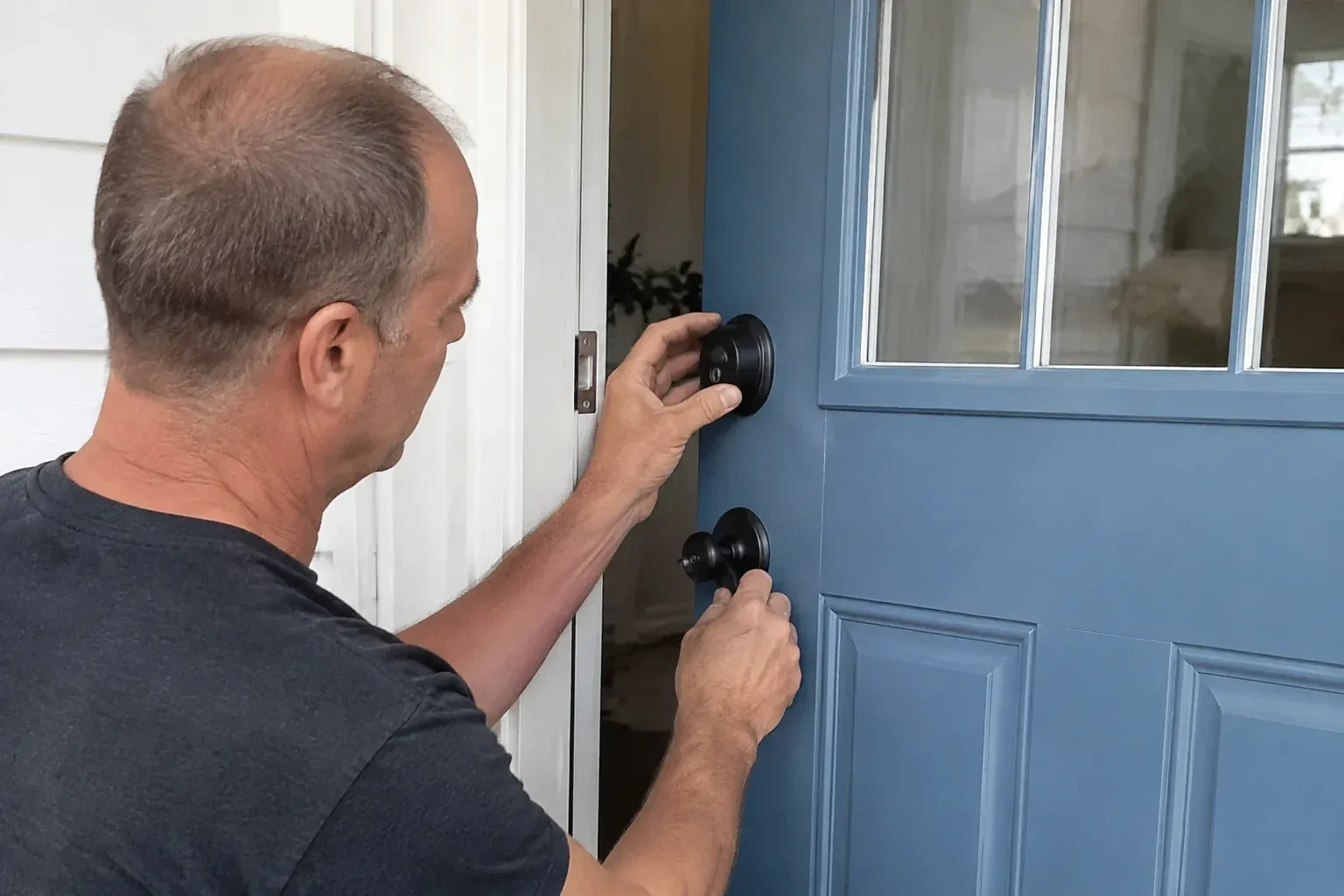
- Deadbolt InstallationSomeone tried the door last winter.
- Vintage Mortise Lock ServiceThe key turns freely in the round cylinder on the door, all the way around and back, without the bolt shifting at all.
- Smart Lock InstallationYour mother still lives on her own, and the personal support worker, the pharmacy delivery and two siblings all need to get in on different days.