Change or rekey · Bramalea Woods
Gate & Building Entry Locks in Bramalea Woods
Every time the courtyard gate closes, it slams hard enough to rattle the fence panels, and the deadlatch never quite drops into the keeper before the spring yanks it the rest of the way.
In plain words
A gate or door that will not latch is rarely just a lock problem; more often the hardware is being asked to catch a moving target. This visit reads the gate or door's actual swing, sag and alignment first, then brings the closer, hinges, strike and cylinder into agreement with each other rather than replacing parts one at a time. Once the physical fit is right, the same lock that seemed unreliable for months often turns out to have been sound all along.
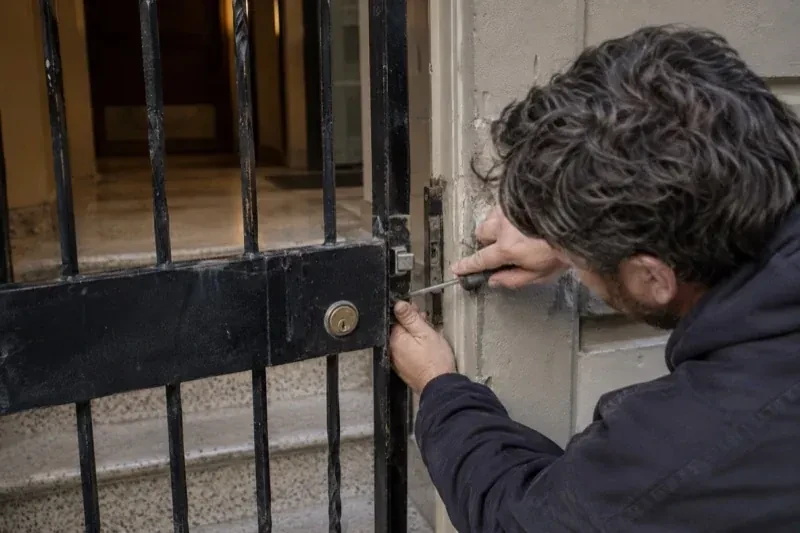
How the visit goesThe gate to the side yard used to close with a satisfying click. After a winter of frost heaving the fence post, the latch now sits a full inch below where the strike is waiting for it, and the gate swings free no matter how hard it is pulled shut.
Gate & Building Entry Locks
How the visit goes
Reading a frost-heaved or settled post
Ground movement shows up as a lock problem long before anyone thinks to blame the post. The locksmith checks whether the gate post has lifted, tilted or settled relative to the latch post it is supposed to line up with, and by how much, since a small seasonal shift is different from a post that has genuinely moved for good. This distinction decides whether the fix is resetting the strike position for now or addressing the post itself, and it keeps the same misalignment from returning with the next frost.
Coordinating keys across a shared entry
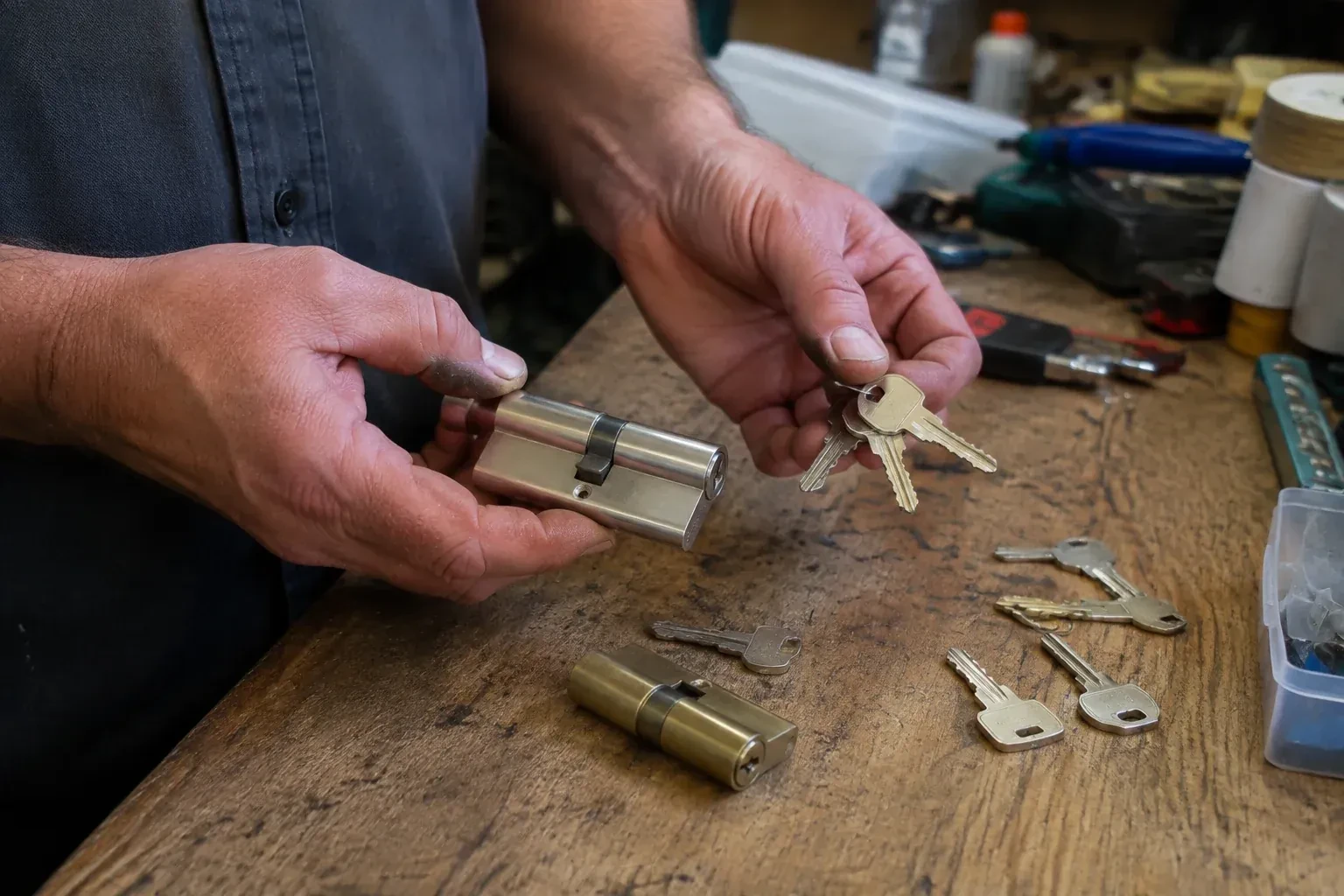
On a property with several gates or a shared building entry, the cylinders that should open on one key are brought onto a common pinning during the same visit, rather than one at a time as complaints come in. Current residents or unit holders each receive a key that matches every door they are meant to use, and a short list is kept of which key opens what. Any gate meant to stay on its own separate key, such as a utility gate the property manager alone uses, is deliberately left off the shared system.
A record for the owner or property manager
You leave with a plain account of what changed: which cylinders were rekeyed or replaced, how many new keys were cut and to whom, whether any gate was brought onto a shared key or deliberately kept separate, and what was adjusted on the closer, strike or post. For a rental or a condo, this note is worth passing to whoever manages the building, since it settles later questions about who currently holds a working key without anyone having to guess or ask around.
Gate & Building Entry Locks
In the van
Dry graphite or PTFE lubricant
Gate and door closers
Key blanks and code cutter
Plug follower and repinning kit
Gate locks and latches
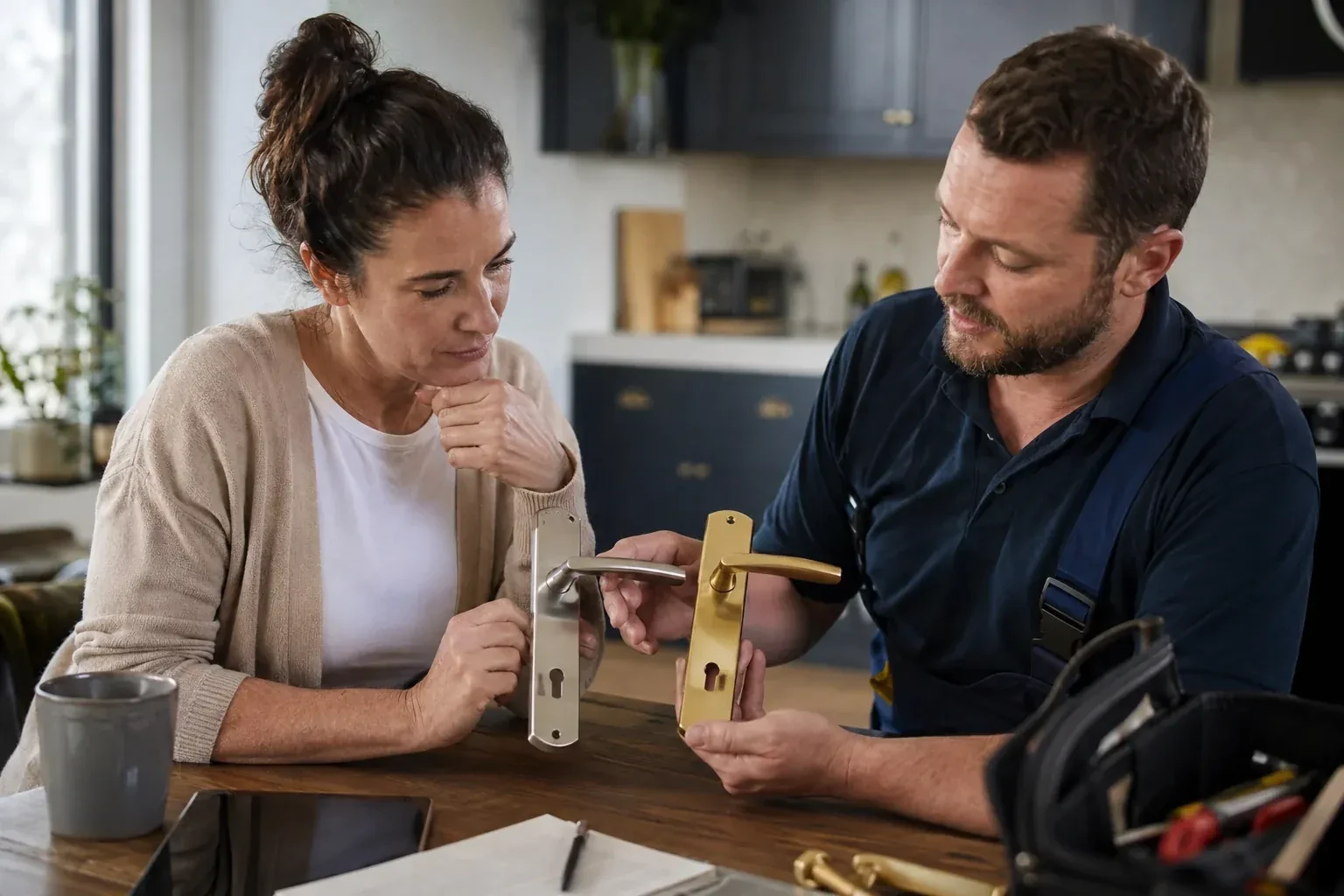
Gate & Building Entry Locks
What affects the quote
Whether the property manager or a board is involved
Work on a shared building entry sometimes needs sign-off from a property manager or condo board before proceeding, and coordinating that approval, along with providing a record of the work for their files, is part of the visit.
Corrosion or damage already present
A cylinder that is merely stiff is a lighter job than one that is visibly pitted, seized or cracked from years of weather exposure, and the quote reflects whichever condition the hardware is actually found in.
Master key or keyed-alike planning
Setting up a master key system, or bringing several separate locks onto one shared key, involves planning the pinning structure across every cylinder involved, which is more work than rekeying one lock in isolation.
What to have ready
- Do you manage this property, or should someone else be involved in the decision?
- Roughly how many people currently need a working key?
- Is the gate sagging, dragging, or hard to close by hand?
Gate & Building Entry Locks: questions
QuestionsShould I choose a padlock or a built-in gate lock for a new gate?
A padlock through a hasp is simple to fit to almost any gate and easy to rekey or swap later, which suits a gate that gets occasional use or belongs to more than one type of user, such as a shared laneway. A built-in gate lock with its own latch and cylinder tends to suit a gate used daily, since it operates with one motion instead of fitting and removing a separate padlock each time. Either can be paired with a closer if the gate should shut on its own.
How should I look after a gate lock so it keeps working?
Twice a year, work the lubricant the cylinder maker specifies into the keyway and cycle the key a few times; the wrong product for that model can collect grit or gum up the mechanism instead of helping it. Check that the closer still settles the gate into the latch without slamming, and look at hinges or post hardware for movement, especially after a hard winter. A cylinder that starts needing a wiggle, or a gate that has begun to drag, is worth addressing while it is still a small adjustment.
A tenant moved out of our building. Do we need to rekey the shared entry?
It is worth doing, since a move-out is exactly the situation a rekey is meant to cover: a former tenant's key still operates the same lock everyone currently living there relies on. Rekeying resets the cylinder to a fresh combination and issues new keys to current residents, without requiring a whole new lock in most cases. Bringing any other gates or doors that share that key along at the same time keeps the whole property on one current combination.
Related services
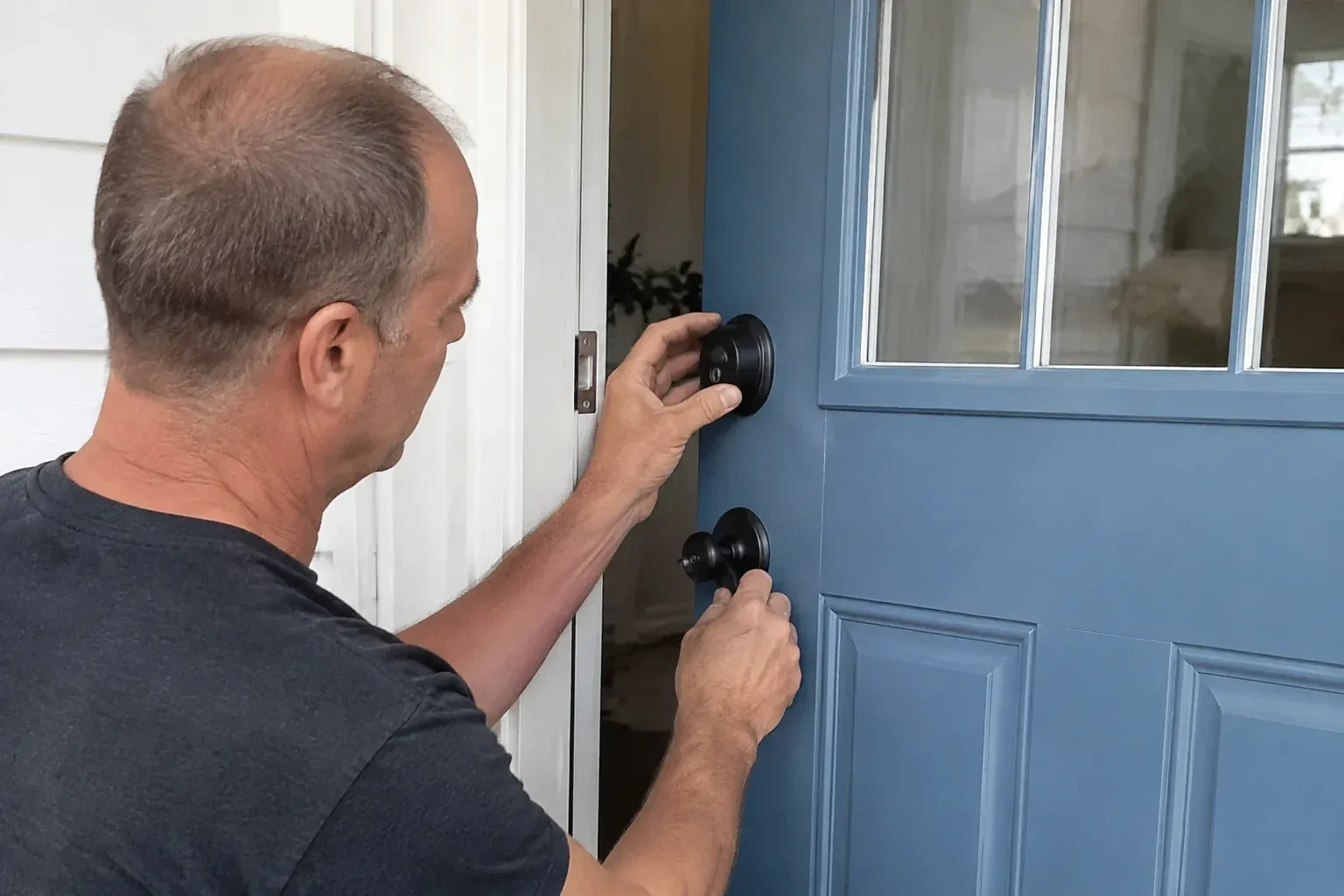
- Deadbolt InstallationSomeone tried the door last winter.
- Lock Replacement & UpgradeThe house is fifteen years old and every exterior door still wears the light hardware the builder fitted: a short bolt, a thin strike held by two small screws, and a knob lock that never suited a street entrance.
- Vintage Mortise Lock ServiceThe key turns freely in the round cylinder on the door, all the way around and back, without the bolt shifting at all.