Lockouts · Brampton
Seized & Jammed Lock Opening
You are inside, the deadbolt is thrown, and the thumb-turn will not budge.
In plain words
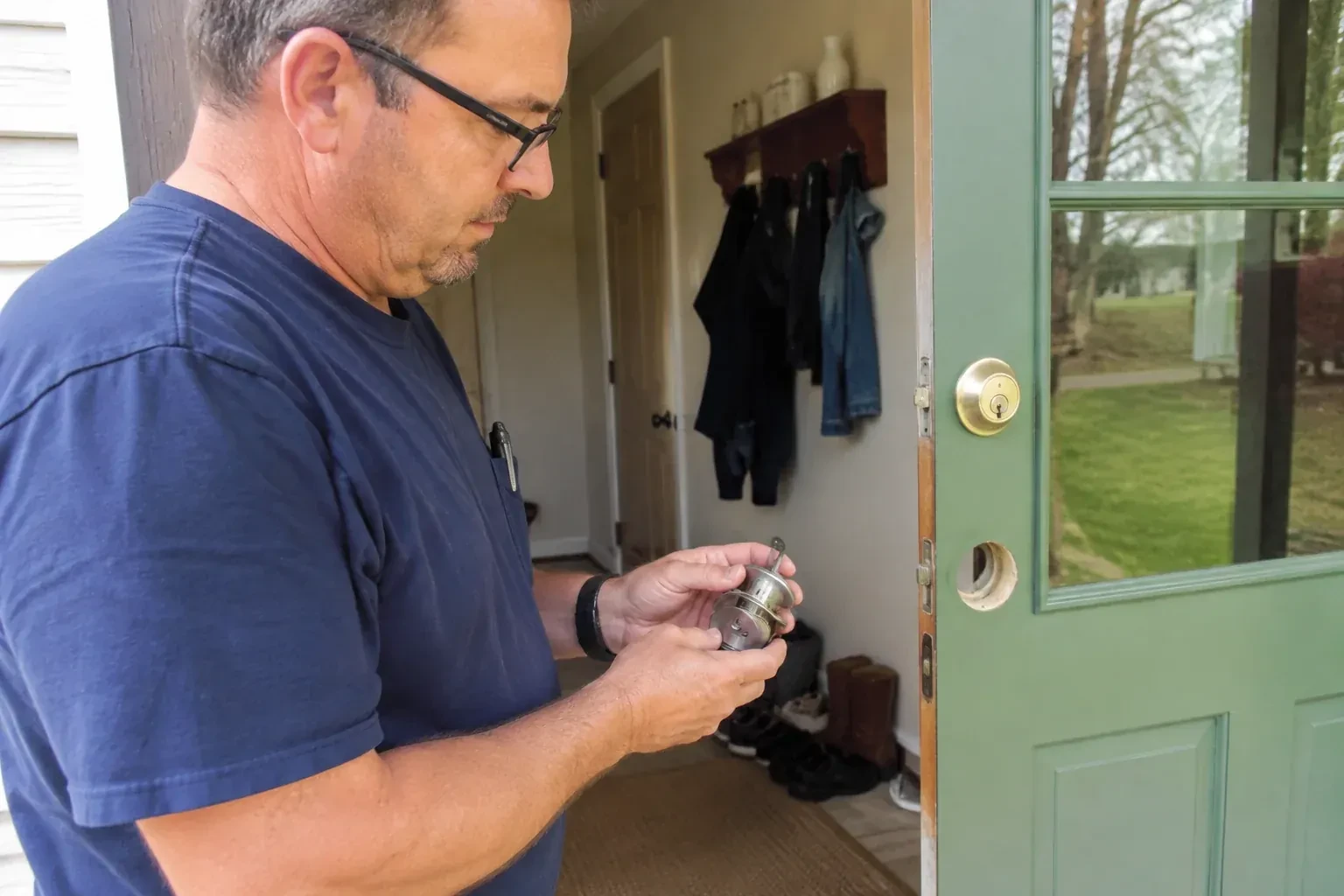
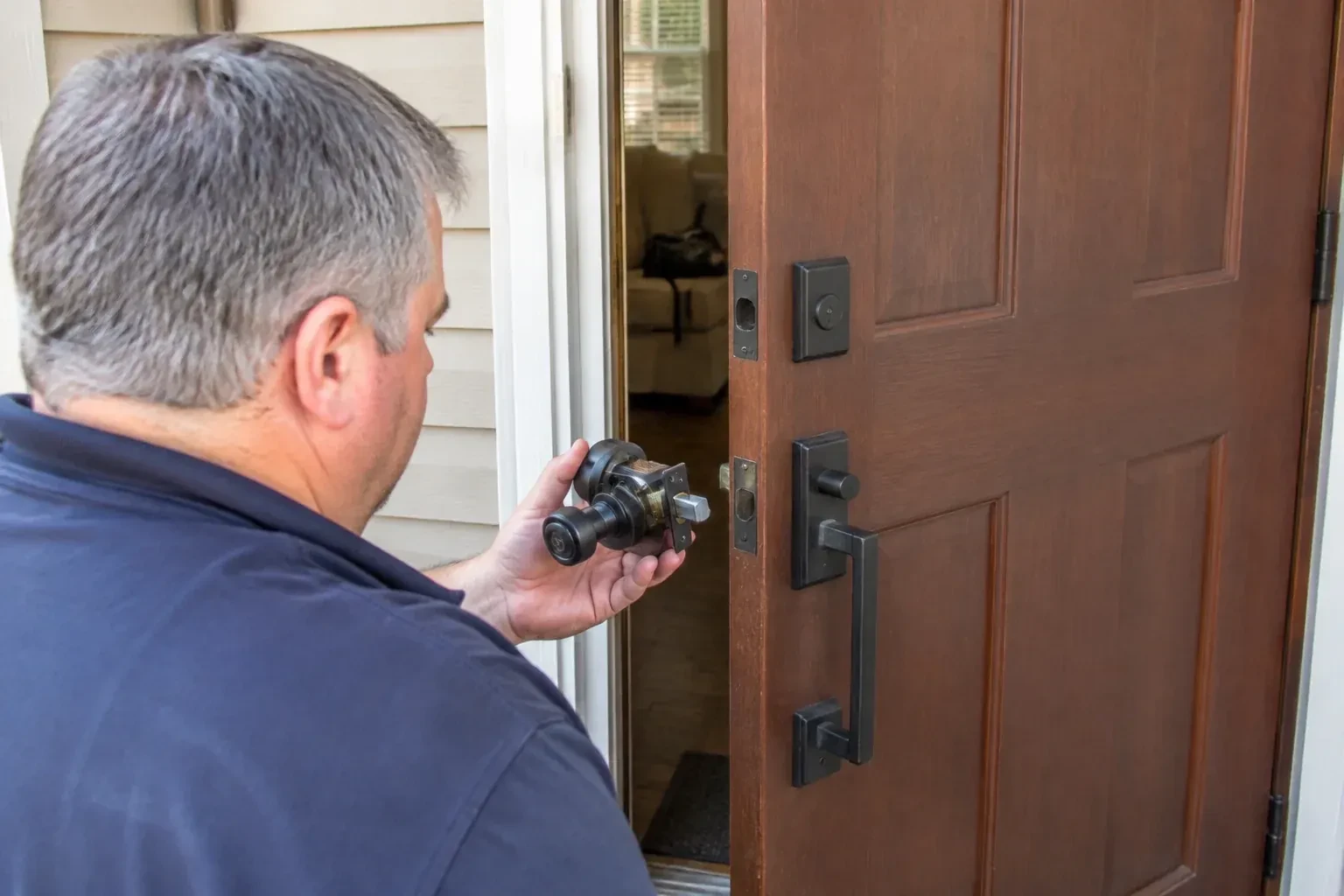
A jammed lock looks like one problem from outside and is usually one of three inside. The cylinder itself may have seized, packed with grit, corrosion or old grease. The link between cylinder and bolt, the tailpiece or cam, may have broken, which is why a key can spin without doing anything. Or the lock may be healthy and the bolt simply pinned against the strike by a door that has moved. Seized and jammed lock opening starts by telling those apart, because the right answer for one would damage the hardware in another. Once the culprit is known, the door is opened and the cause is repaired.
How the visit goesEvery time you pull the key out of the side door it comes away gritty. The lock has been sticky since the salt trucks started running, and today it has gone from sticky to solid, with the bolt still thrown.
Seized & Jammed Lock Opening
How the visit goes
Which of the three families it belongs to
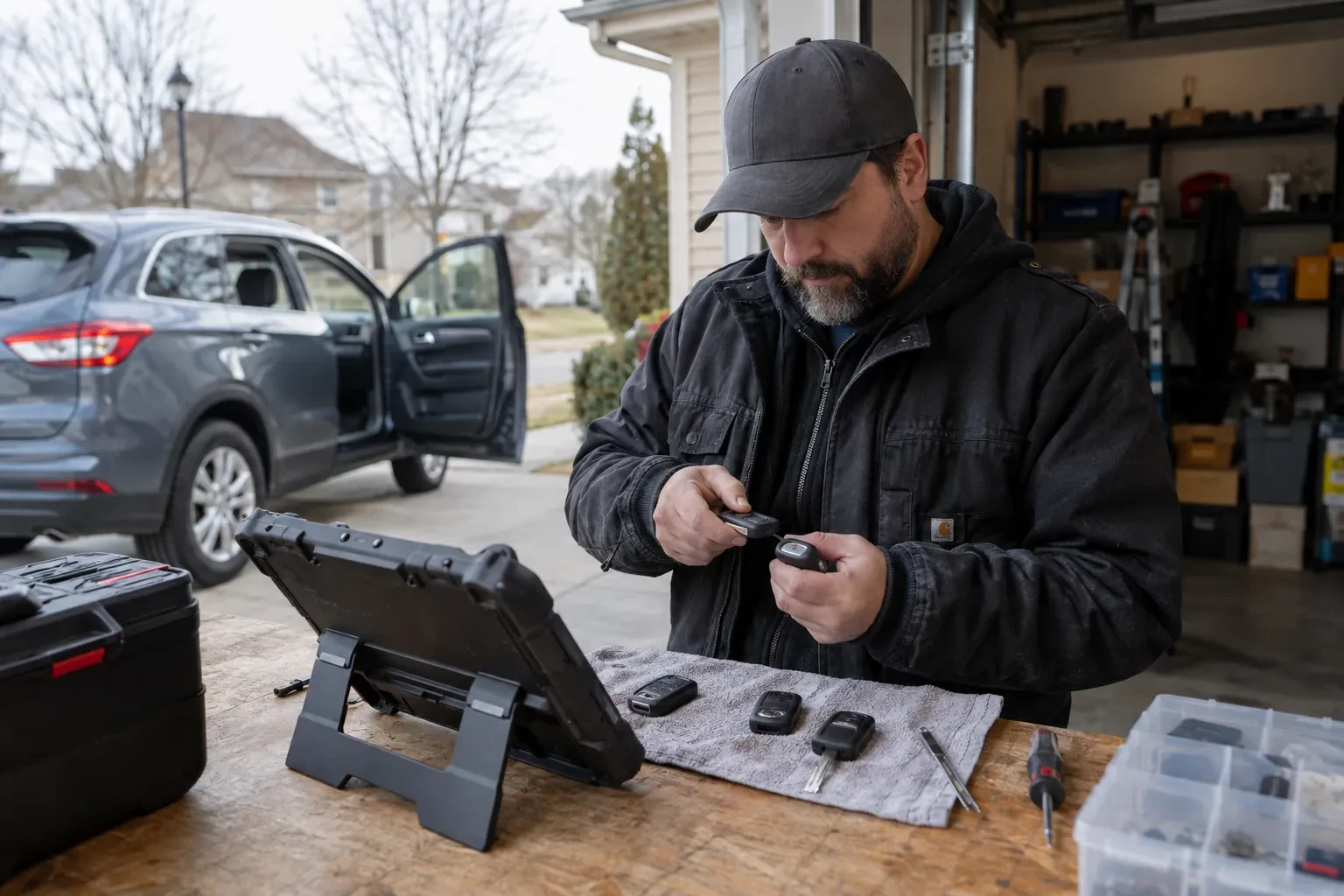
Every jammed lock falls into one of three groups, and sorting it is the whole diagnosis. A key that enters fully and will not turn points to the cylinder: grit, ice, corrosion, dried lubricant or a plug that has not returned to its neutral position with the shell. A key that turns freely and moves nothing points to the connection behind the cylinder, the tailpiece or cam, or to a broken hub in a mortise case. A key that works only when the door is pushed, pulled or lifted points past the lock entirely to the door and its strike. Each group has its own opening method and its own repair.
Thawing ice and clearing salt
Ice is melted, never chipped. A lock de-icer or gentle warmth on the cylinder face turns the frozen meltwater back to liquid so it can drain, and the key is then worked until the plug turns. Boiling water is kept well away, because it refreezes inside and can crack cold brass. Salt crust is flushed out with contact cleaner and the plug is dried thoroughly before any lubricant goes in, since salt and moisture sealed under lubricant keep corroding. The cylinder is then dressed with the lubricant specified for that product, applied once everything is dry. If the weatherstrip has frozen to the door, that bond is released and the seal wiped.
A door that closes without a fight
If the door was the cause, the hinges, strike and seal have been set so the bolt has room. Keeping it that way is a seasonal habit: each spring and fall, try the lock with the door closed and no pressure on it, and snug the hinge and strike screws if the door has begun to drop. Wood keeps moving with humidity, so a door that swells in August may need a touch on the strike in September. A door that suddenly needs a push to lock is telling you early, while the fix is still a screwdriver and not a seized bolt.
Seized & Jammed Lock Opening
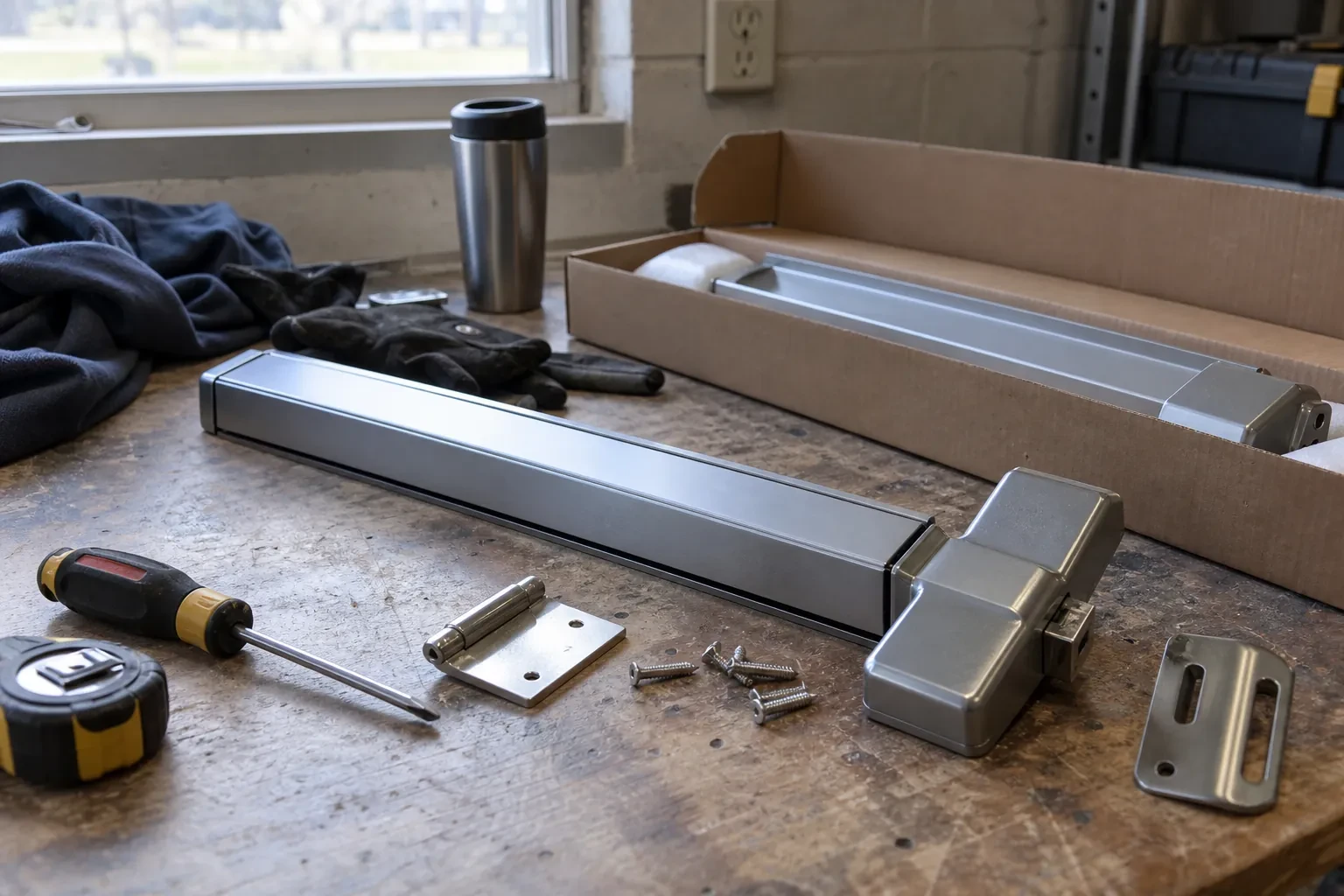
In the van
Cylinder springs, pins and cap
Mortise case spring and hub
Electronic contact cleaner
Penetrating lubricant
Long hinge screws
Seized & Jammed Lock Opening
What affects the quote
Small parts behind the cylinder
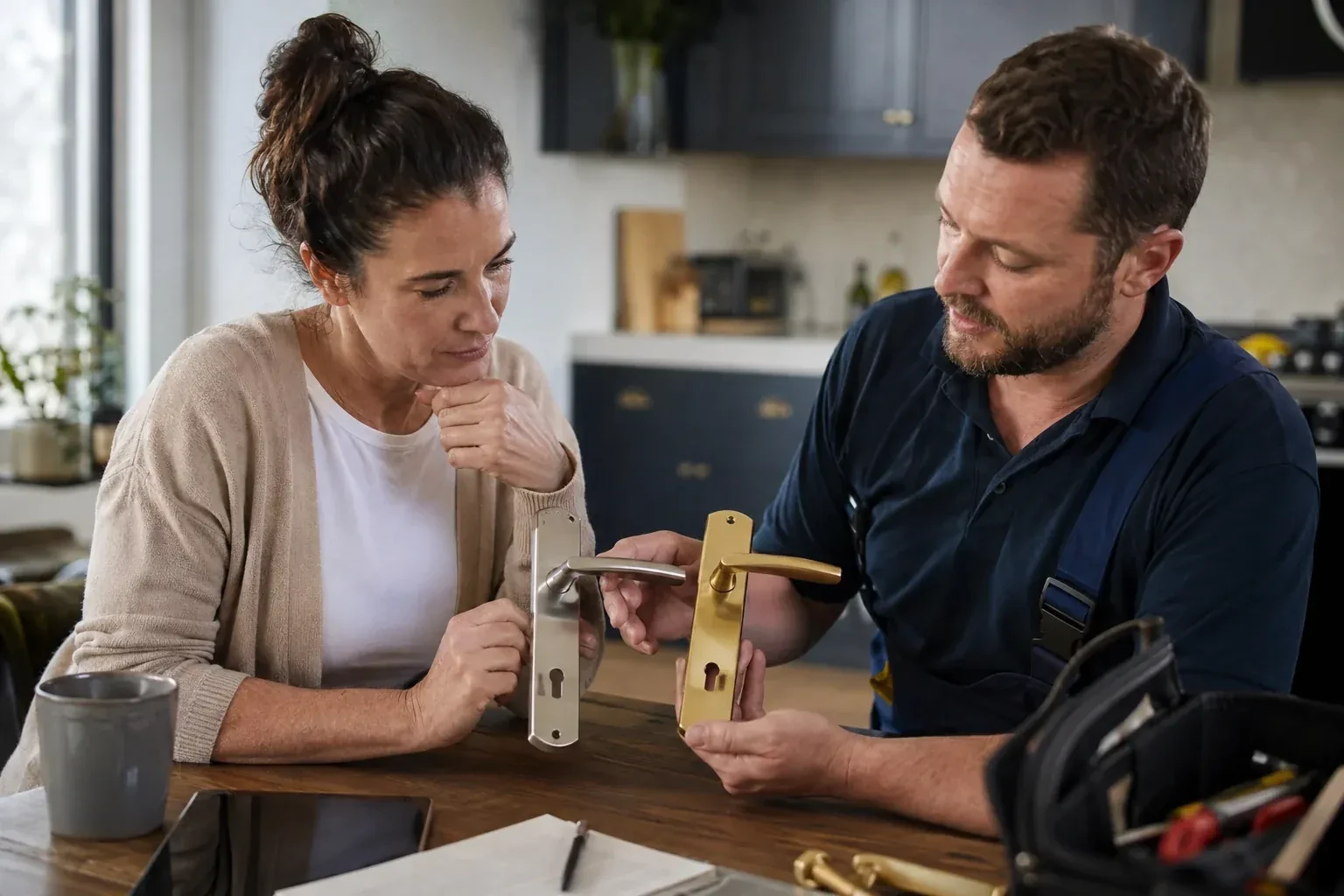
Tailpieces, cams, springs, cylinder caps and pins are minor items, but each one used is named on the quote so you can see what went into the lock.
Door and hinge adjustment
When the door caused the jam, hinge screws, shims, a strike move or a deepened bolt pocket are quoted as their own line beside the opening.
How many locks are affected
One seized side door is the simplest case; a front and back door that both drag, or a storefront with two leaves, adds hardware and time to the visit.
What to have ready
- Which side of the building does the door face, and is it near a salted driveway?
- Is anyone inside, and can the door be opened from that side?
- Do you have identification, a lease or a management contact for the property?
Seized & Jammed Lock Opening: questions
QuestionsIs a key stuck in the lock the same problem as a jammed lock?
They are close relatives. A key that will not come out is usually a plug that has not returned to its neutral position with the shell, a cylinder cap that has loosened, debris in the keyway, or a cylinder that is pinned incorrectly; some cylinders are also designed to hold the key until the plug is returned. The locksmith frees the key first, without pulling, then treats the cause the same way as any seized cylinder.
Why did my lock seize when it worked yesterday?
Locks rarely fail in a day; they fail slowly over months and announce it in a morning. Grit and old lubricant build up in the pin stacks until one cold night thickens them past the point the key can overcome, or a door that has been drifting on its hinges finally pins the bolt after a humid week. The wiggle you needed last month was the warning. A lock in this state is usually cleaned or adjusted back to health rather than replaced.
My keypad deadbolt is jammed and the motor just whirs. Is that the same service?
Yes, with one difference. On an electronic deadbolt the motor is trying to throw a bolt that is bound in the strike, and it strains or times out instead of driving it. Door alignment is a common cause, though batteries, corrosion, an overtightened mounting bolt, or a hardware fault can produce the same strain. The locksmith frees the bolt, adjusts the strike or hinges so it travels without resistance, checks the battery contacts, and confirms the auto-lock throws cleanly with the door closed.
Related services
- Business Lockout ServiceIt is ten to nine, three staff are on the sidewalk with their coffees, and the key that has opened the glass front door for six years will not turn.
- Broken Key ExtractionThe apartment key snapped mid-turn, leaving the cylinder twisted halfway between locked and open.
- Break-In Damage Lock RepairThere is a hole where the cylinder used to be.