Lockouts · Brampton
Business Lockout Service
It is ten to nine, three staff are on the sidewalk with their coffees, and the key that has opened the glass front door for six years will not turn.
In plain words
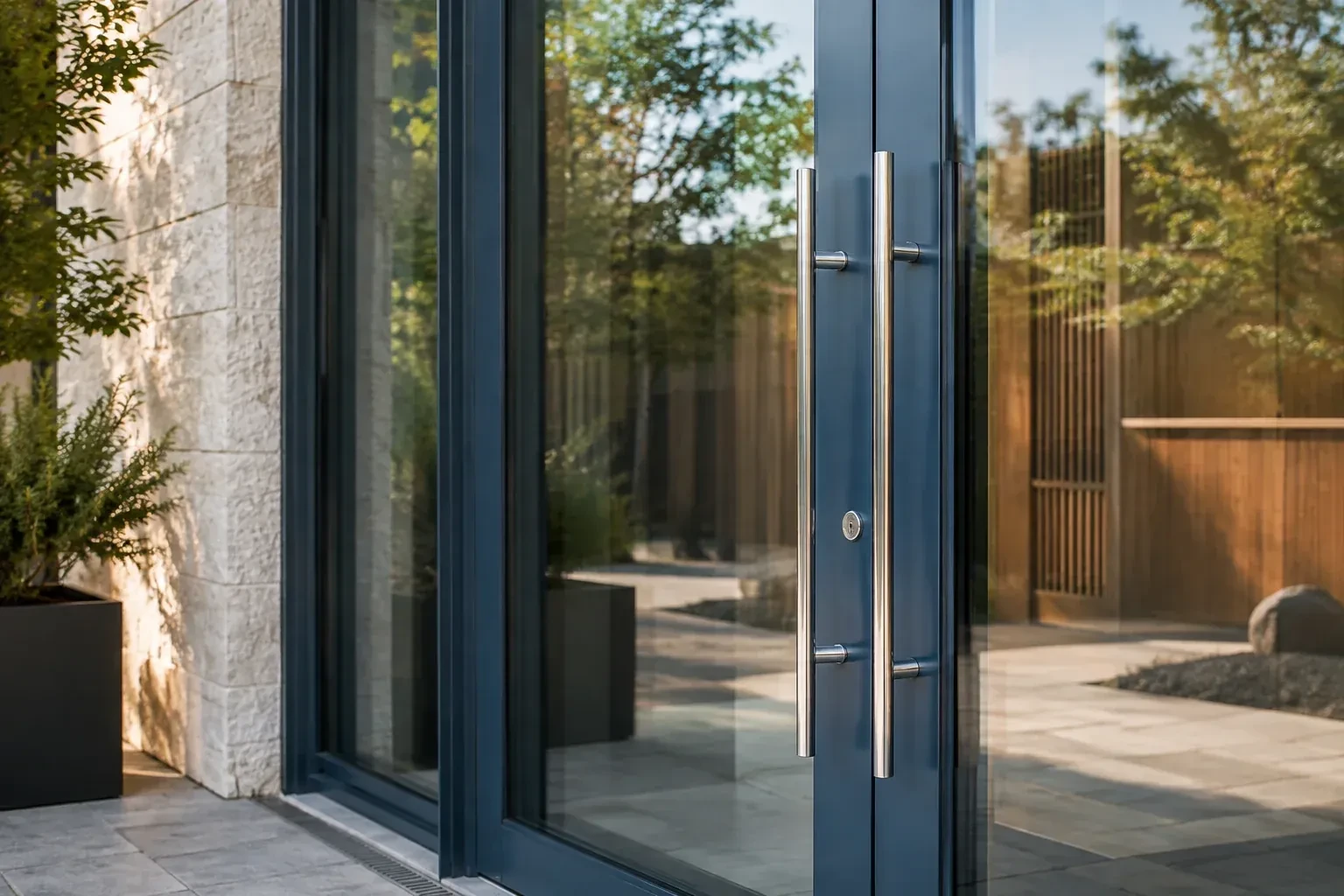
Heavy commercial doors move, and a good share of business lockouts are really door problems. A glass storefront door hangs on pivots or a continuous hinge that wear with thousands of openings a week, and once the door drops a few millimetres the hookbolt or latch binds against its strike. A hydraulic closer that has stiffened in the cold or lost its adjustment leaves a door that never latched properly the night before. Part of a lockout visit is reading the door: lifting it back into line, adjusting the strike and closer, and making sure the lock is asked to do only what a lock should do.
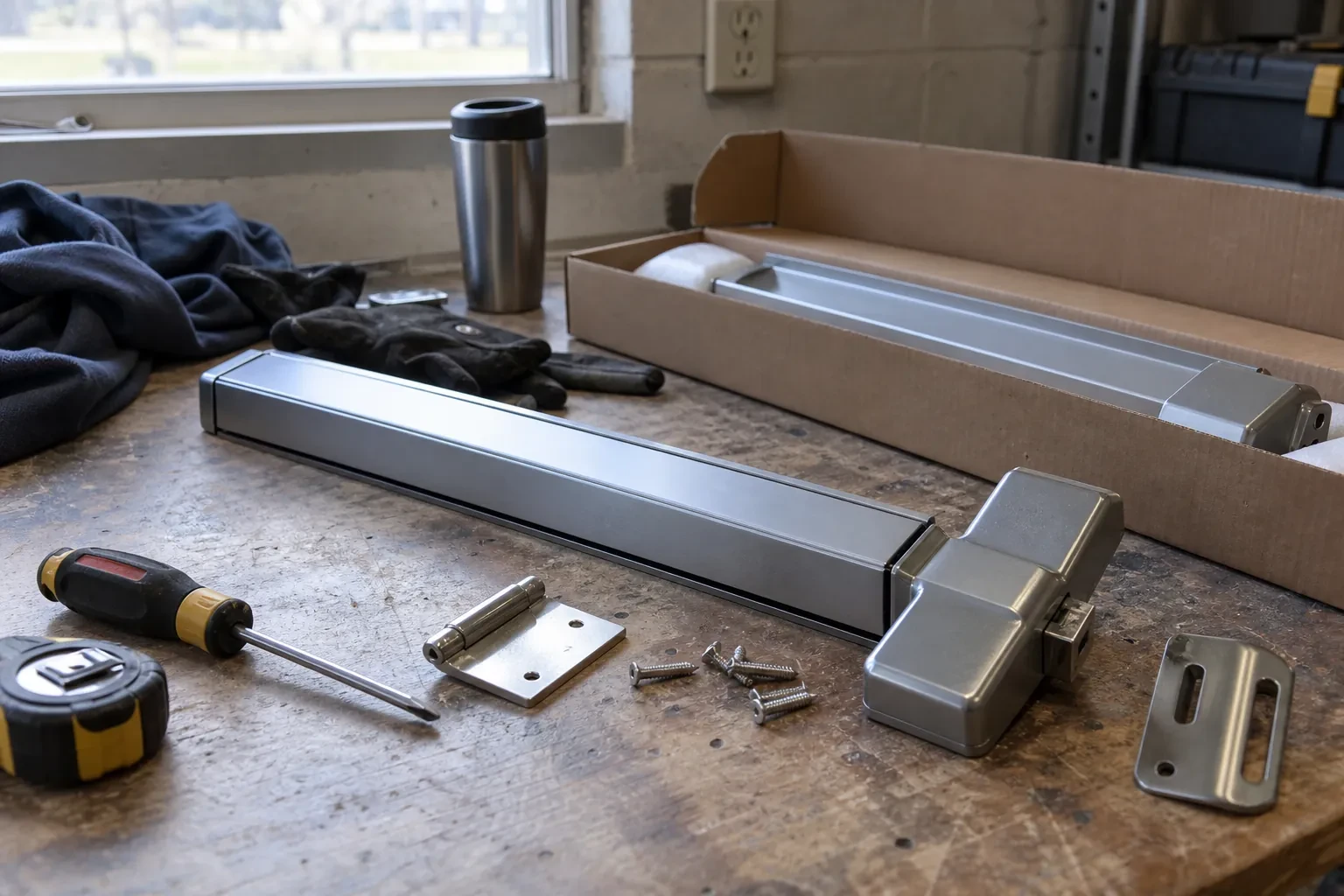
How the visit goesA cook stepped into the alley with the recycling and the rear door swung shut behind him. The push bar works from inside, but the outside handle has a keyed cylinder and the key is hanging in the kitchen office. The front door is locked too.
Business Lockout Service
How the visit goes
The building around the unit
A unit inside a plaza, office tower or industrial condominium comes with rules of its own. The locksmith asks whether the door is master keyed to a building system, because rekeying one cylinder without the property manager's knowledge can lock out cleaning and maintenance staff. A labelled fire door needs hardware that keeps its rating. A door on the exit route must keep releasing from inside with one motion, which rules out some replacements before they are suggested. Loading docks, freight elevators and after-hours building access are confirmed so the locksmith can actually reach the door with tools. A short call to the property manager often answers all of this at once.
Non-destructive first, on every commercial door
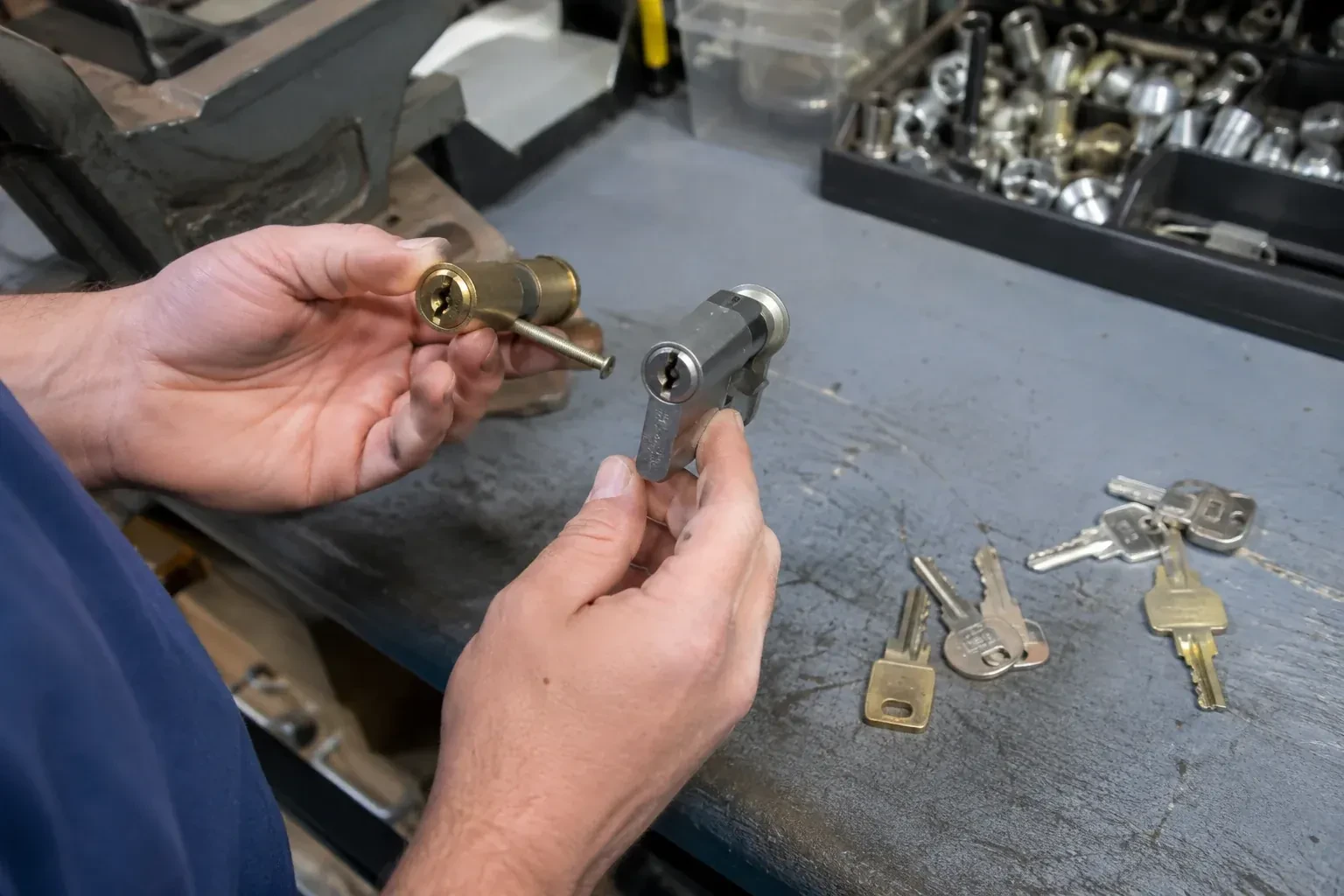
Commercial cylinders are built to a higher standard than most residential ones, but the order of work is the same. The locksmith begins with methods that operate the mechanism as a key would: picking or decoding the mortise or rim cylinder, or pulling a removable core with a control key when the building uses one. Next come bypasses that suit the specific hardware without cutting anything. Drilling sits at the end of the list and is discussed before it begins, aimed only at the cylinder, with a replacement fitted in the same visit. Working in this order keeps the storefront, the trim and the lock body as they were, and the business back on its own keys.
Exit doors that still let everyone out
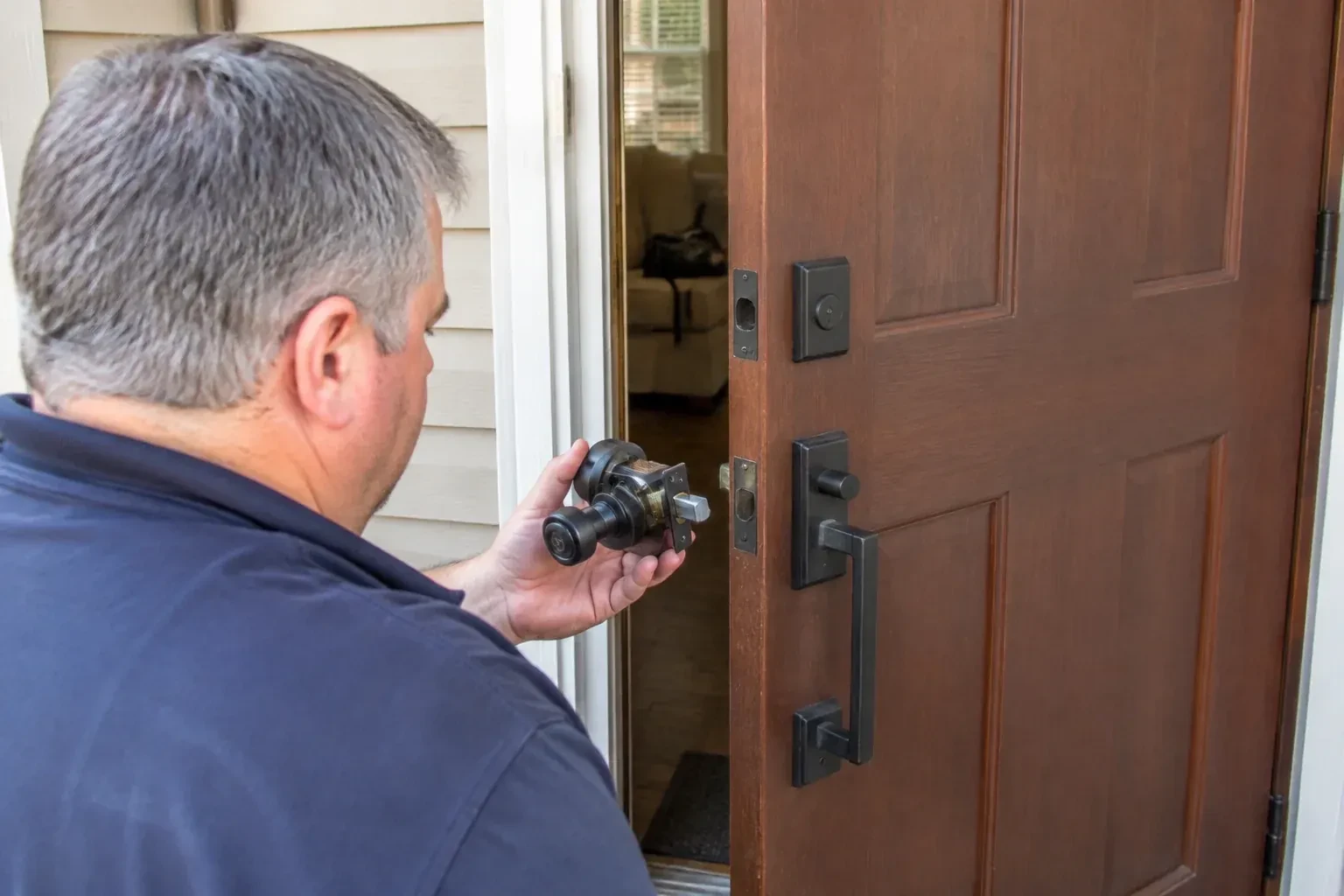
Whatever was replaced, a door on the way out of the building still opens from inside with a single motion and no key while people are in it. That standard is why a storefront gets a thumb-turn or paddle inside, a rear door keeps its push bar, and a double-cylinder deadbolt does not go on an exit route. The locksmith checks each door for this before leaving and points out any older hardware, such as a chain or a keyed-inside bolt on a back door, that the business may want to bring into line.
Business Lockout Service
In the van
Storefront deadlock and deadlatch bodies
Interchangeable cores pinned to system
Commercial pick and tension tools
Strikes, pivot shims and closer adjustment tools
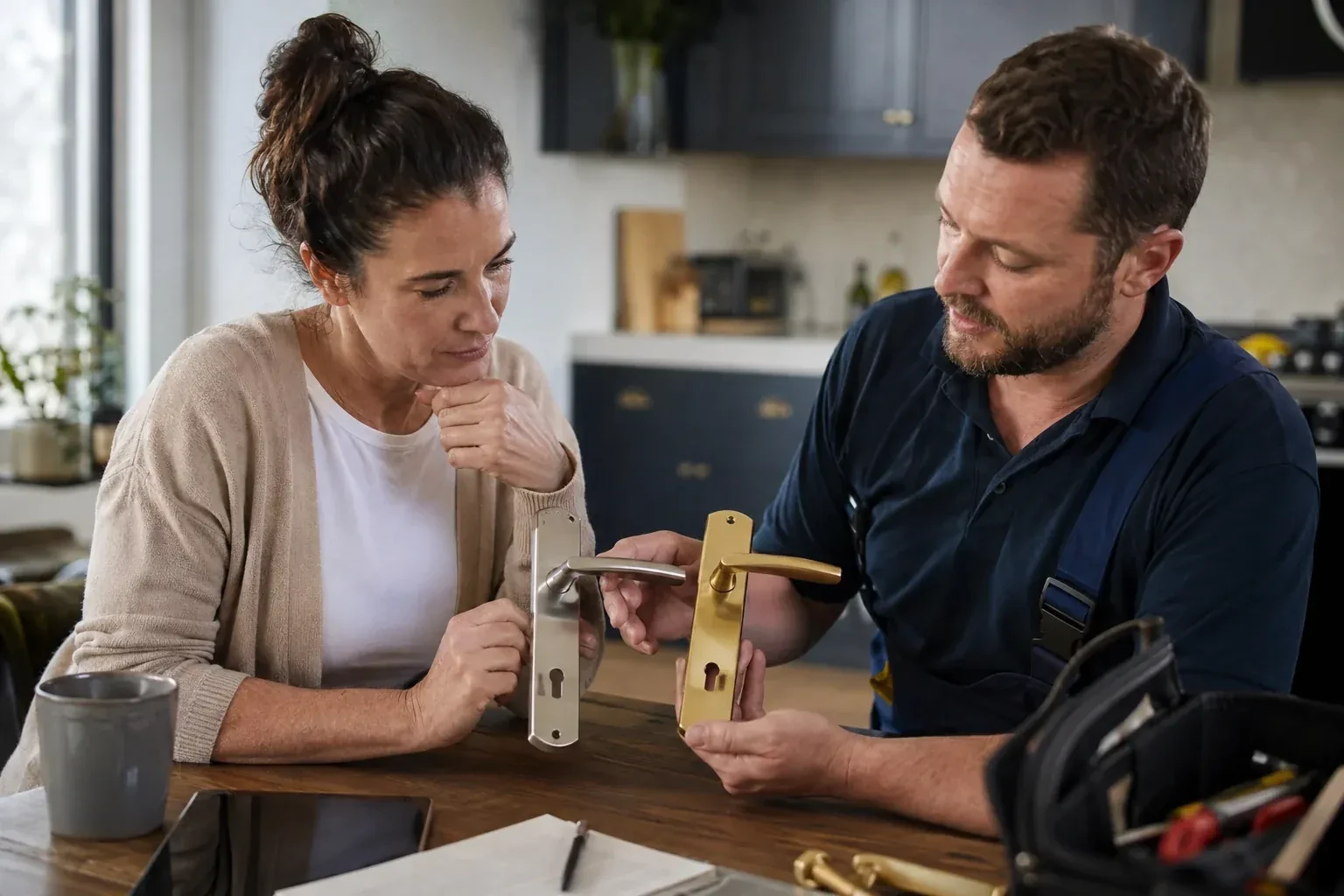
Replacement mortise and rim cylinders
Business Lockout Service
What affects the quote
Master key system changes
Where the door belongs to a building-wide master key system, changing it means planning with the property manager and pinning cylinders so both your key and the building key still work, which is more careful work than a single rekey.
Padlocks, gates and interior doors
A shutter padlock, a compound gate and interior doors for the cash office, stockroom or server closet are lighter work than an exterior lock but each is its own line, and a padlock is often replaced rather than opened.
Damage from earlier attempts
A paddle bent by a pry bar, a stile scratched by a screwdriver or a cylinder wrenched by pliers may need repair as well as opening, and the locksmith points out what was already there before quoting it.
What to have ready
- Are there other doors, a roll-up shutter, a gate or a padlock you also need opened?
- Has anyone already tried to force or pry the door?
- Which door are you locked out of, and what does the lock on it look like?
Business Lockout Service: questions
QuestionsCan you also deal with the back door, the roll-up shutter and the gate?
Yes. A business lockout covers every opening the premises relies on: the rear service door with its exit device, a roll-up shutter and its padlock, the compound gate, a mailbox in the lobby and interior doors such as the cash office or server closet. Mention each one when you call so the right padlock shackles, cores and cylinders are in the van, and so cylinders that should share a key are handled together.
How many keys should a business have, and who should hold them?
Fewer than most businesses think, and every one of them named. Two people who can open, one of whom can be reached on a day off, cover the door. Cleaners and contractors get a key only if they need one and hand it back when the arrangement ends. Write down who has what, collect keys when people leave, and rekey when one does not come back. Interior keys for the cash office or stockroom follow the same rule on a shorter list.
Last night the door would not lock either. Is that the same problem?
Sometimes, though a deadlatch that will not catch at closing and a bolt that refuses to withdraw at opening are different mechanisms, not automatically the same fault. A door dropped on its pivots or a cam slipped behind the cylinder can affect either one; a closer stopping short of the strike explains a latch that will not catch but not a bolt that will not retract. The locksmith checks each symptom on its own during the visit and tests the door closing under its own weight before leaving.