Lockouts · Brampton
Broken Key Extraction
The apartment key snapped mid-turn, leaving the cylinder twisted halfway between locked and open.
In plain words
Freezing is one of the bigger seasonal causes of broken keys here. Meltwater runs into the keyway during a thaw and freezes overnight, so the plug is locked in ice, and most people respond by turning harder. The blade gives before the ice does. A winter extraction visit therefore begins with thawing: lock de-icer or gentle warmth frees the plug, then the fragment is drawn out and the cylinder is dried and given the lubricant its maker specifies. You leave with the piece out, a new key cut, and a small tube of de-icer so the next frozen morning is a pause rather than a snap.
How the visit goesIn the parking lot your car key snapped in the driver's door. You are holding the plastic head with the buttons on it, the metal blade is inside the lock, and the spare is on a hook at home.
Broken Key Extraction
How the visit goes
Locked or unlocked right now
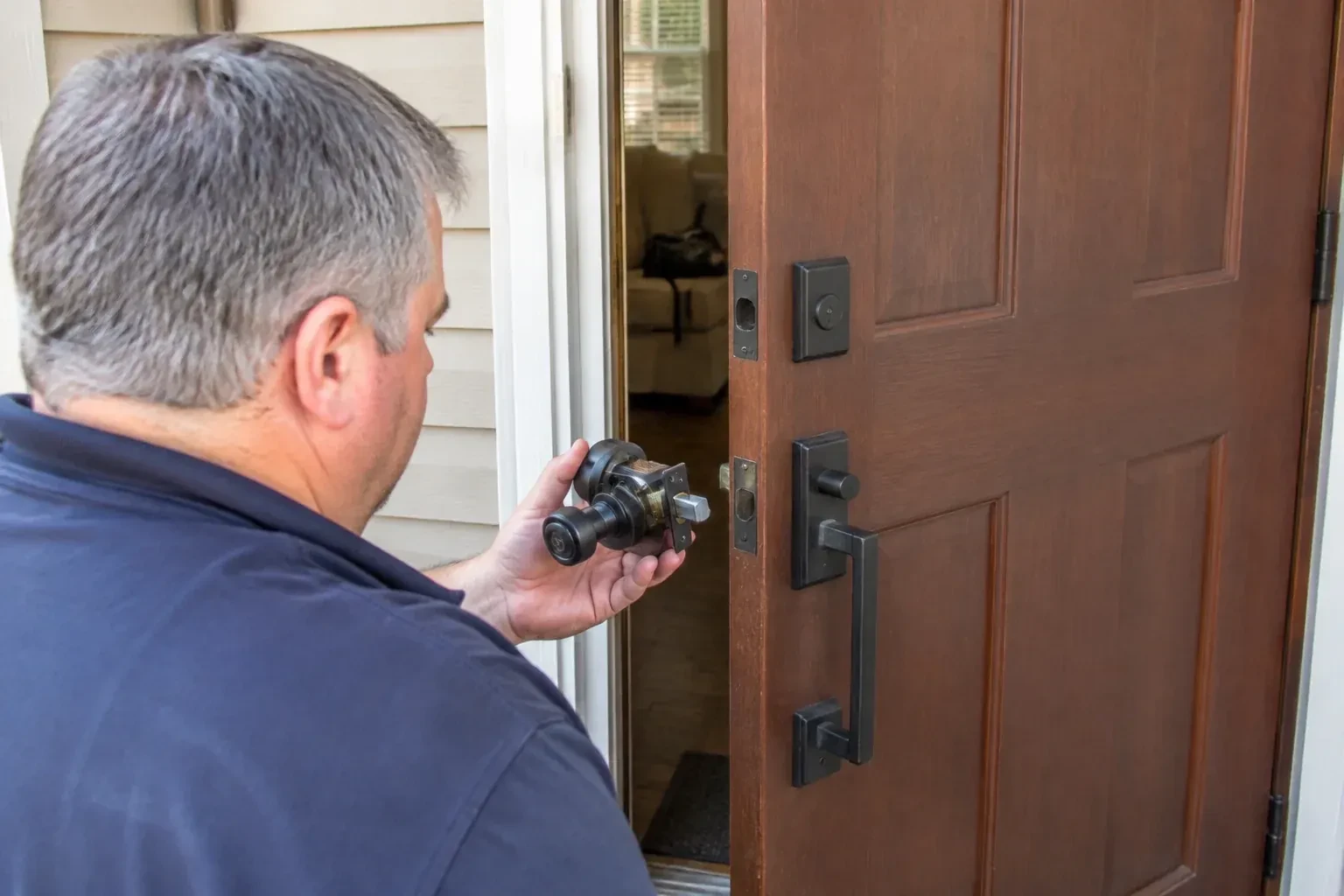
Whether the bolt is thrown changes the order of work. If the door is locked, extraction is the first half and getting you inside is the second; the locksmith plans both so the door is opened with the least fuss once the keyway is clear. If the key broke while you were locking up and the door is open, the priority reverses: the fragment comes out and the door is made secure before anything else is discussed, so you can leave when you need to. On a vehicle the same question applies to the door and, separately, to whether the ignition turns.
Bringing the plug back to rest
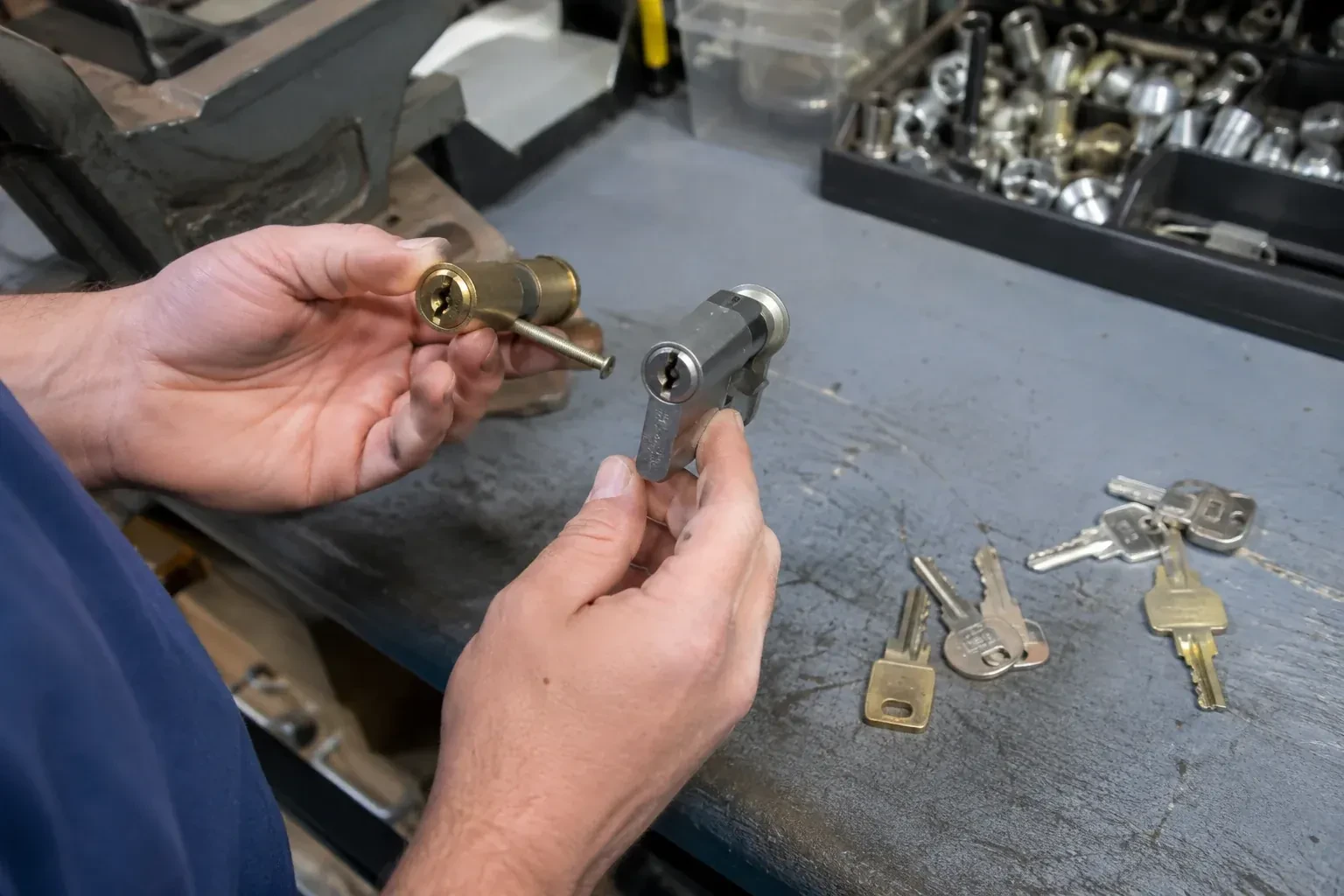
Nothing slides out of a rotated plug, because the pins that the key lifted are still sitting at the shear line and holding the blade. So when the key snapped mid-turn, the first job is to return the plug to its resting position. The locksmith applies gentle rotational pressure with a tension tool, feeling for the point where the pins drop back into the plug and the keyway lines up with the cylinder body. Sometimes a light tap on the face helps the pins settle. Only once the plug is at rest is the fragment free to move, and only then do the extractors go in.
A lock that turns like it should
The visit closes with the lock proving itself. The new key goes in fully, turns through its full travel and comes out without a catch, from both sides, first with the door swung open, then with it shut against the strike. The bolt is watched seating fully in its pocket. You are shown the fragment that came out and told what condition the cylinder was in. Anything the locksmith noticed, a strike screw backing out or a hinge that has dropped, is pointed out so it is not a surprise later. The door is locked with your own new key as the last act of the visit.
Broken Key Extraction
In the van
Replacement cylinder or deadbolt
Manufacturer-approved cylinder lubricant
Fine-jawed extractor pliers
Tension tool for resetting the plug
Vehicle key blades and chip shells
Broken Key Extraction
What affects the quote
When you call
Whatever hour you call about a broken key extraction — morning, evening, a weekend or a holiday — the amount is the same. Locksmiths are reachable at any time, and the exact figure is confirmed on site once the technician has seen how deep the fragment sits.
Locked or unlocked door
If the door is locked, the extraction is followed by opening it, which is quoted as its own part of the visit. If the door is open, the work is extraction and securing.
Vehicle key electronics
Fitting a new blade to a chip head, or moving the chip and remote into a new shell, is separate from the extraction and quoted as such, as is any ignition check.
What to have ready
- Would you like extra keys cut while the locksmith is there?
- Do you have a spare key that works, or the key code tag from the lock?
- Is the door or vehicle locked or unlocked right now?
Broken Key Extraction: questions
QuestionsMy car key snapped in the door. Is that a locksmith job?
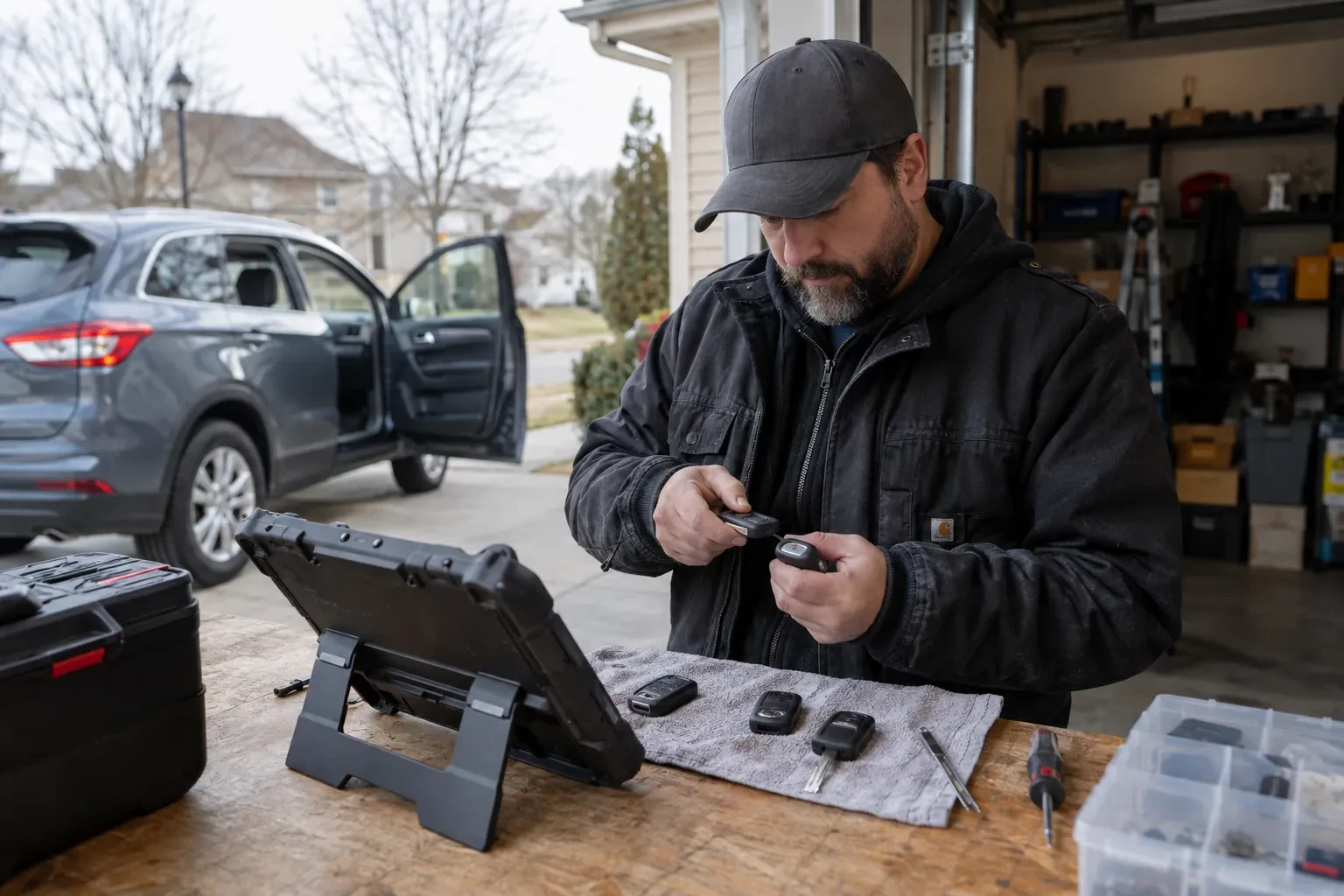
Yes. Vehicle door locks and ignitions use wafer cylinders that respond to the same extractor tools. Once the blade is out, the plastic head you are holding, which carries the transponder chip and any remote buttons, can usually take a freshly cut blade so the car keeps recognizing it. The ignition is checked as well, since a broken key sometimes disturbs the wafers.
Why did my key break at all?
Often fatigue, though not the only cause. A brass blade is weakest where the deepest cut leaves the least metal, and thousands of turns can slowly work a crack into that spot. Then one morning something asks more of it: a frozen cylinder, a bolt binding in a swollen door, grit in the keyway, or turning before the key was fully in. A bent, worn or poorly cut key can also fail on its own, with no such trigger. The lock is inspected afterwards to find which applied.
What happens if the piece cannot be removed?
It is rare, and it is discussed before anything changes. A glued, jammed or corroded-in fragment can usually still be reached by taking the cylinder off the door and working the plug out from the back. If even that fails, the cylinder is drilled where plug meets housing, sacrificed and replaced on the spot with new keys cut, so the door locks normally by the time the locksmith leaves.
Related services

- Business Lockout ServiceIt is ten to nine, three staff are on the sidewalk with their coffees, and the key that has opened the glass front door for six years will not turn.
- Break-In Damage Lock RepairThere is a hole where the cylinder used to be.
- Seized & Jammed Lock OpeningYou are inside, the deadbolt is thrown, and the thumb-turn will not budge.