Car keys · Brampton
Motorcycle & Scooter Keys
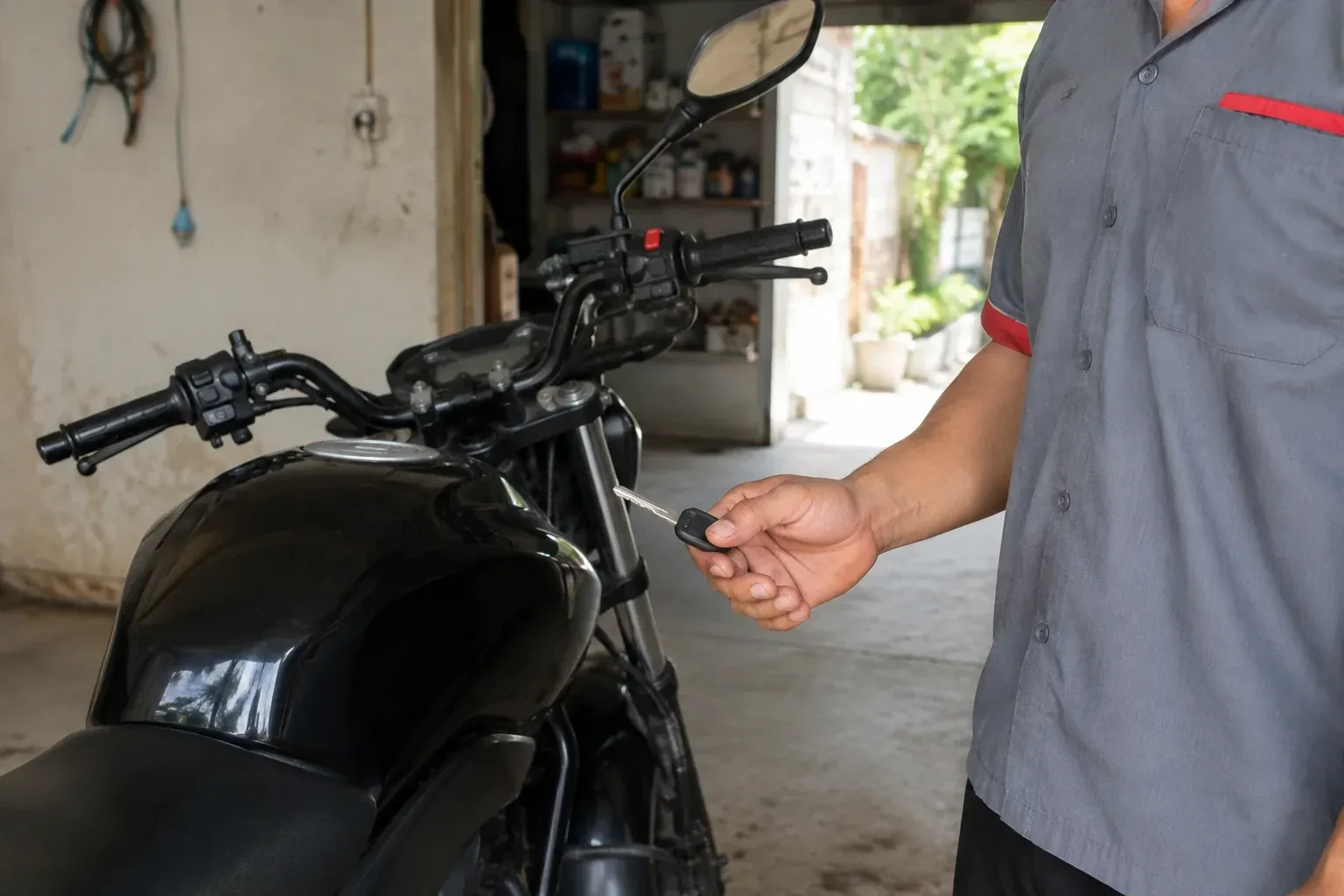
After a winter under a cover, the steering lock will not budge.
In plain words
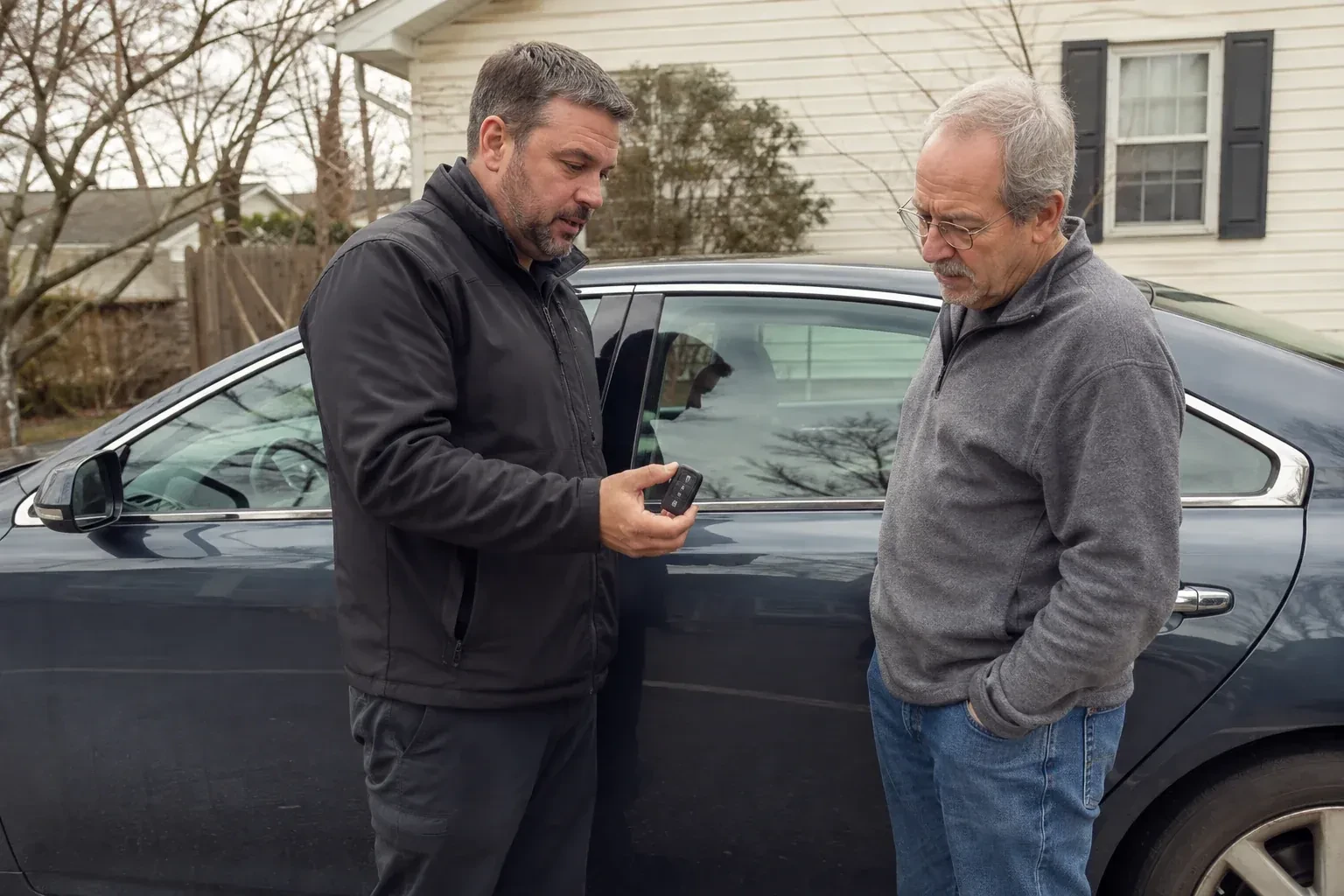
The visit follows a steady order regardless of what caused the missing key. Details taken over the phone, such as make, model and which locks are affected, decide what equipment comes along. At the machine, ownership is confirmed and the lock or locks are read to understand the keyway and any electronics involved. A key is then cut, decoded or programmed to match, tested on every lock on the bike including a full engine start, and handed over along with a note of what was done.
How the visit goesAfter a winter under a cover, the steering lock will not budge. The key seats fully in the barrel, but turning it meets a wall of resistance that no amount of wiggling moves past.
Motorcycle & Scooter Keys
How the visit goes
Reading the lock family
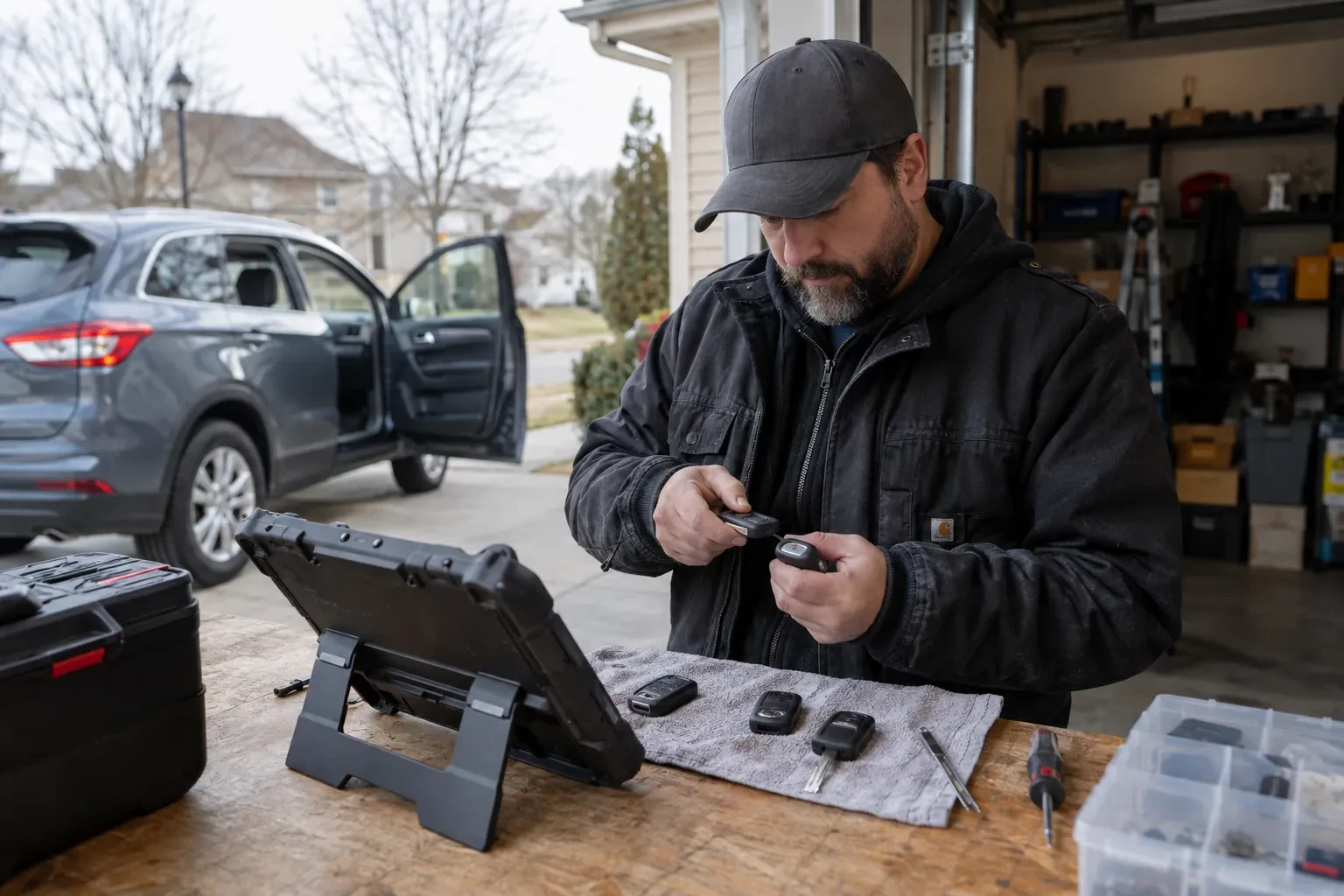
Every motorcycle lock has a shape and a history that tells the locksmith what they are working with. The keyway profile, the number of wafers, whether the plug is single- or double-sided, and any maker's mark on the lock face narrow down which key blank and which cutting code apply. Manufacturers reuse wafer counts across very different keyway profiles, so a lock that looks similar to another model can still refuse a blank cut for it. Identifying the lock correctly before cutting anything is what keeps the first key made for the machine the right one.
Cleaning and servicing a corroded lock
A lock gummed up by road grit or old grease is stripped down, its wafers and springs cleaned individually, and the keyway itself cleared of anything trapped against the wafers. Corrosion on a wafer's edge is worked off carefully rather than scraped away roughly, since removing metal changes the depth the key needs to lift it to. Once the mechanism moves freely again, it is dressed with whatever lubricant its own maker specifies, reassembled, and tested with the customer's key before the locksmith considers the lock itself resolved rather than simply hidden under a new cut.
A key set that covers the whole machine
Where the locks are compatible, the visit ends with them all answering to the same key: ignition, steering, seat and, where fitted, the fuel cap or a storage compartment. Before leaving, each one is opened and closed again with the owner watching, so there is no guessing about which key does what. Carrying one key instead of two or three is a small change, but it is the detail most owners mention afterward, since a single blade on the ring is one less thing to sort through at the pump or on the side of the road.
Motorcycle & Scooter Keys
In the van
Torx and security bits
Fob shells and batteries
Replacement ignition or steering lock
Contact cleaner
Motorcycle key blanks
Motorcycle & Scooter Keys
What affects the quote
Transponder and fob hardware
A transponder key needs a chip and, on some systems, a fob shell in addition to the cut blade, and that hardware is a separate line from a plain mechanical key.
Weather affecting a seized lock
A lock seized by cold, ice or dried-out grease from a season of storage takes patient thawing and working before a key can be tested against it, which a winter call reflects.
Any prior damage or attempts
Any prior attempt at the lock, a failed hardware-store copy or a scratched keyway, may need to be worked around or corrected before a new key can be properly tested, adding to the job.
What to have ready
- Is the machine's VIN accessible on the frame or paperwork?
- Does the engine crank but fail to start with the current key?
- Is the steering lock turning freely, or does it feel stuck?
Motorcycle & Scooter Keys: questions
QuestionsI bought a used bike with just one worn key. What happens now?
The locksmith first identifies every lock on the machine, ignition, seat and fuel cap included, and tests the key that came with it against each one. Whatever the existing key does not already cover is then cut or decoded to match, so the outcome is a complete, known set of keys rather than a single blade of uncertain history. It is a common situation and does not require any prior records to resolve.
What should I do to look after a new key or lock afterward?
Very little beyond two simple habits: wipe the key clean before use, especially after a wet ride, and, where the lock's own maker calls for it, a light dose of the specified lubricant once or twice a year. Storing a spare somewhere other than on the machine itself rounds out the care a new key or lock generally needs.
Do you need the vehicle's VIN to make a key?
It helps but is not always required. The VIN can confirm the exact model and sometimes points to a factory key code on file, which speeds up cutting a key without reading the lock from scratch. Where the VIN is not available or does not lead anywhere useful, the locksmith works directly from the lock or an existing key instead, so a missing VIN slows the process rather than stopping it.
Related services
- Car Key ReplacementMinus twenty outside, the fob button does nothing, and the door keyhole has a crust of road salt over it because you have not used a metal key in that car since the day you bought it.
- Spare Car Key DuplicationTwo coworkers share one delivery van and one key between them, trading it at the start and end of every shift in a parking lot.
- Key Fob ProgrammingA cracked case or a spin through the wash left the fob unresponsive, and opening it up reveals a slightly corroded board where the buttons used to sit.