Lockouts · Brampton
Lost Keys — Same-Visit Rekey
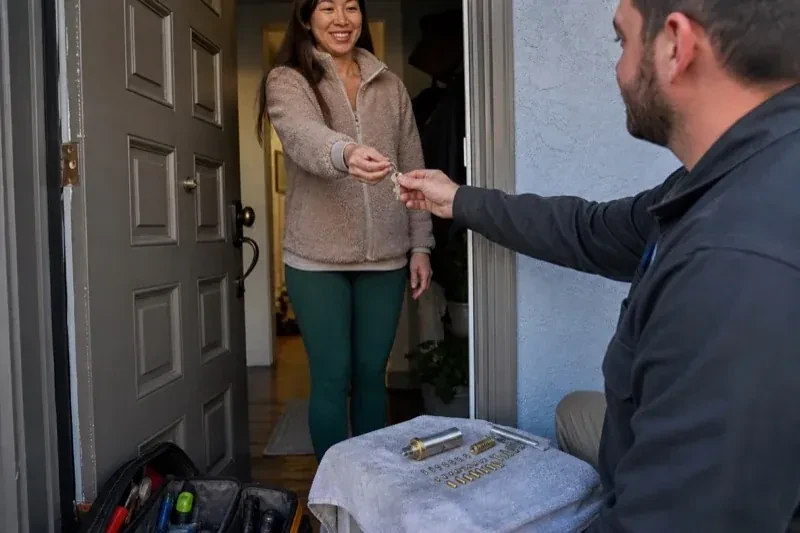
The lawyer's envelope held two keys for the new house.
In plain words
If you rent, losing a key is handled in three steps rather than one. Tell your landlord first, since a lock change on a rented unit goes smoother when both sides know about it and both end up with a working key. Then the locksmith rekeys the suite door, and any other cylinder that key fitted, with both parties knowing. Finally new keys are cut for you and for the landlord's set, so the arrangement that existed before the loss is restored on a fresh combination. Landlords generally welcome the call; their hardware stays in place and their own key set is refreshed too.
How the visit goesYou were shovelling the driveway after dark and the ring must have slid out of your coat pocket somewhere under a metre of snow. You have raked the whole bank with a flashlight. It will turn up in April, and you would rather not wait.
Lost Keys — Same-Visit Rekey
How the visit goes
Reading each cylinder before it comes off the door
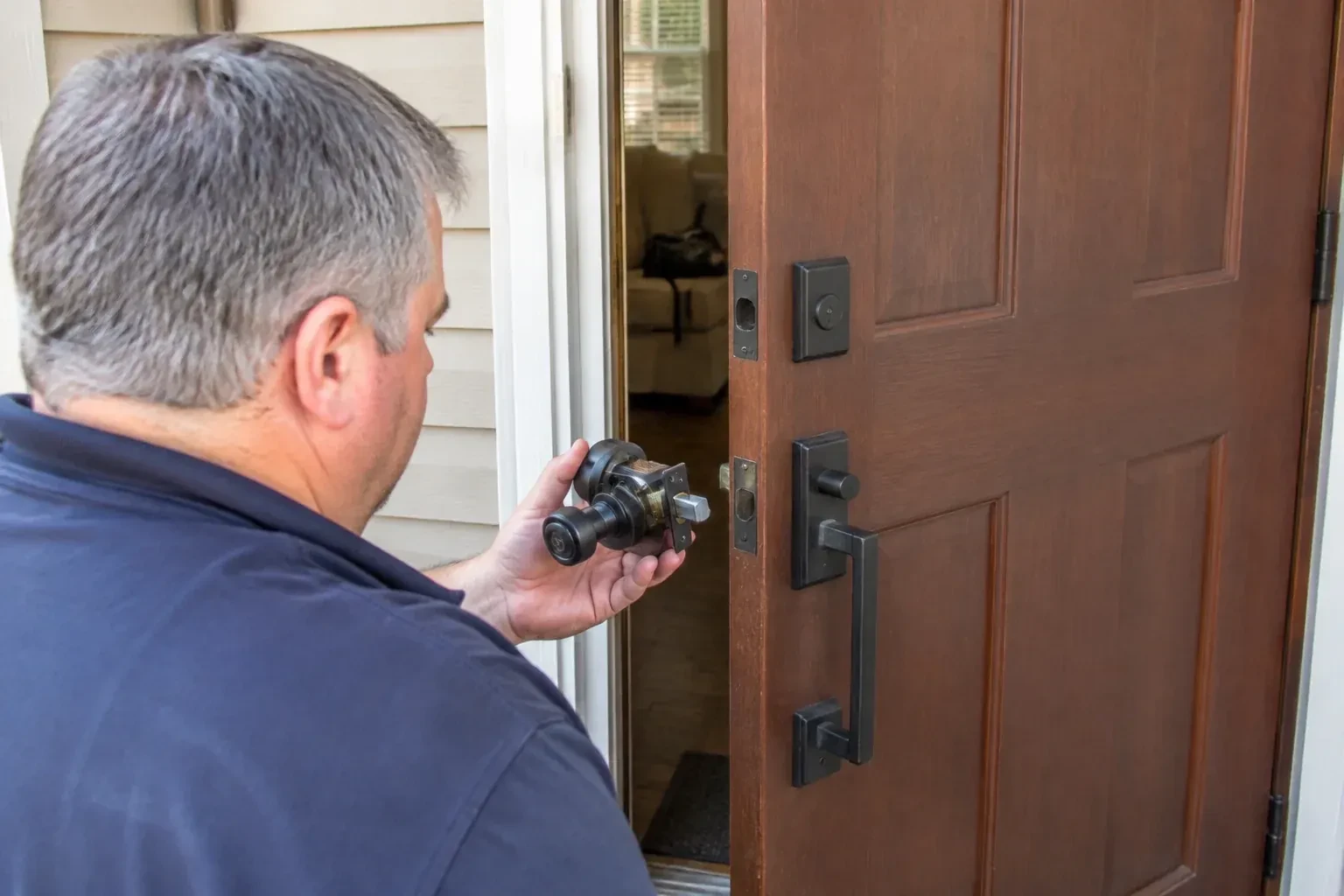
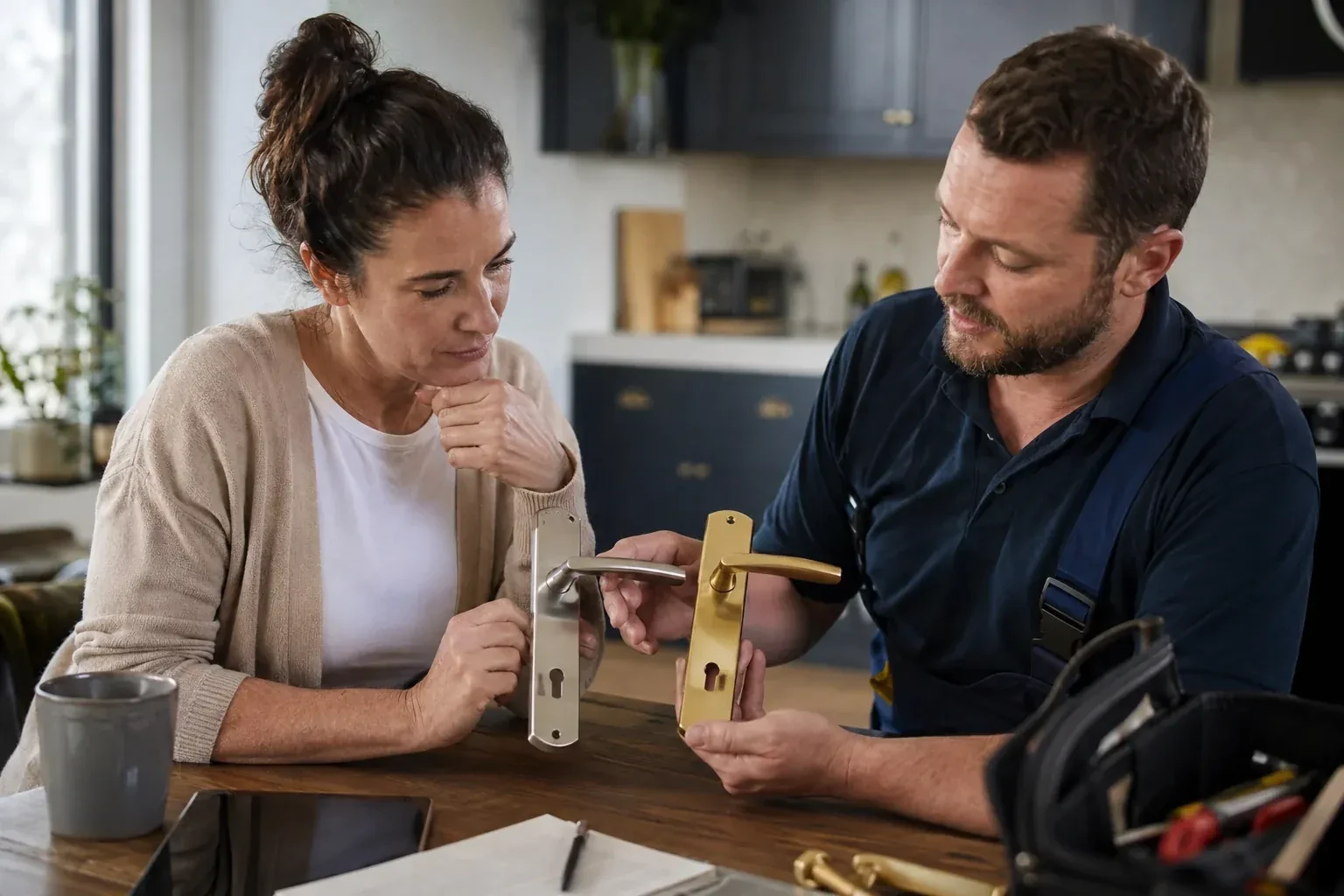
Every cylinder on the list gets a close look while it is still in the door. The keyway shape and the maker's stamp tell the locksmith which pin kit fits and whether the keys can be cut on the van. The feel of the plug with a working key, if one exists, says whether the pins and springs are healthy or tired. Corrosion on the face, a wobbly plug or a key that needs a jiggle points to a cylinder that will benefit from cleaning or replacing while it is out. A homeowner-rekeyable cylinder, recognisable by its small reset slot beside the keyway, calls for a different tool and gets noted.
Bringing every door onto one key
When the household wants a single key, the locksmith pins each compatible cylinder to the same combination in turn, using the same cut key as the reference so nothing drifts between doors. A cylinder from a different keyway family is exchanged for one that matches, or the household keeps a second key for that door if they prefer. Where a home has a keyed garage entry, a shed and a gate on the same list, they follow the same process. The finished set is tried door by door with a single key, and the spare cylinders and old keys are gathered up so nothing that fits the old combination stays in circulation.
One key on the ring
If the house was keyed alike during the visit, the ring that goes back in your pocket is lighter. One key opens the front door, the back door, the garage entry and the gate. Each family member carries one thing instead of a jangle, and the question of which key goes to the dog walker has one answer. New doors added later, a shed or a workshop, can be pinned to the same code when they are installed. Guests and sitters find the arrangement easier too, and a single key is a good deal harder to lose than a bunch.
Lost Keys — Same-Visit Rekey
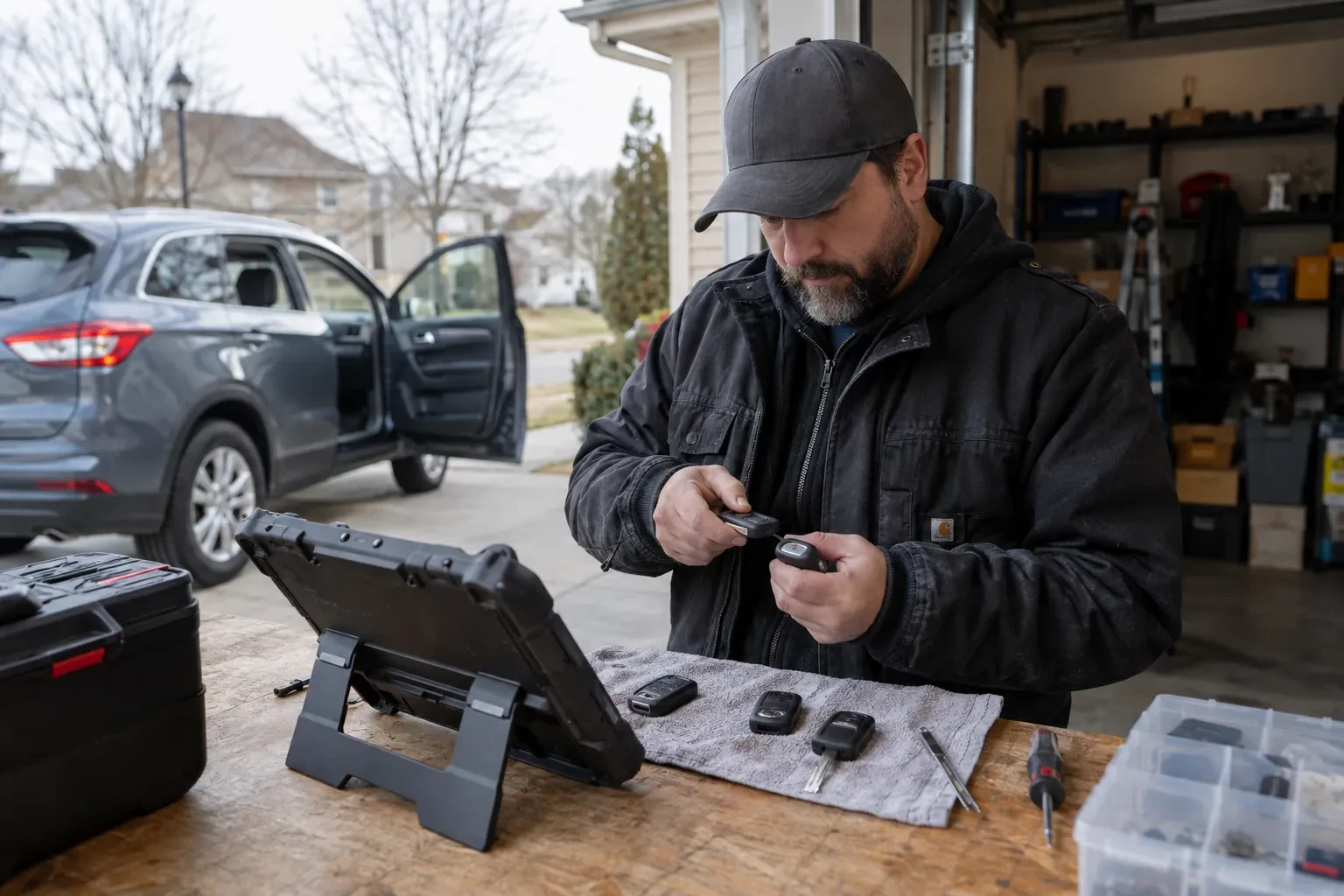
In the van
Plug follower set
Key tags and a key register
Key gauge and decoder
Pin tweezers and shims
Code key machine
Lost Keys — Same-Visit Rekey
What affects the quote
Condition of the cylinders
A clean, healthy cylinder is repinned as is. One clogged with salt and grit is cleaned first, and a worn or damaged one is replaced rather than repinned, each priced as its own item.
Entry as well as rekeying
If the lost key was your only key and you are locked out too, the door is opened first and that opening is quoted as its own step ahead of the rekey.
Upgrades chosen during the visit
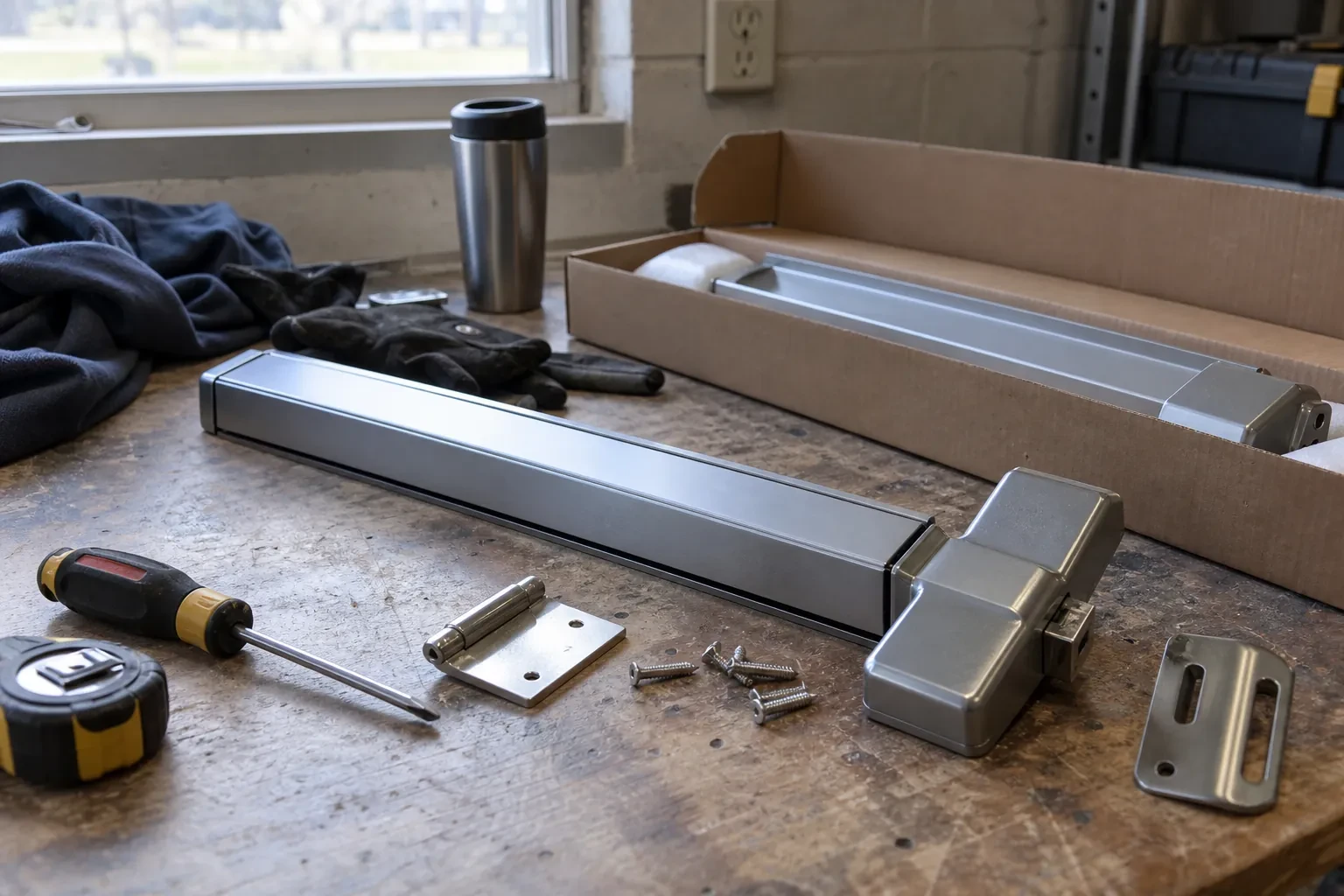
Some people take the moment to move to a heavier deadbolt, a restricted keyway, a reinforced strike or a lockbox for the spare. None of it is required; each option is a separate line.
What to have ready
- Do you own the property, rent it, or manage it for someone else?
- Do you currently have a way inside, or are you locked out as well?
- Was anything with your address, such as a licence or a mail tag, lost with the keys?
Lost Keys — Same-Visit Rekey: questions
QuestionsHow many new keys should I ask for?
Count the people who genuinely need one and add one for a known spare location: each adult, a teenager, a caregiver or regular sitter, the neighbour who checks the house, the landlord if you rent. Keys are cut on site, so the number is easy to settle during the visit. Fewer keys with names attached is the point; another can always be cut later from the code.
Does stamping keys 'do not duplicate' stop copies?
It asks; it does not compel. The stamp is a request that a key-cutting counter may or may not honour, and manufacturers say as much. Real control comes from a restricted keyway, whose blanks are issued only through authorised channels against a key card, or simply from knowing how many keys exist and who holds them. A rekey resets that count to a number you chose.
Can all my doors work on one key afterwards?
Usually, yes. Cylinders that share a keyway family accept the same blank, so they can be pinned to one combination during the rekey. The front door, back door, garage entry and a gate padlock of the same family become a single key. Where a door uses a different family, the locksmith can swap its cylinder for a compatible one in the same visit, or you can choose to keep two keys for that door.
Related services
- Business Lockout ServiceIt is ten to nine, three staff are on the sidewalk with their coffees, and the key that has opened the glass front door for six years will not turn.
- Broken Key ExtractionThe apartment key snapped mid-turn, leaving the cylinder twisted halfway between locked and open.
- Break-In Damage Lock RepairThere is a hole where the cylinder used to be.