High security · Brampton
Safe Opening & Combination Change in Brampton
A safe sat in a late parent's basement for years, its combination known to nobody left in the family, and everyone would like to know what is actually inside it.
In plain words
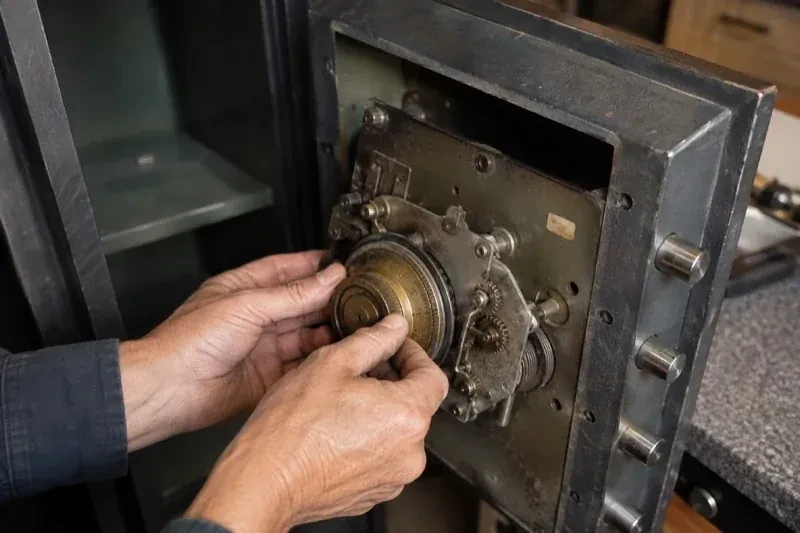
A safe that arrives with no history at all, through an estate, an auction or a property changing hands, gets treated as an unknown until the locksmith reads it directly: the data plate, the lock type, the dial or keypad style, and any wear that hints at its age. From there the opening proceeds exactly as it would for a known safe, and afterward a fresh combination replaces whatever was set by owners nobody can ask.
How the visit goesPry marks circle the dial after an overnight break-in attempt, and the safe now refuses every number that used to open it, as if something inside has locked itself down.
Safe Opening & Combination Change
How the visit goes
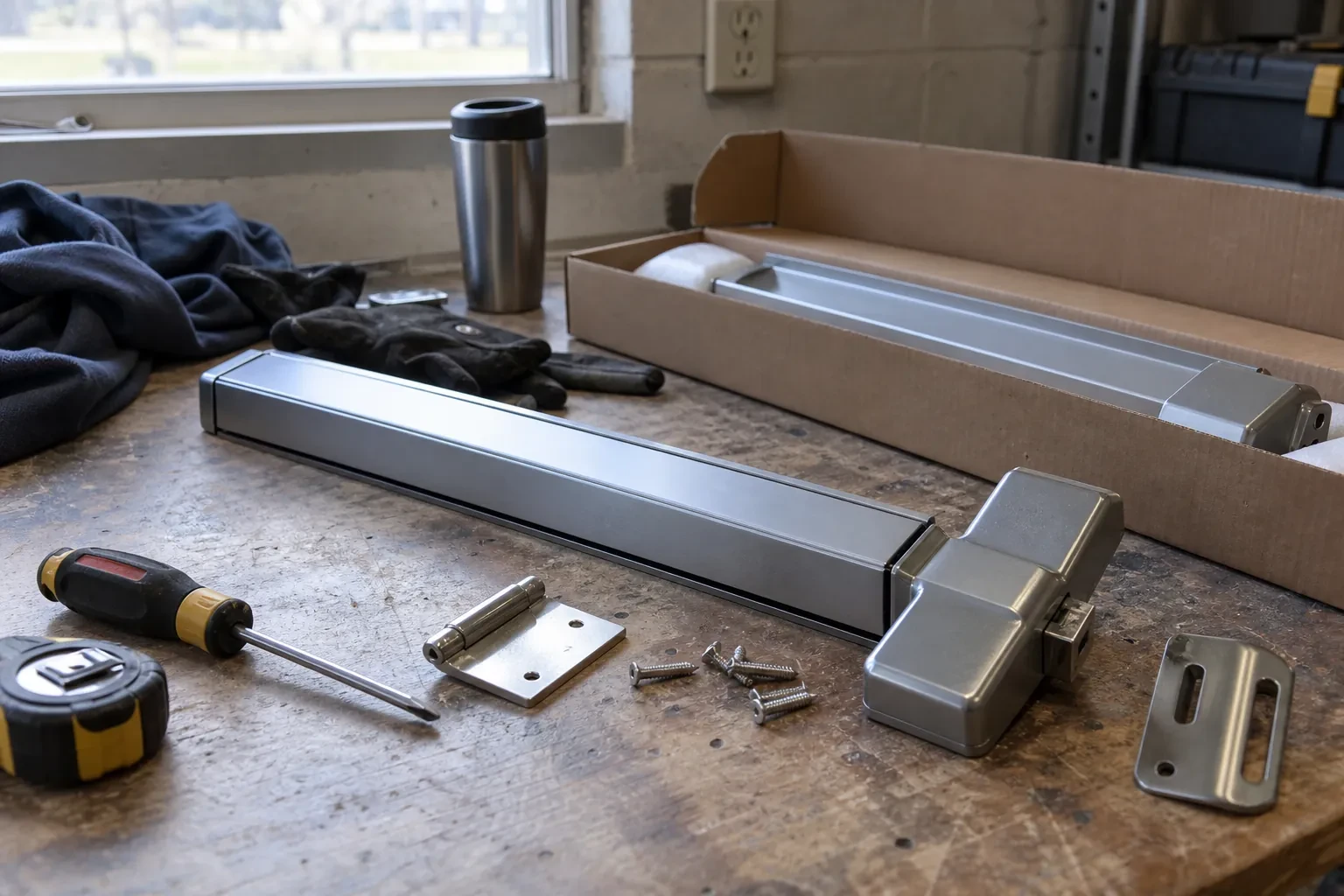
Checking the bolt work and handle
A locked-out safe is not always a locked-out lock. The locksmith checks whether the handle turns normally, whether the bolt work is retracting at all, and whether resistance shows up at the handle rather than at the dial or keypad. A jammed bolt, a corroded linkage or a relocker that has dropped into place can all hold a door shut even when the correct combination is entered without complaint. Sorting this out before assuming the lock has failed avoids replacing a perfectly good combination lock to solve a mechanical problem that sits elsewhere in the door.
Repairing or replacing the lock afterward
Once the safe is open, the lock that caused the trouble gets its own decision. A worn or damaged mechanical lock can often be repaired in place, its wheel pack, drive cam or spindle replaced individually rather than swapping the whole assembly. A failed electronic lock is more often replaced outright with a comparable or higher-rated unit, since circuit boards and keypads are not field-serviceable like a wheel pack. Either path aims for a lock at least as capable as the one it replaces, matched to the case's existing cutout, though restoring the safe's overall rated protection after any field repair follows the manufacturer's approved method rather than being assumed automatic.
A plan for the day this happens again
Most safes that needed a reset today will need one again eventually, whether from a future staff change, a forgotten code, or simple wear on an aging lock. Deciding now who is responsible for passing the combination along when roles change, keeping a written record somewhere secure, and having the safe's model and service history noted somewhere accessible all make the next visit shorter and simpler than this one. None of this is required before the locksmith leaves, but a few minutes spent on it now is the difference between a short reset next time and starting from an unknown safe all over again.
Safe Opening & Combination Change
In the van
Borescope for internal viewing
Electronic keypad input unit
Dial decoding instrument
Nine-volt and lithium batteries
Spindle and drive cam
Safe Opening & Combination Change
What affects the quote
Number of new codes needed afterward
Setting one combination for a single owner is the simplest case; programming separate codes for several staff members on an electronic lock takes correspondingly more time.
Whether model or service records are available
A visible data plate, a purchase receipt or a manual on hand speeds up identifying the exact lock; a safe with none of that takes a few extra minutes to assess on site.
Replacement lock or hardware needed
If the existing lock is worn out, damaged, or simply outdated, a replacement mechanical or electronic lock adds to the visit, priced separately from the opening itself.
What to have ready
- Has the safe been through a fire, flood or break-in attempt?
- Does the keypad light up or make sounds when pressed?
- Is the lock a dial, a keypad, or a key?
Safe Opening & Combination Change: questions
QuestionsDo drop safes or under-counter cash safes work the same way as a larger floor safe?
The identification step is the same regardless of size, but the lock inside is not assumed from the safe's size: a small drop safe or under-counter unit can carry anything from a basic keypad to a high-security lock, so each is identified on its own before manipulation, reset or a combination change proceeds, with the same care around authority and aftercare applying equally.
Can a safe be repaired instead of replaced after drilling?
Often, yes, particularly for a mechanical lock, where a worn wheel pack, drive cam or spindle can be replaced individually within the existing lock body. An electronic lock's circuit board and keypad are less often repairable in place and are more commonly swapped for a comparable or higher-rated replacement unit that fits the same cutout.
My safe was in a fire or a flood. Does that change how it gets opened?
It can. Heat or water exposure sometimes trips a relocker or damages the bolt work independently of the combination lock, so the locksmith checks for that first rather than assuming the lock itself has failed. A safe with fire-rated insulation may also need that lining checked once open, separately from the lock work.