Commercial · Brampton
Commercial Rekeying in Brampton
The office has been reshuffled twice since the locks were last touched.
In plain words
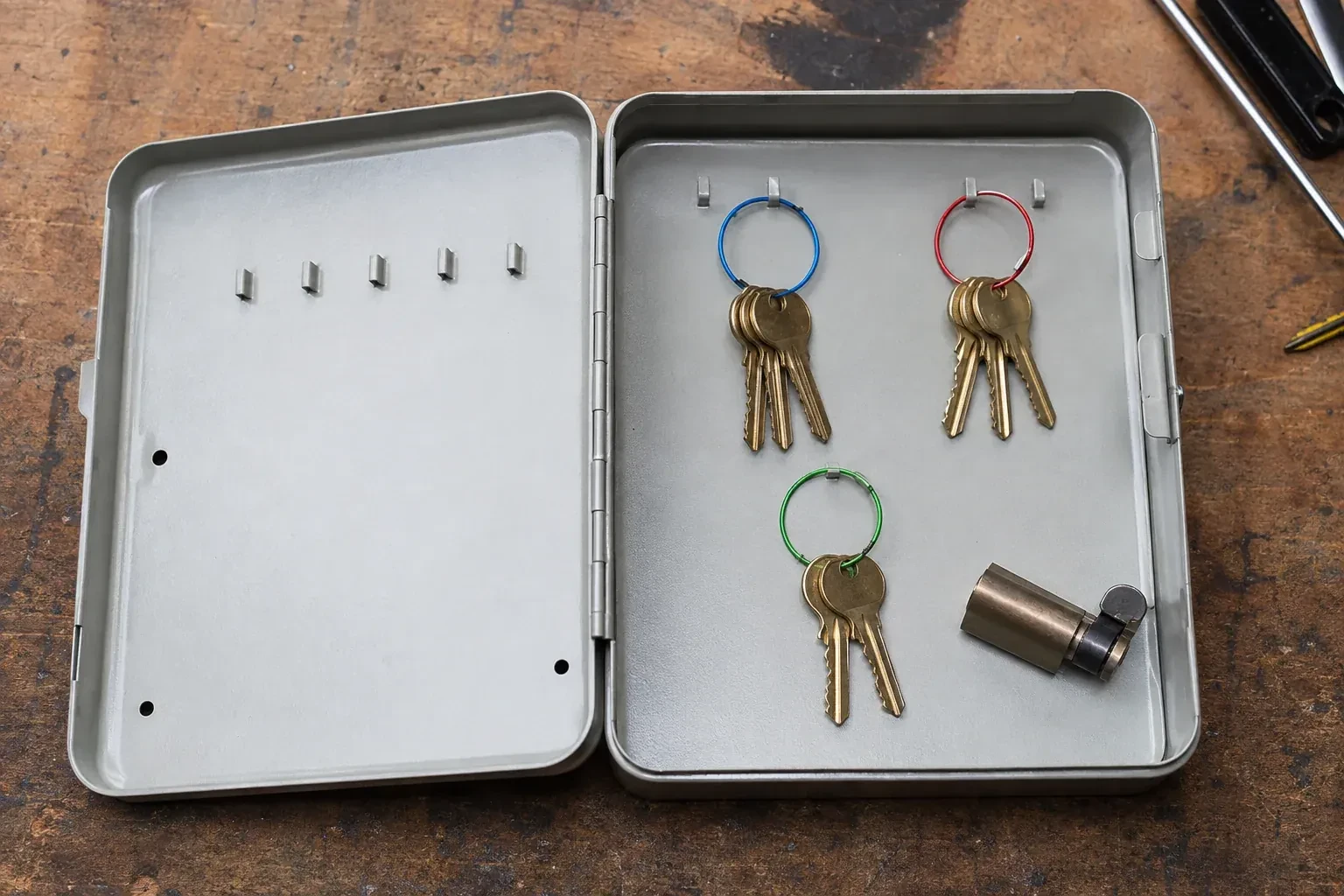
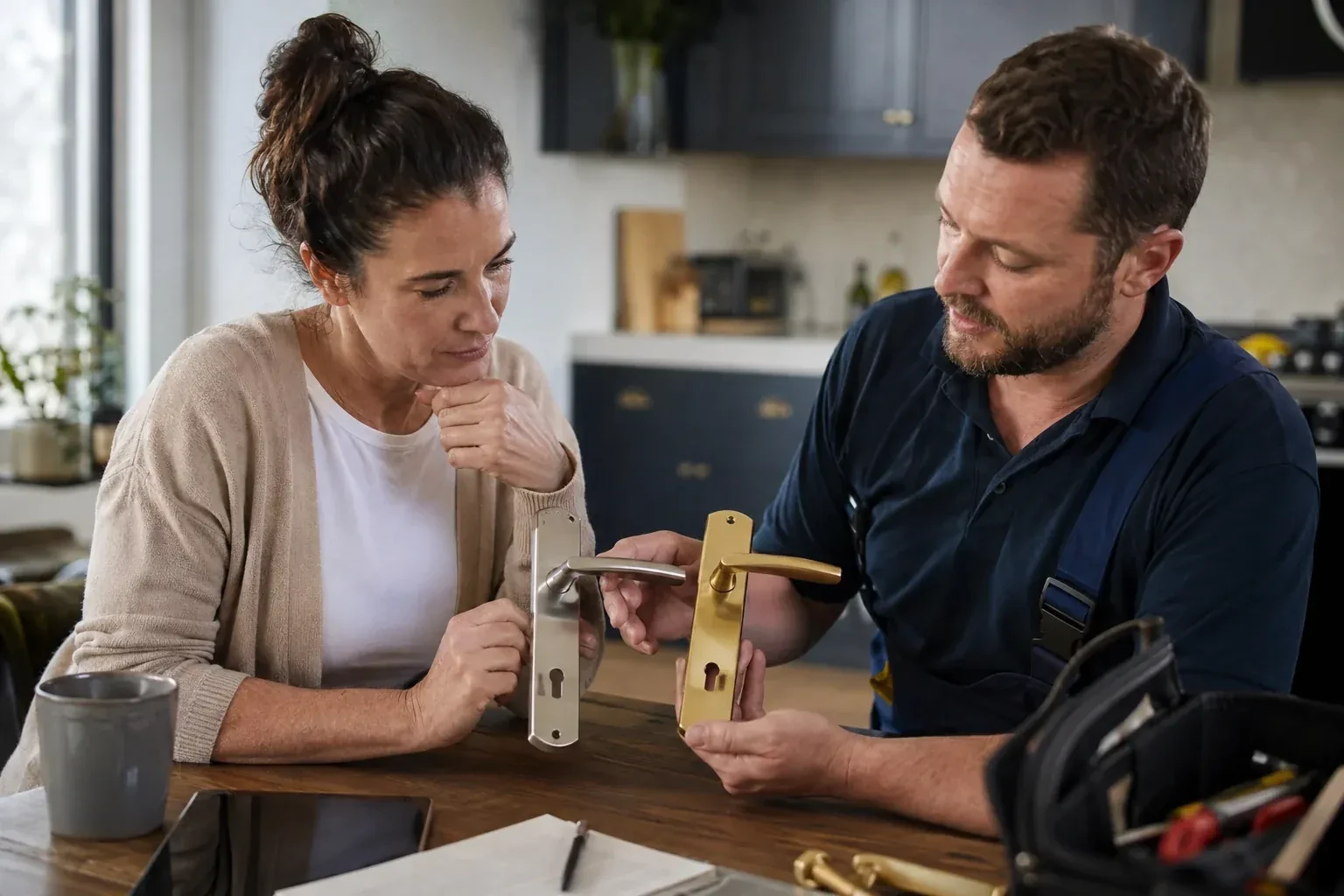
Taking over a commercial unit is the moment to make the locks yours. The keys handed across at signing are only the ones the previous occupant remembered; cleaners, suppliers and former staff may still carry others. Rekeying every cylinder your lease gives you control of gives you a clean start on day one, with keys cut for your team and a chart of which door each one opens. The locksmith also clears up the odds and ends that come with a new lease: a padlock with no key, a mailbox lock seized since the last tenant. You open knowing exactly who can get in.
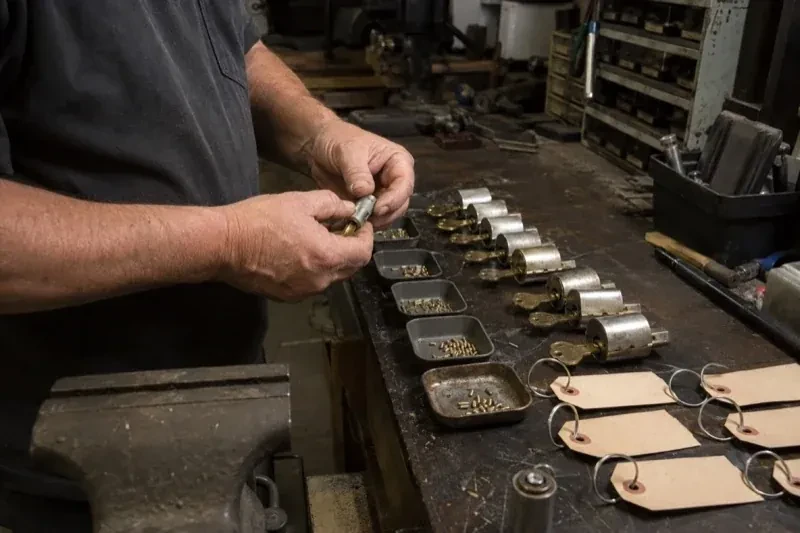
How the visit goesThe drawer behind the counter holds a tangle of keys with tape labels: front old, side, Dave. Some open things, some open nothing, and the hardware-store copies mean the true count drifted long ago past anything written down.
Commercial Rekeying
How the visit goes
Choosing the window and the order of doors
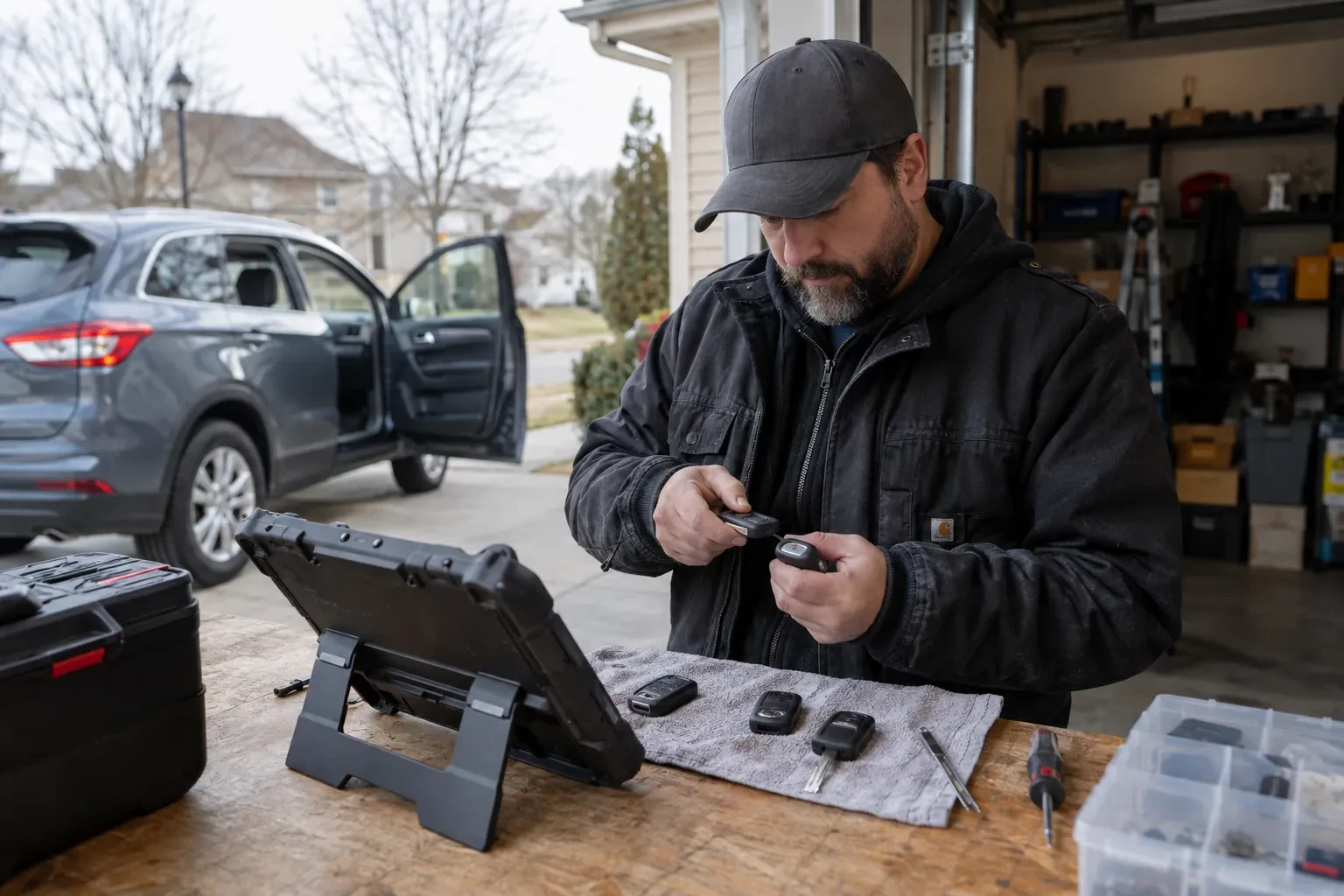
The last part of the assessment is practical: when can the work happen, and in what order. A retail shop may prefer the hour after closing; a restaurant, the mid-morning lull; a warehouse, the gap between the last outbound truck and the night shift. The locksmith also asks about deliveries, the cleaning crew, the alarm monitoring company and anyone else who holds a key and needs a new one before their next visit. From this comes a sequence, typically the doors staff use least first and the main entrance last, so there is always a working, lockable way in and out while the cylinders are being changed.
Retiring the old keys
The job is finished when the old keys are proven dead, not when the new ones work. At every rekeyed opening the locksmith tries a sample of the old keys, including the master if one existed, and confirms that each one enters the keyway and turns nothing. The collected old keys are then cut through with snips in front of the manager and can be handed back as scrap or taken away. Any door deliberately left on its original key is written on the chart in plain words so nobody assumes it changed. That last check is what turns a day of brass work into a genuine reset of who can open the business.
A routine for the next departure
Turnover stops being a security event once there is a procedure for it. When someone leaves, their key is collected against the register and ticked off; if it cannot be produced, the chart shows exactly which cylinders that key opened, and only those are dealt with. Businesses that chose interchangeable cores can go further: the manager takes the control key from the safe, swaps the affected core for a spare in less time than a coffee break, and the locksmith repins the removed core at leisure for the next time. Either way the response is measured and specific, and the front door is never left answering to a key that walked out with a former employee.
Commercial Rekeying
In the van
Plug follower
Key stamp set and tags
Commercial pin kit
Standard and restricted key blanks
Dry graphite or PTFE lubricant
Commercial Rekeying
What affects the quote
Upgrades chosen on the day
Some businesses use the visit to move to interchangeable cores, add a lockbox for the alarm company or fit a heavier cylinder on the cash room. Each is a separate line you can accept or leave.
Several locations
Rekeying two or three sites onto one keying plan means travel between them and a chart that spans buildings, quoted per site plus the shared design work.
Documentation and register
A keying chart, a key register and stamped codes on every key are part of a proper commercial rekey, and the quote names the paperwork so it is never skipped.
What to have ready
- Which staff need to open which doors on a normal day?
- When is the premises quiet or empty enough for the work?
- Which doors, if any, belong to the landlord or a shared corridor?
Commercial Rekeying: questions
QuestionsWill rekeying affect our alarm system or card readers?
Mechanical rekeying leaves electronics alone: alarm panels, card readers and keypads keep their codes and credentials. What changes is the list of people holding keys, and it is worth updating the alarm company's keyholder list and retiring the codes of anyone who has left at the same time, since keys and codes usually walk out together. Where a door has both a card reader and a keyed override, the override cylinder is rekeyed with the rest.
What is an interchangeable core and why is it suggested for staff turnover?
A small-format interchangeable core is a small figure-eight cylinder that slides out of the lever, deadbolt or padlock when a control key is turned, with no tools needed; larger doors sometimes use a large-format core with a different profile instead. A manager keeps the control key in the safe and a few spare cores on hand, so a missing key means the core is swapped in moments and repinned later. For a business with frequent staff turnover, it turns a call-out into a routine.
What is the difference between rekeying a business and replacing its locks?
Rekeying keeps every lock on the door and changes only the pins inside the cylinder, so a new key works and the old ones stop. Replacing swaps the hardware itself. Commercial cylinders are made to be repinned many times, so rekeying suits any lock in sound condition and leaves the levers, trim and door untouched. Replacement is chosen door by door for cylinders that are worn, corroded or too light for what they protect.
Related services
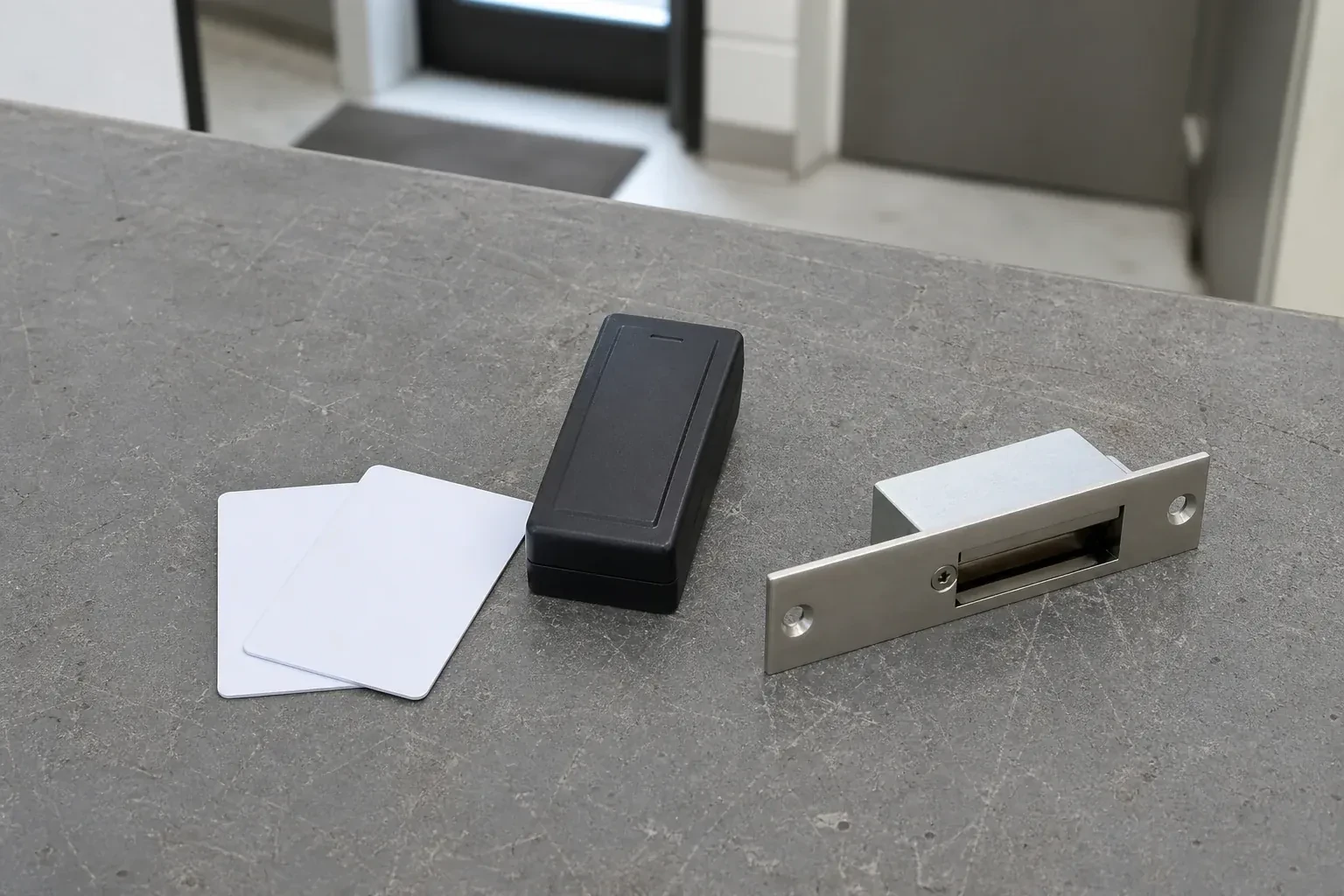
- Access Control InstallationYou just leased the empty unit next door and want the new tenant to open their own suite without a key to yours, to the loading dock, or to the electrical room down the hall.
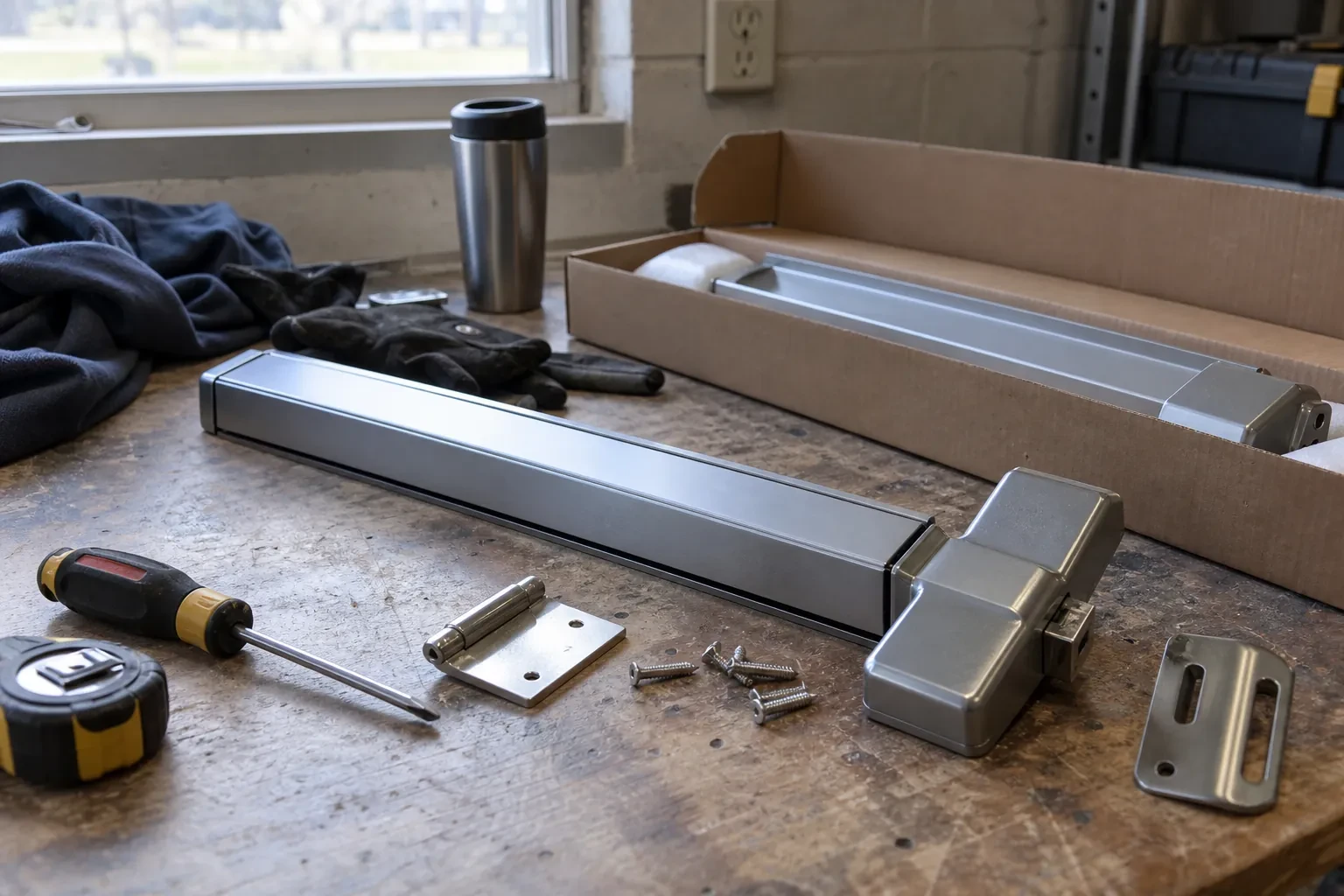
- Panic & Exit HardwareThe new access-control reader at the staff entrance works fine going in, but nobody has sorted out the door's exit side, and right now a card reader and a pushbar exist as two separate ideas.
- Commercial-Grade Lock ReplacementThe kitchen delivery door gets shouldered open more than a hundred times a shift, and lately the latch slips past the strike plate instead of catching it on the first push.